Virtual Reality Language Learning
This project involves a VR language learning application designed to help users overcome foreign language anxiety and improve vocabulary retention. The app provides three core features: VR-based real-time translation, safe space role-switching for immersive practice, and 3D interactions with objects like food for intensive language learning.
Project Type
UXR/UXD/UI
Timeline
2 Months
Concept
Virtual Reality
My Role
UX Research
UX Designer
VR Developer
Usability Tester
ToolKit
Pen & Paper
Figma
FigJam
Miro
Target Audience
Language Learners
Travelers
Expatriates and Immigrants
Business Professionals
Project Overview
Approach Followed

Foundational Research
Research Papers, articles.

Ideation
Brainstorming, discussions.
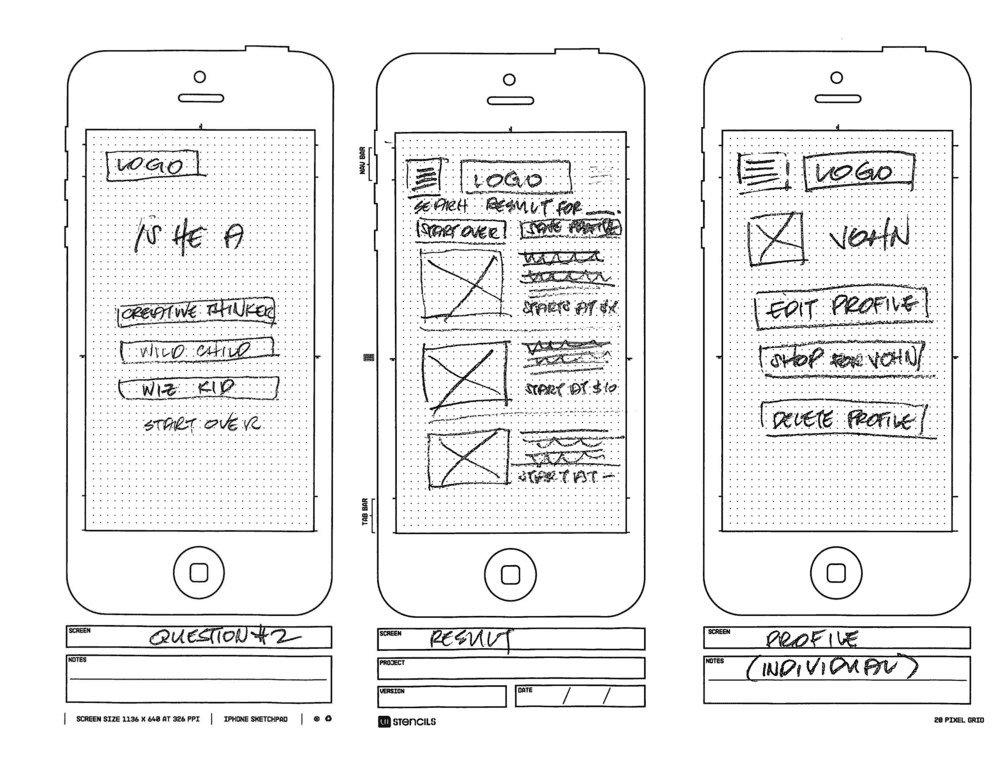
Paper Wireframing
Pen and paper, crazy 8

High-fidelity Wireframing
Visual and interactive prototypes that resemble the final product

Digital Prototyping
Realistic, interactive prototypes and mockups.

Usability Testing
User testing,A/B testing
UX Research Study
discovery & exploration
Background
Foreign language learners often experience anxiety, which hinders their ability to practice and retain new vocabulary. This research aims to address these challenges by exploring how immersive VR technology can create a safe, engaging environment for users to practice language skills and reduce anxiety.
Research Questions
Q1. How does language anxiety impact a learner’s ability to engage with traditional language learning tools?
Q2. Can immersive VR environments reduce anxiety and improve language learning outcomes?
Q3. How do interactive 3D elements and real-time translation influence language retention and learner confidence?
Research Goal
The primary goal of this research is to identify how VR technology can facilitate language learning through interactive, anxiety-reducing environments. Insights from this research will inform the design of the VR app, optimizing it for language retention, confidence-building, and effective practice.
Hypothesis Statement
If a VR-based environment provides interactive 3D learning and real-time translation, users will be more likely to overcome language anxiety, leading to better retention and more effective language learning experiences.
UX Methodologies
User Interviews
Surveys
How Might We?
Affinity Mapping
Competitive Analysis
Research Findings
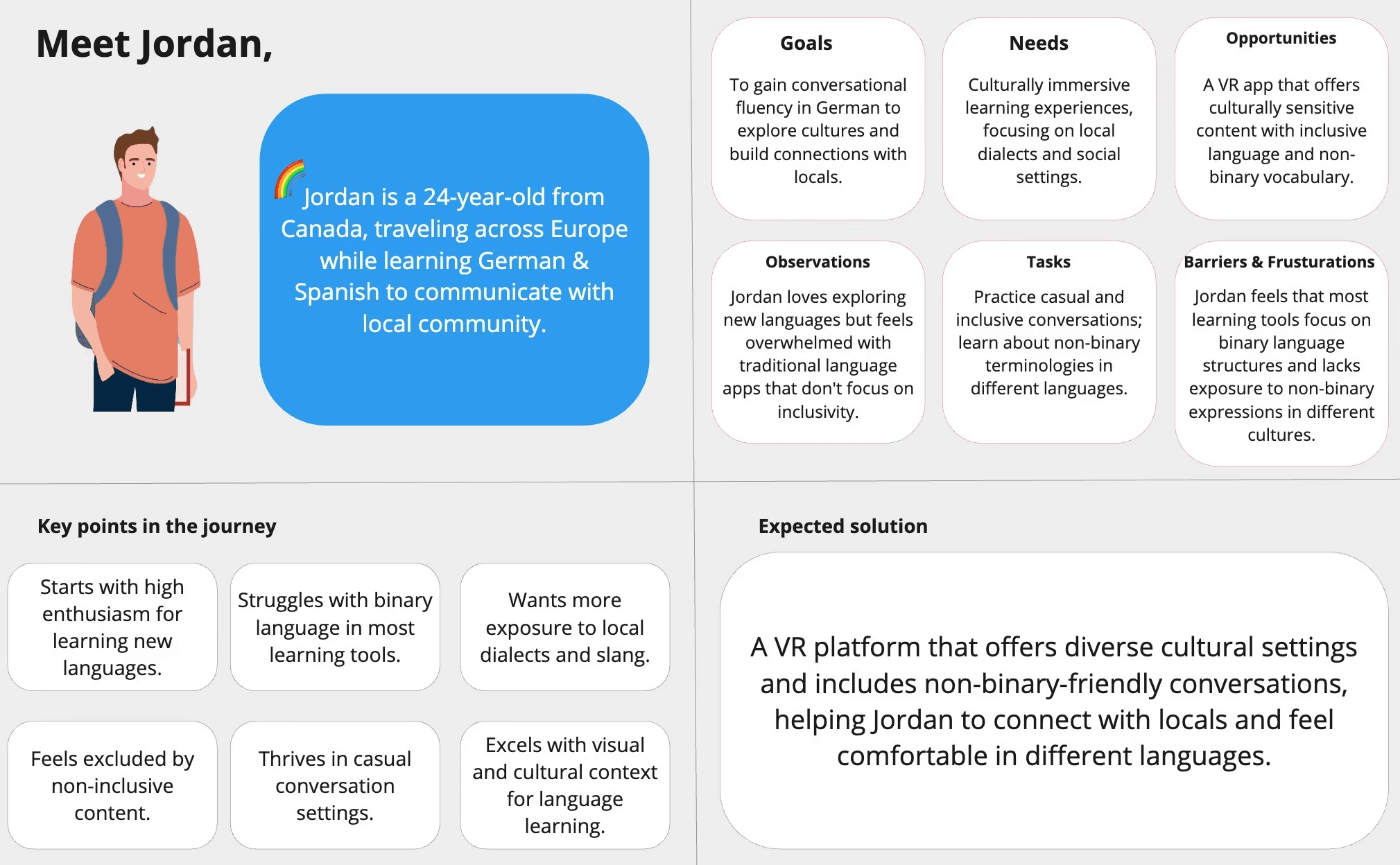
User Personas


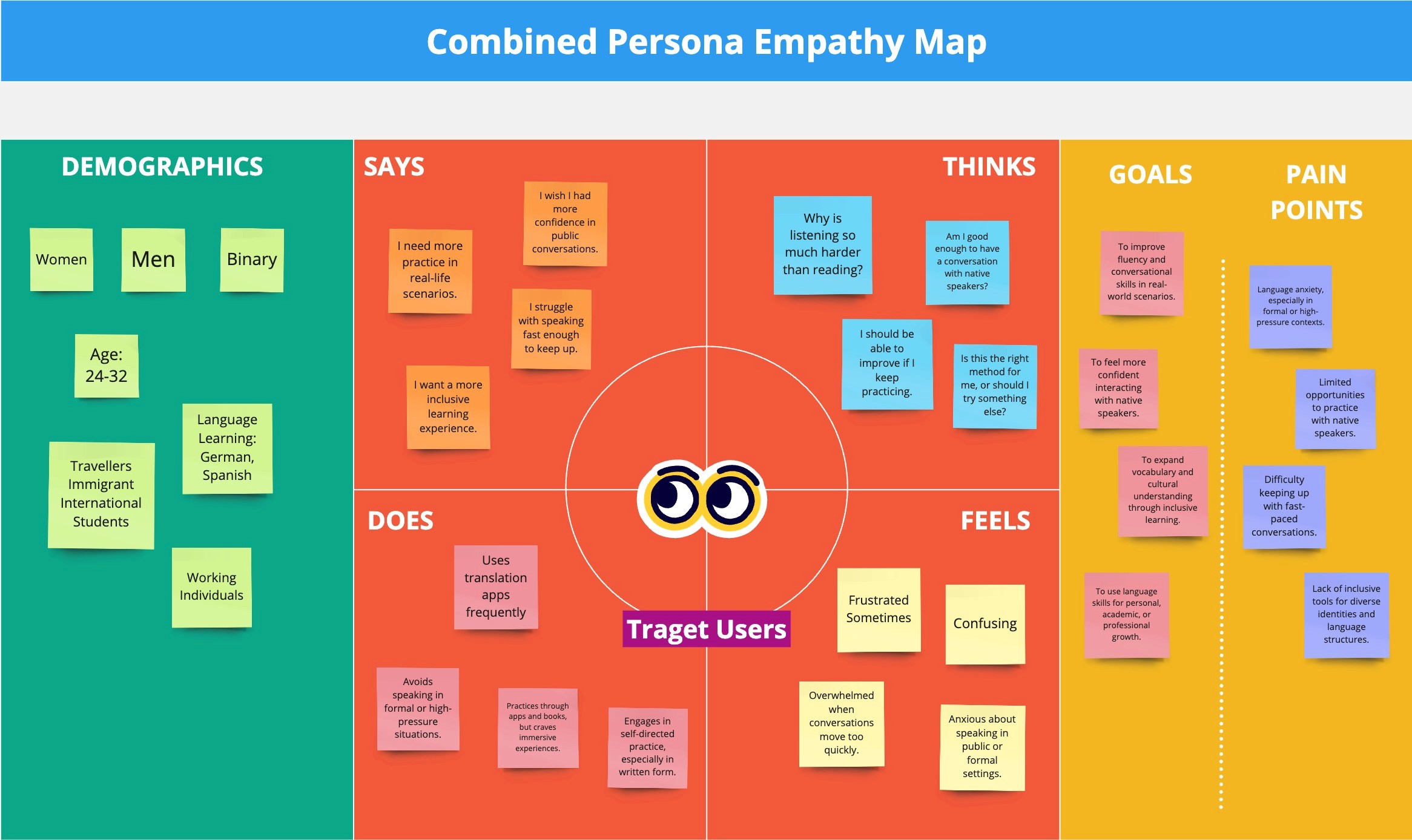
User interviews were conducted to explore language learning and speaking challenges among individuals and foreigners.
Two women and two men participated in remote interviews via Google Meet.
The qualitative and quantitative insights and the observations gathered were used to create three detailed personas.
#1 User Interview


As part of the research for the VR language learning app, a survey was conducted with 17 respondents, consisting of international students, foreign language learners, professors who teach foreign languages, and other university students.
The objective of this survey was to gather insights about their language learning and teaching experiences. These insights serve as the foundational research to inform the design and development of the app, helping to better address user needs and pain points.
Survey Response #1
Survey Response #2
Survey Response #3
Survey Outcome
Practice Opportunities Are Key: A significant 35% of respondents cited the lack of practice opportunities as the biggest challenge in language learning, emphasizing the need for more immersive and interactive experiences.
Daily Use of Digital Tools: 40% of participants use digital tools daily for language learning, highlighting the importance of incorporating technology into language education.
Strong Interest in VR for Learning: 75% of respondents (combining "Very likely" and "Likely") showed a strong inclination towards using VR for language learning, indicating a high potential market for VR-based solutions.
Difficulty with Native Speakers: 25% of respondents expressed difficulty in understanding native speakers, suggesting that the app should offer features like native speaker simulations or real-time practice.
Positive Attitude Towards Technology: Overall, the survey showed a positive attitude towards adopting new technologies like VR, setting a solid foundation for developing innovative learning solutions.
#2 User Survey
Identified Key User Needs: Users require a task management solution that is both engaging and tailored to their specific motivations—whether it's reducing stress, enhancing productivity, or balancing work and personal life.
Defined Core Pain Points: Users struggle with distractions, overwhelming tasks, and ineffective prioritization, leading to procrastination and last-minute stress.
Develop Solution Concepts: Focus on creating a personalized task management tool that integrates humour, customizable reminders, and task breakdown features to address user-specific challenges and enhance overall productivity.
#3 How Might We (HMW) ?
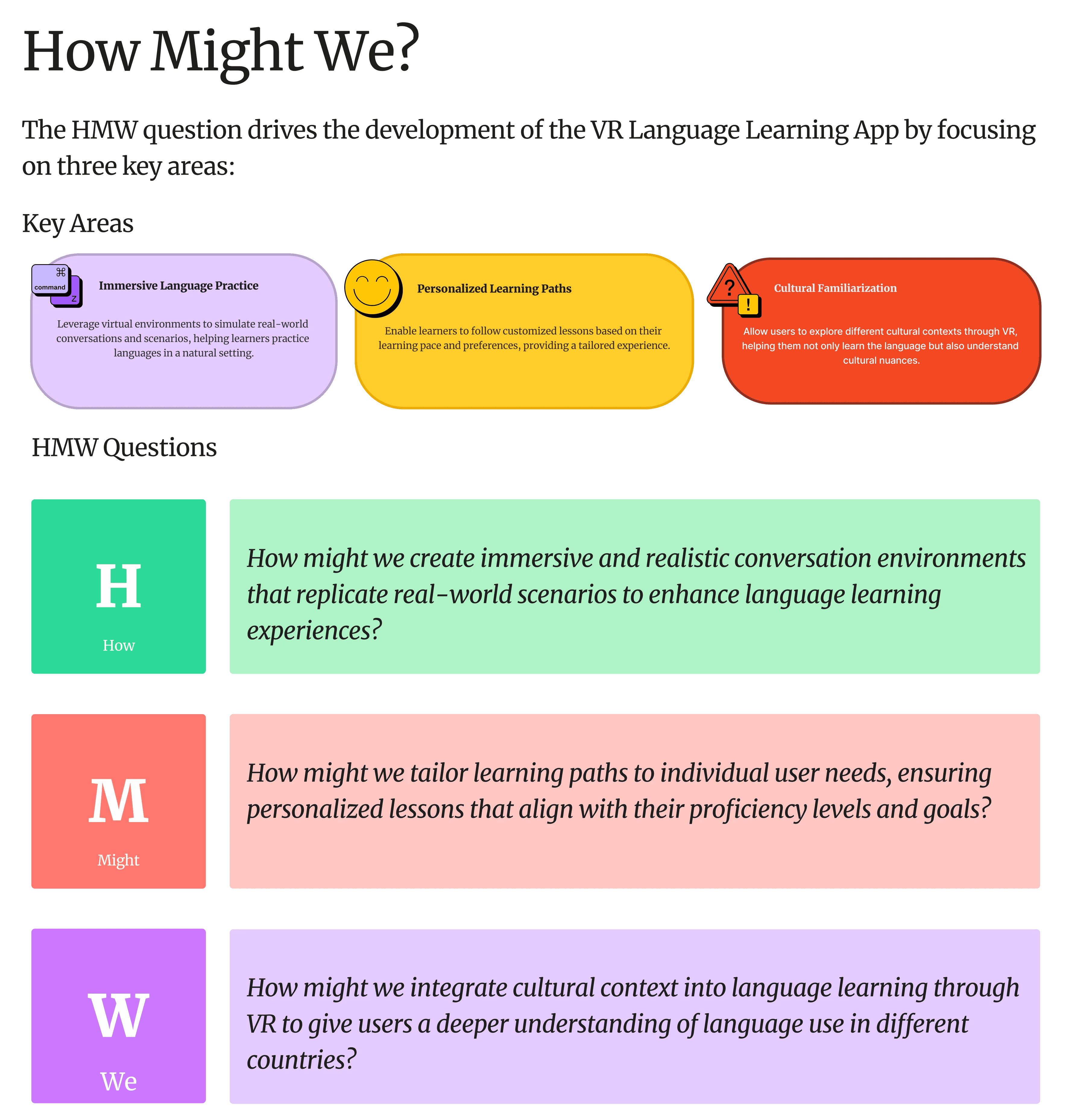
The "How Might We" (HMW) questions are a critical part of our foundational research, derived from the insights gathered during our user surveys. These questions guide the development of the VR Language Learning App by addressing key challenges in language acquisition. By answering these HMW questions, we aim to design a more effective, engaging, and personalized platform for learners from diverse backgrounds.
The How Might We (HMW) question drives the development of VR Language Learning App by focusing on three key areas.
#5 Competitive Analysis
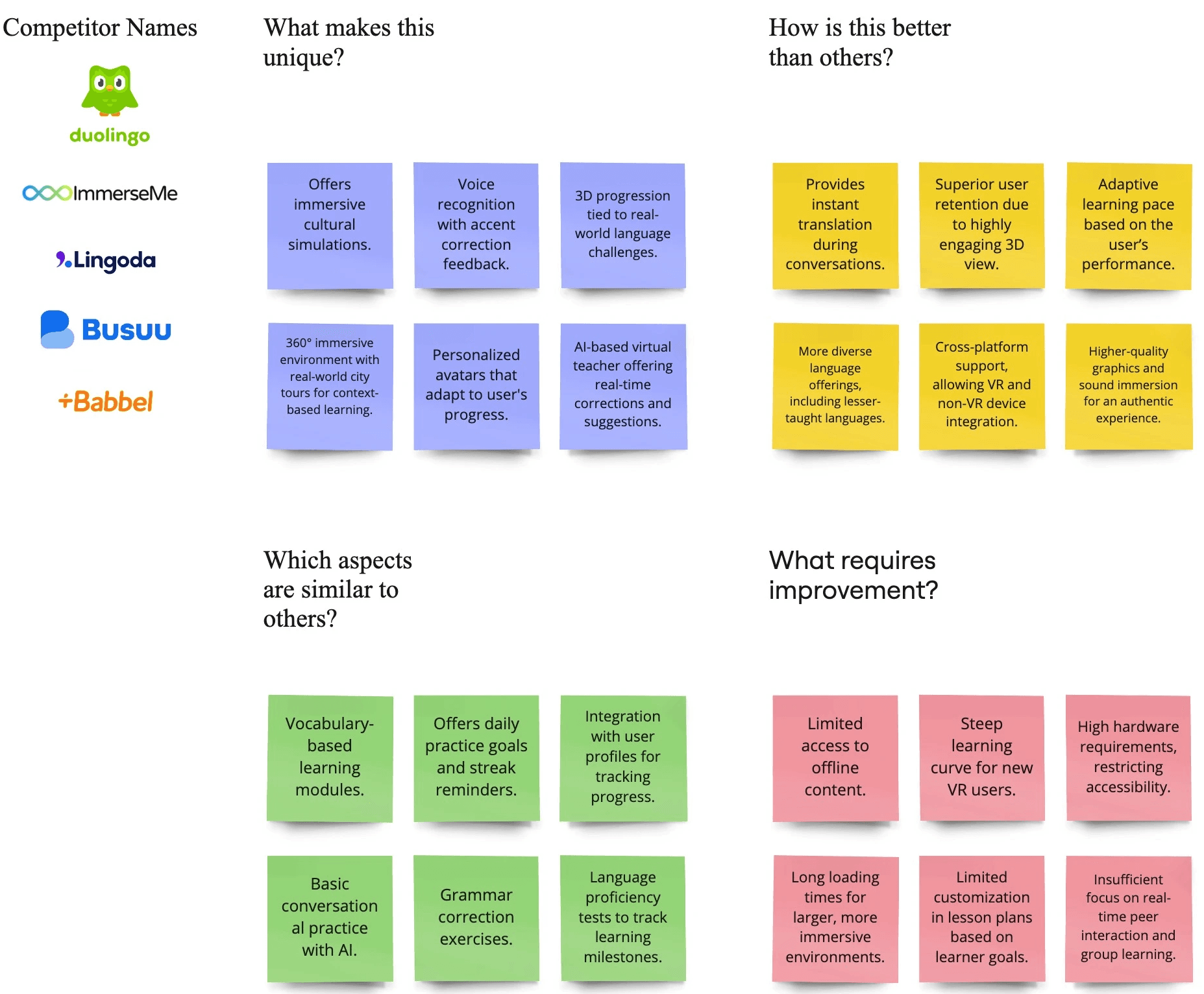
In the rapidly evolving landscape of language learning technology, our VR language learning app positions itself at the forefront by leveraging immersive experiences to enhance language acquisition. This competitive analysis examines key players in the market, highlighting their strengths, weaknesses, and unique selling propositions.
Outcome
Market Positioning: Duolingo and Babbel dominate the market with strong brand presence, while ImmersiveMe targets niche VR-based language learning.
User Experience: ImmersiveMe excels in engagement through VR simulations; Lingoda focuses on personalized live interactions.
Content Variety: Busuu offers diverse languages and interactive feedback; Babbel prioritizes grammar-focused exercises.
Technology Integration: ImmersiveMe stands out for its use of VR, while others rely on traditional apps and AI.
Pricing Models: Competitors vary from free, ad-supported models (Duolingo) to premium subscriptions (Babbel, Lingoda).
#6 Research Findings

UX Design Goals
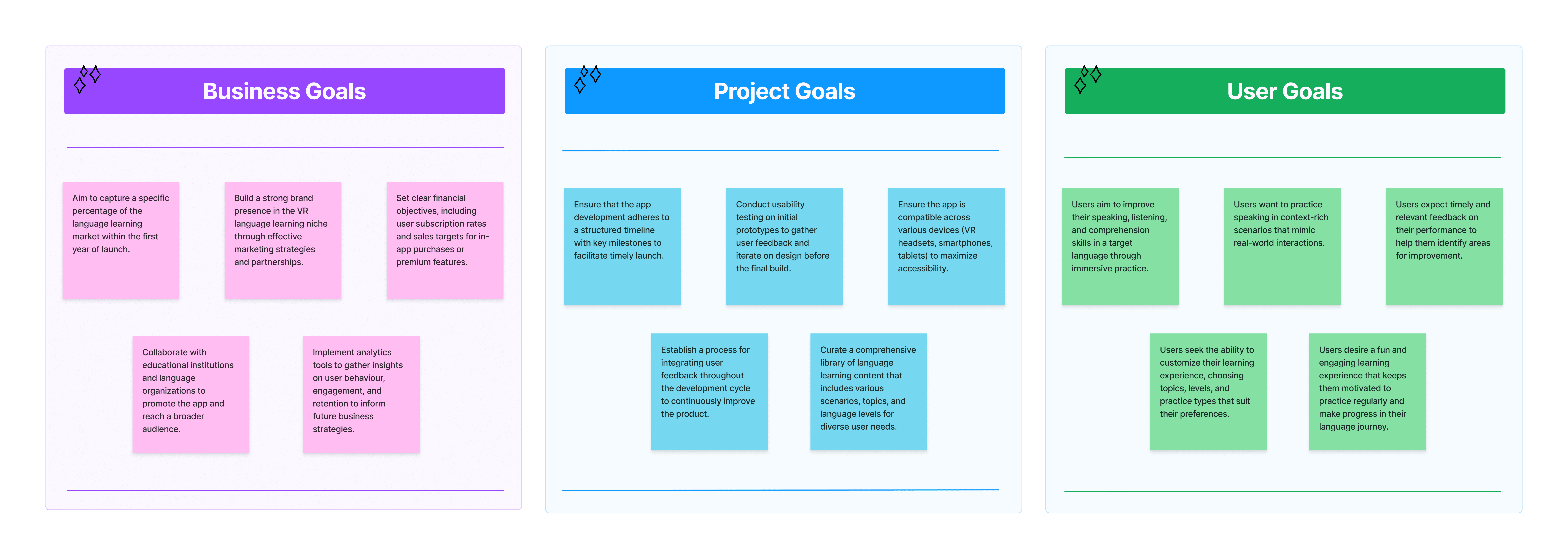
The primary UX design goals for the VR Language Learning app are to create an immersive learning environment that fosters confidence and reduces language anxiety, to enhance user engagement through interactive and personalized experiences, and to ensure intuitive navigation that allows users to focus on their language learning journey without distraction.
UX Design and Implementations
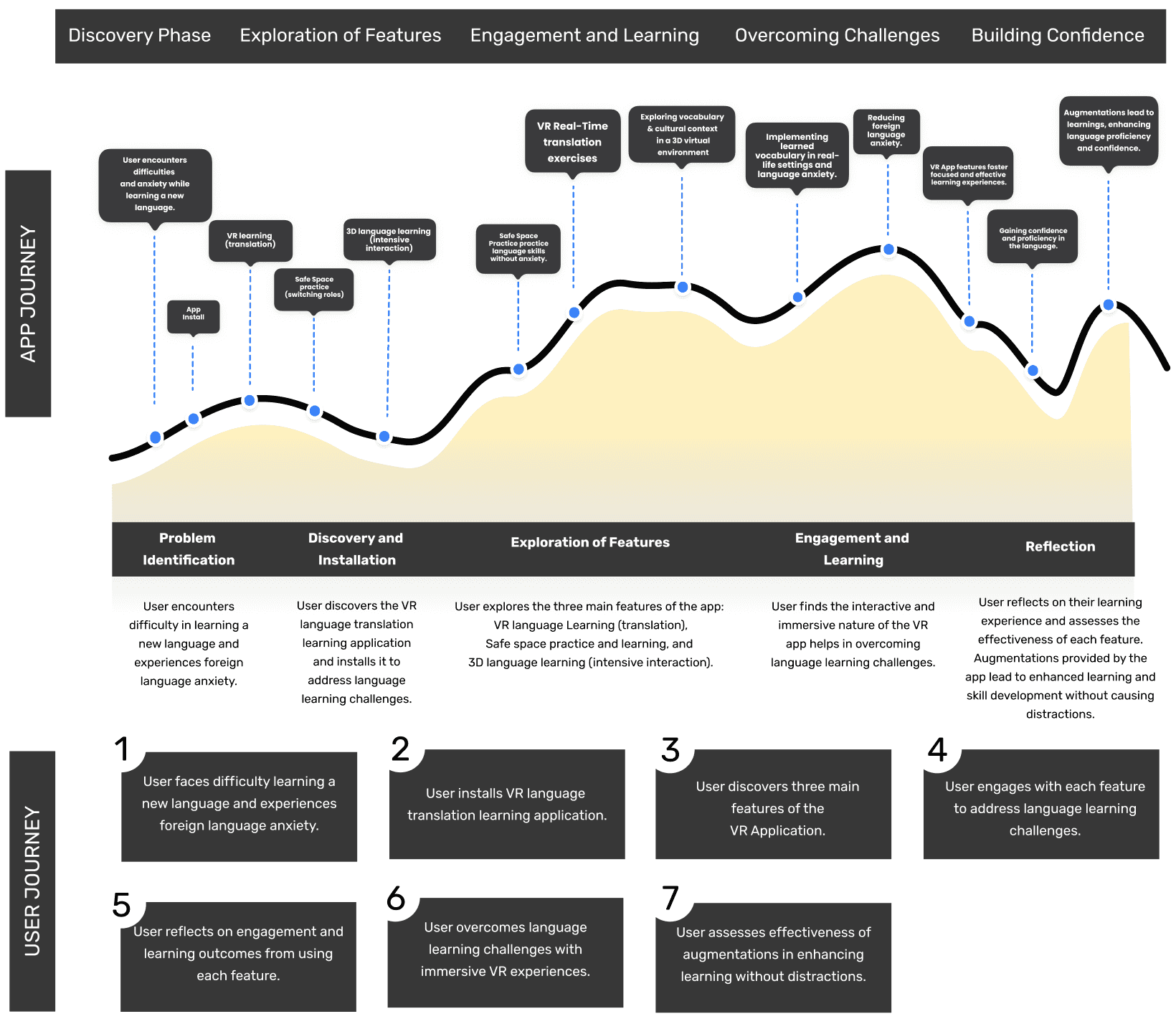
Journey Map
The Journey Map section outlines the app and user journey for the VR language learning project. It visualizes key touchpoints, from user onboarding and navigating immersive scenarios to completing language tasks and receiving feedback. The journey highlights user interactions at each stage, showcasing how the app guides learners through a seamless, engaging, and effective language learning experience.
User Flows
The user flows in the VR Language Learning app map out key interactions, guiding users through immersive language translation and practice scenarios, ensuring a smooth, intuitive experience that enhances language acquisition and confidence-building.
User Flow 1: Virtual Reality Language Translation
Objective: To enable users to seamlessly translate and comprehend foreign language phrases in real-time within immersive virtual environments.
User Flow 2: Safe Space Practice
Objective: To provide users with a stress-free, interactive environment where they can practice language skills without fear of judgment, allowing them to build confidence and improve fluency.
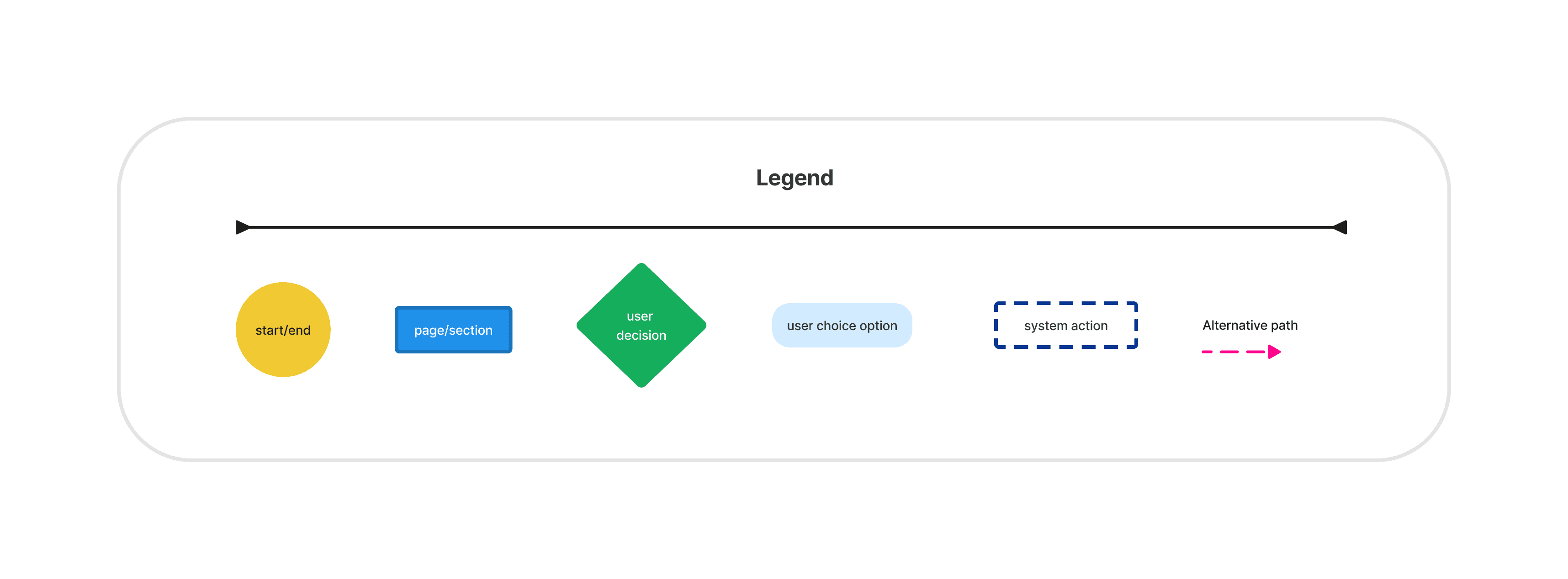


Low-Fidelity Screens
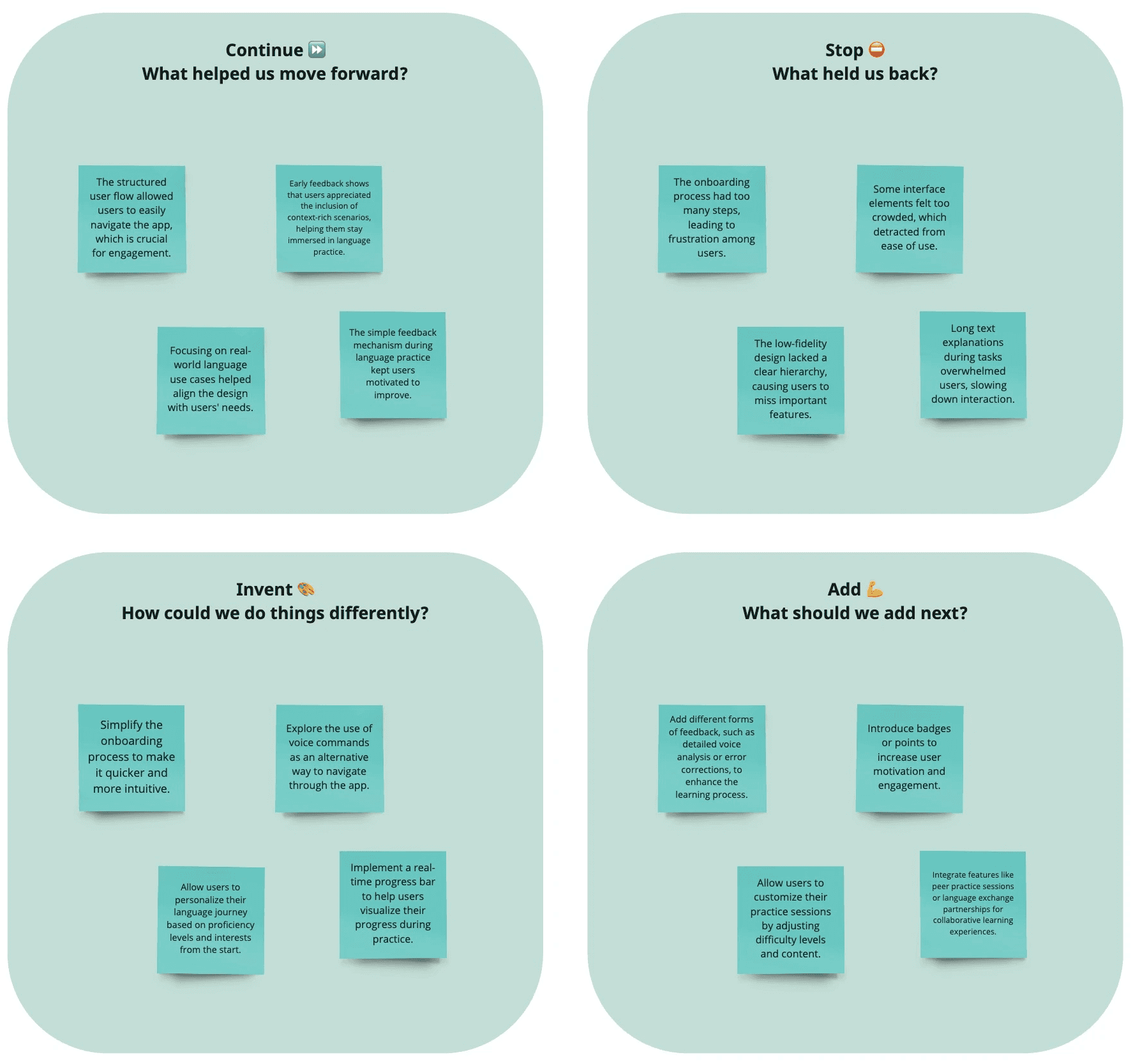
Wireframe Feedback
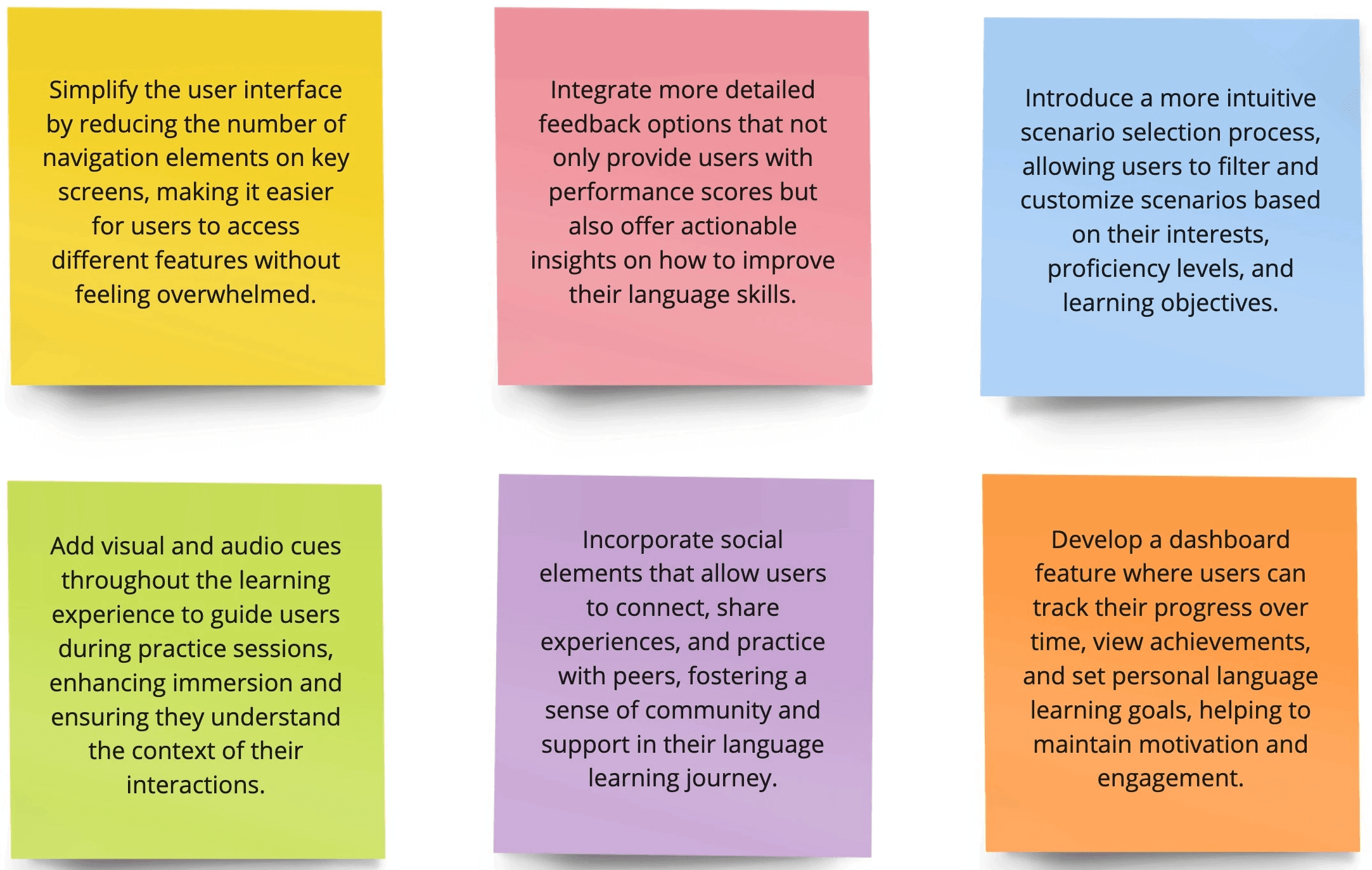
Suggestions for Final Prototype
Wireframes
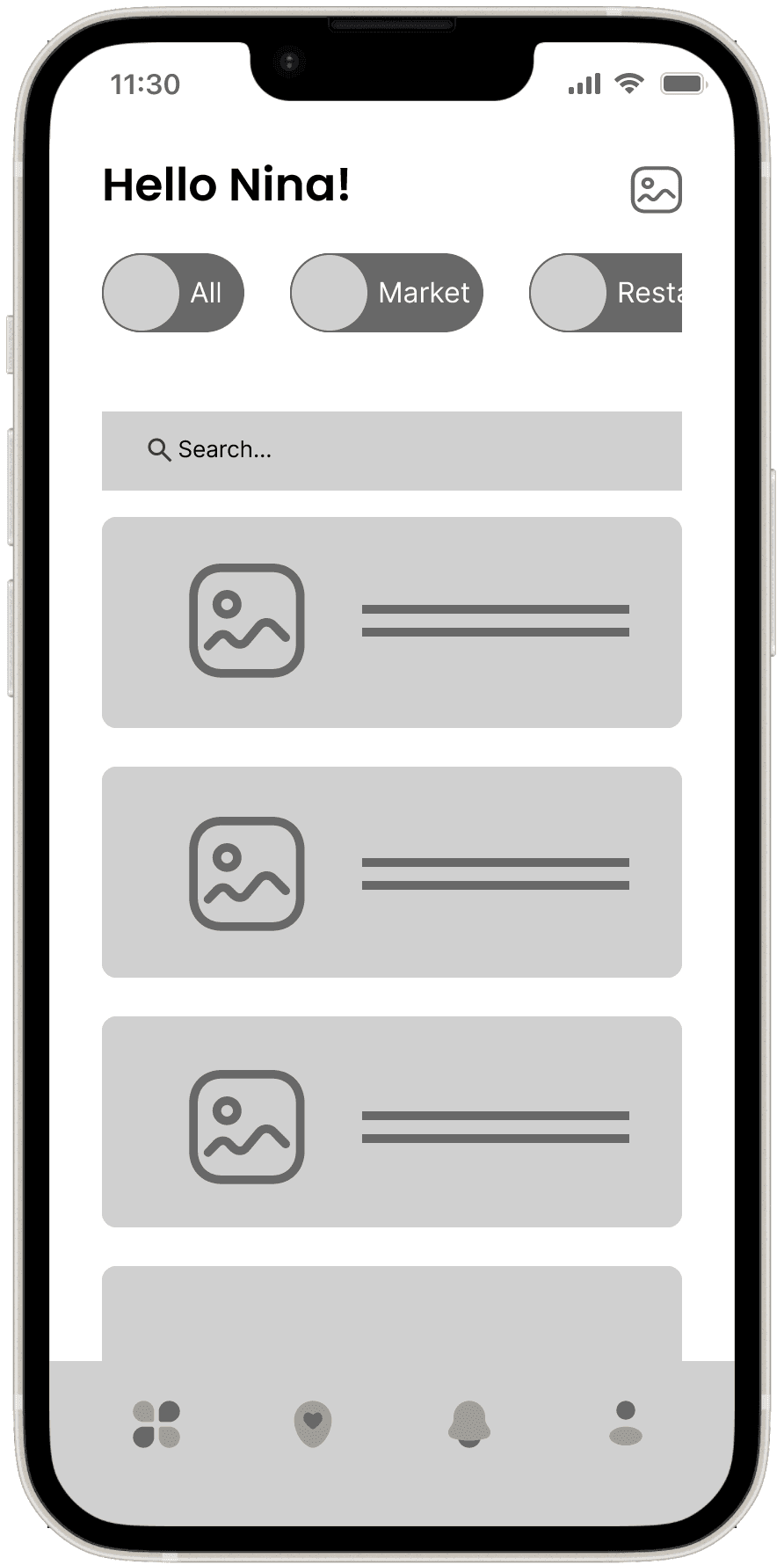
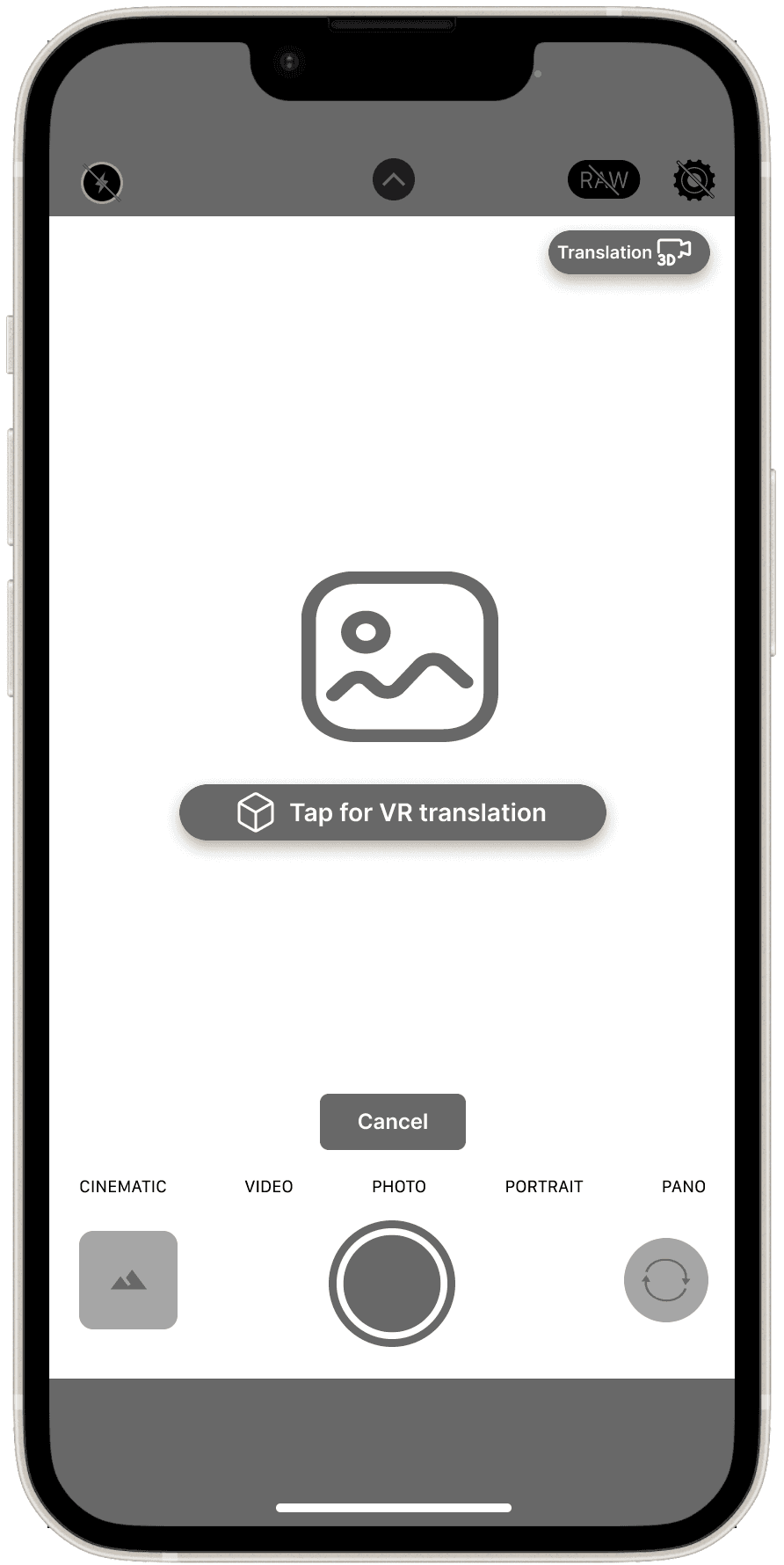
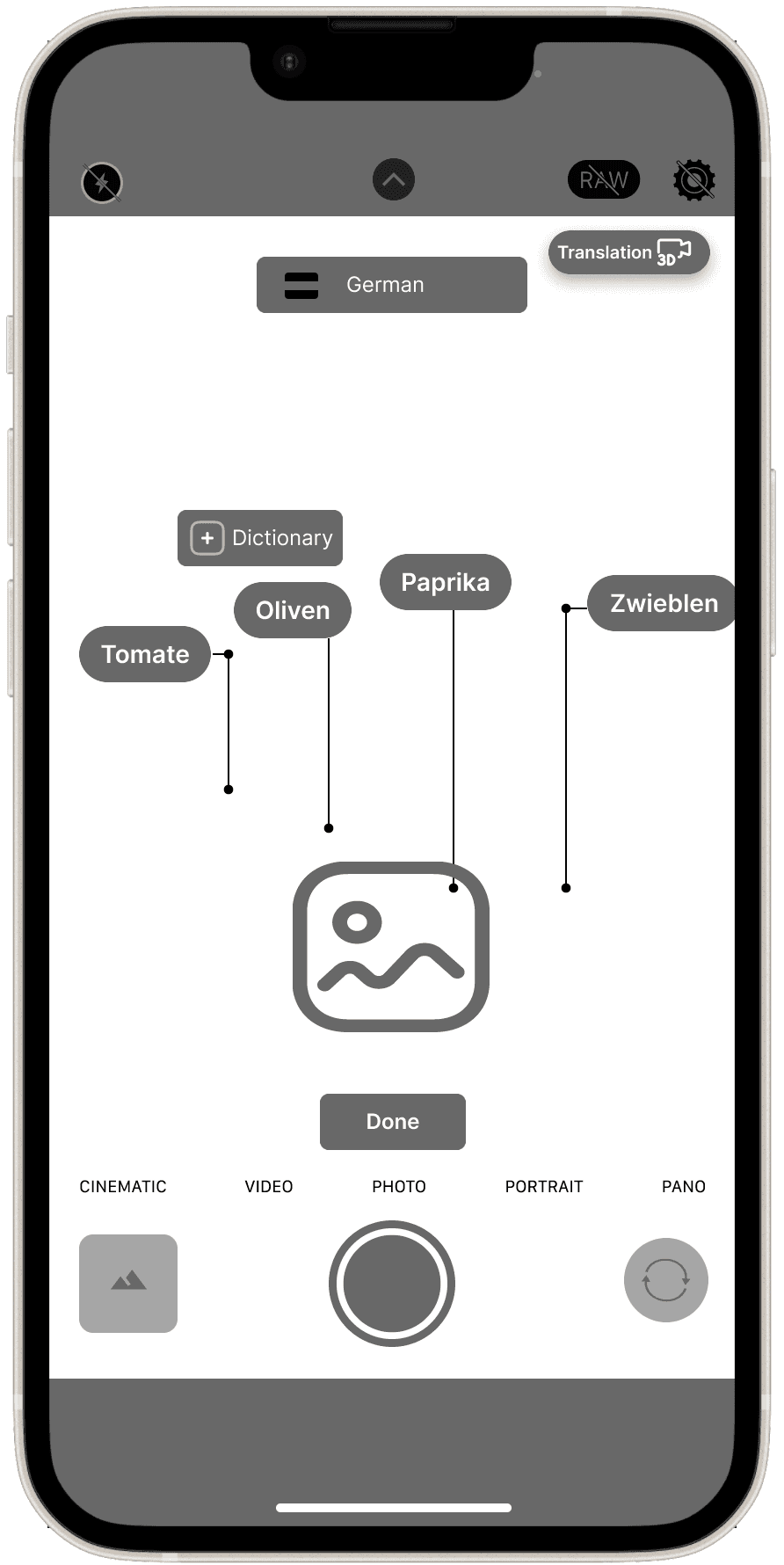
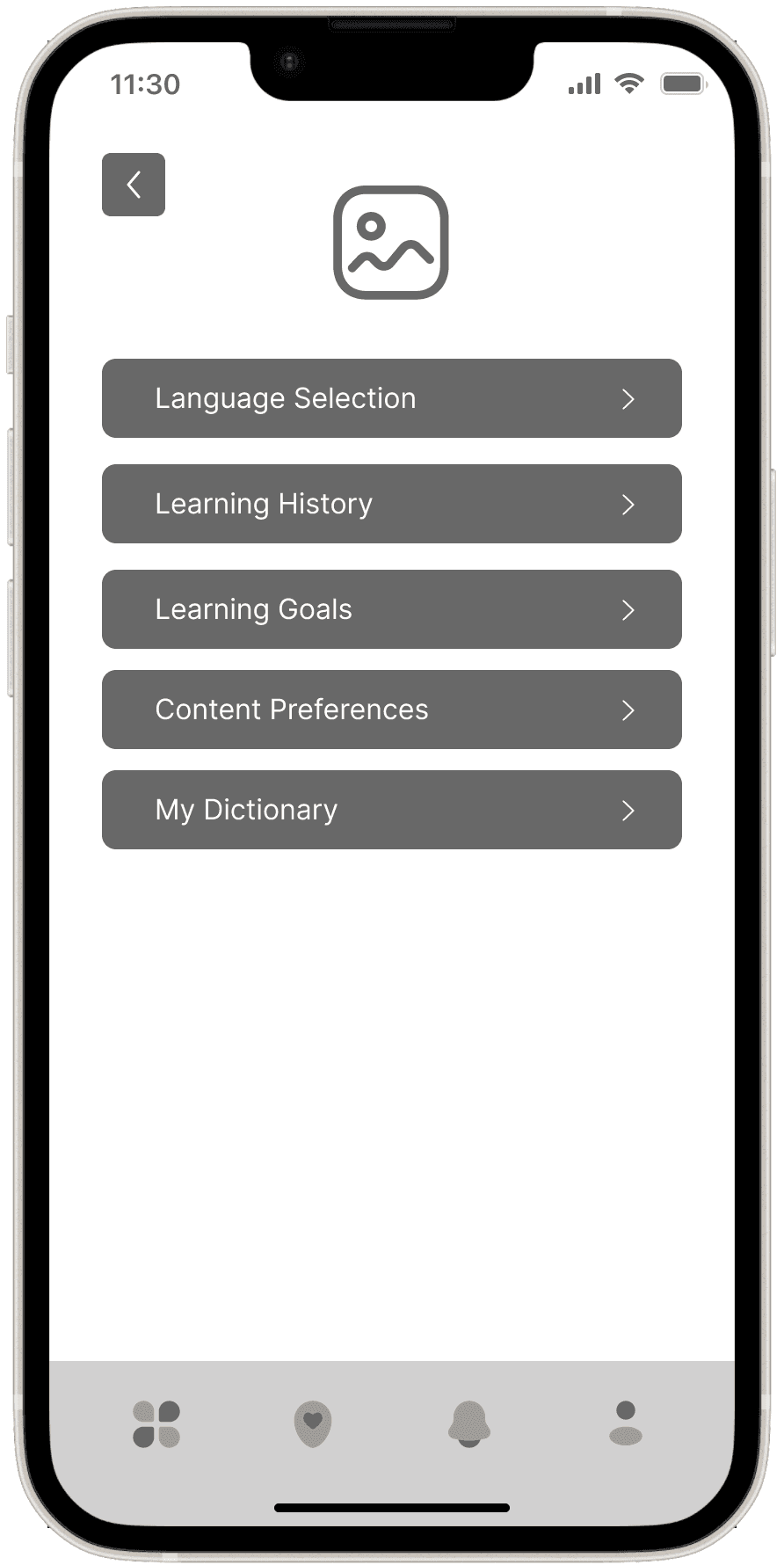
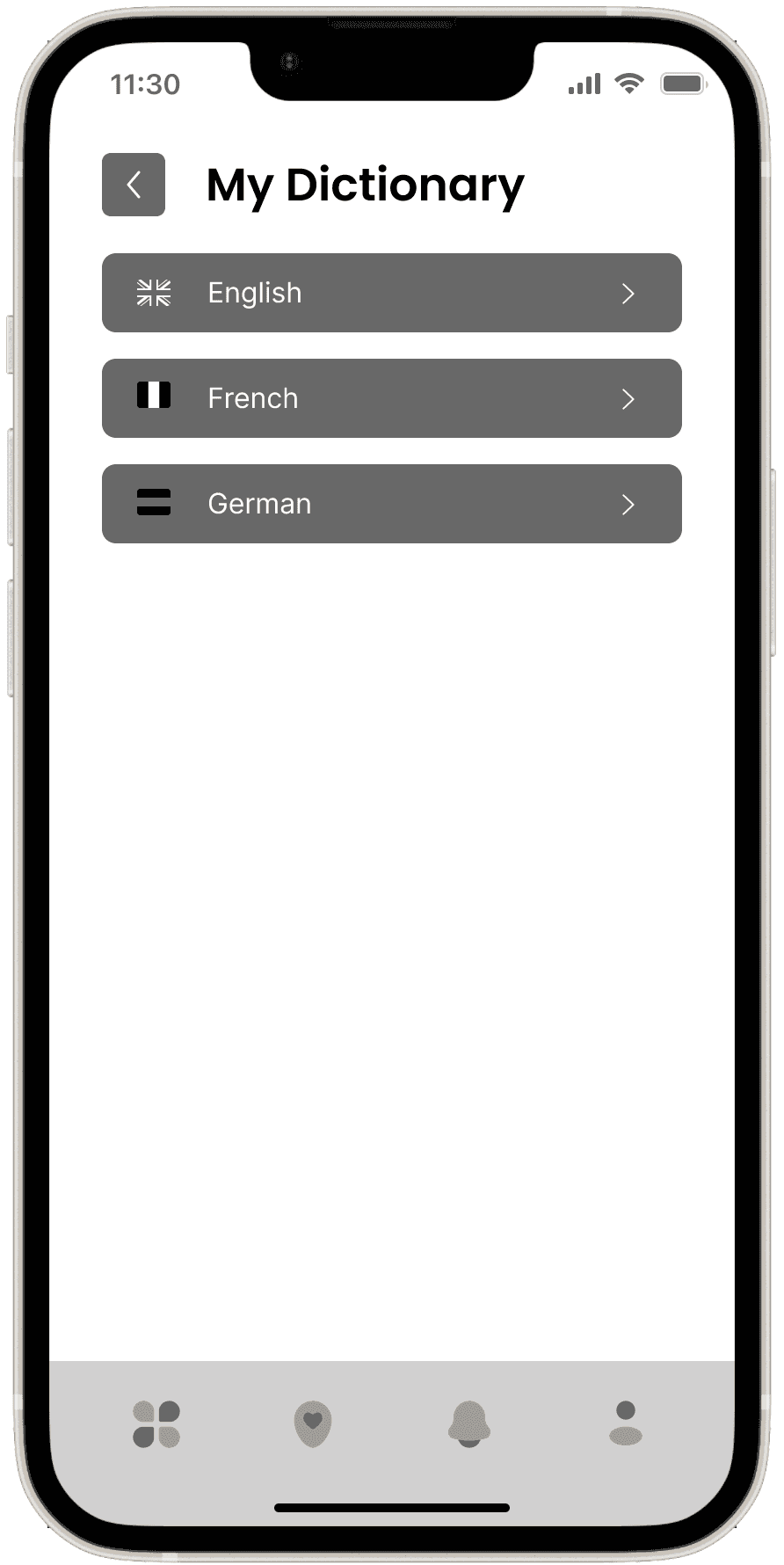
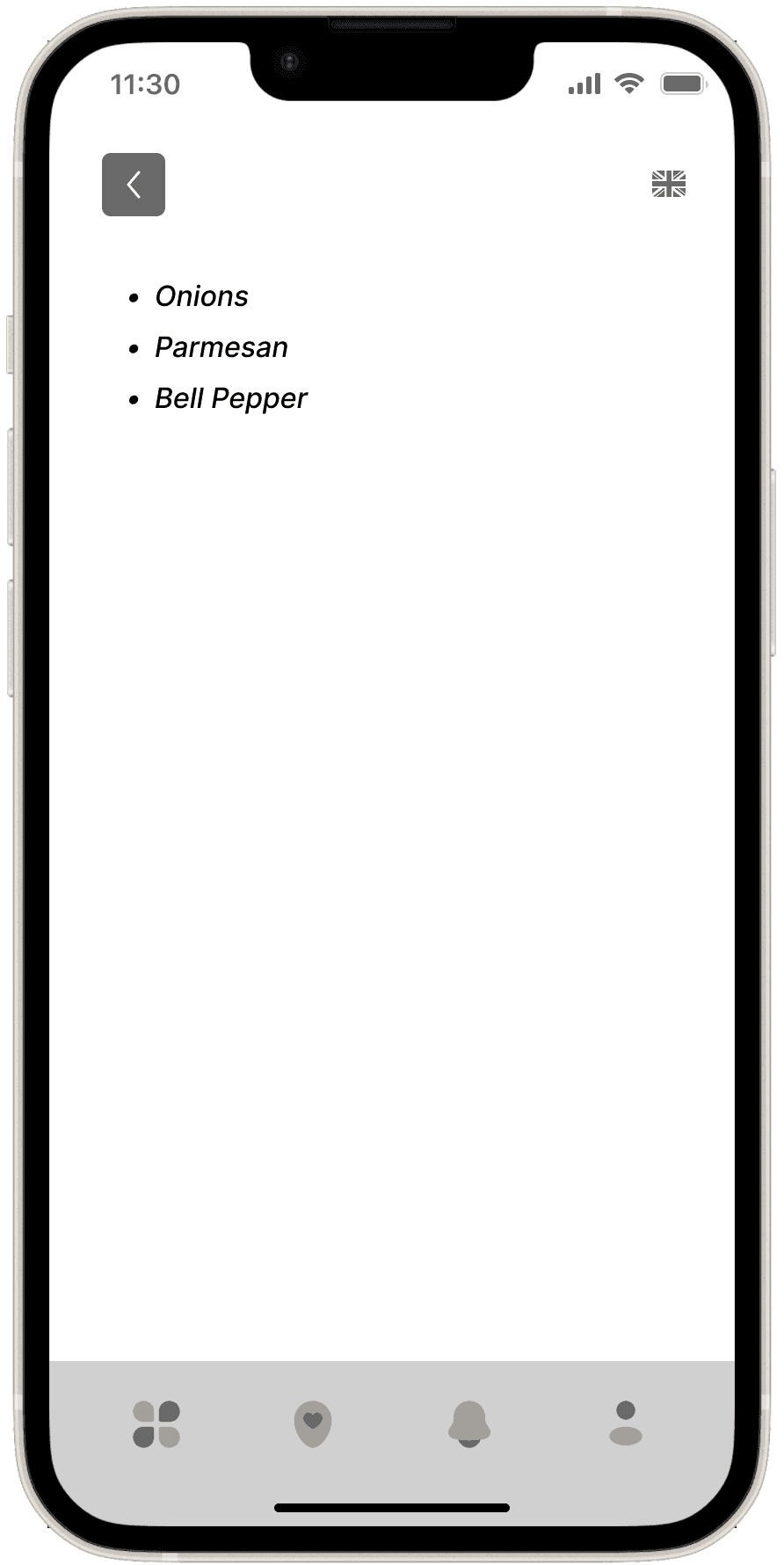
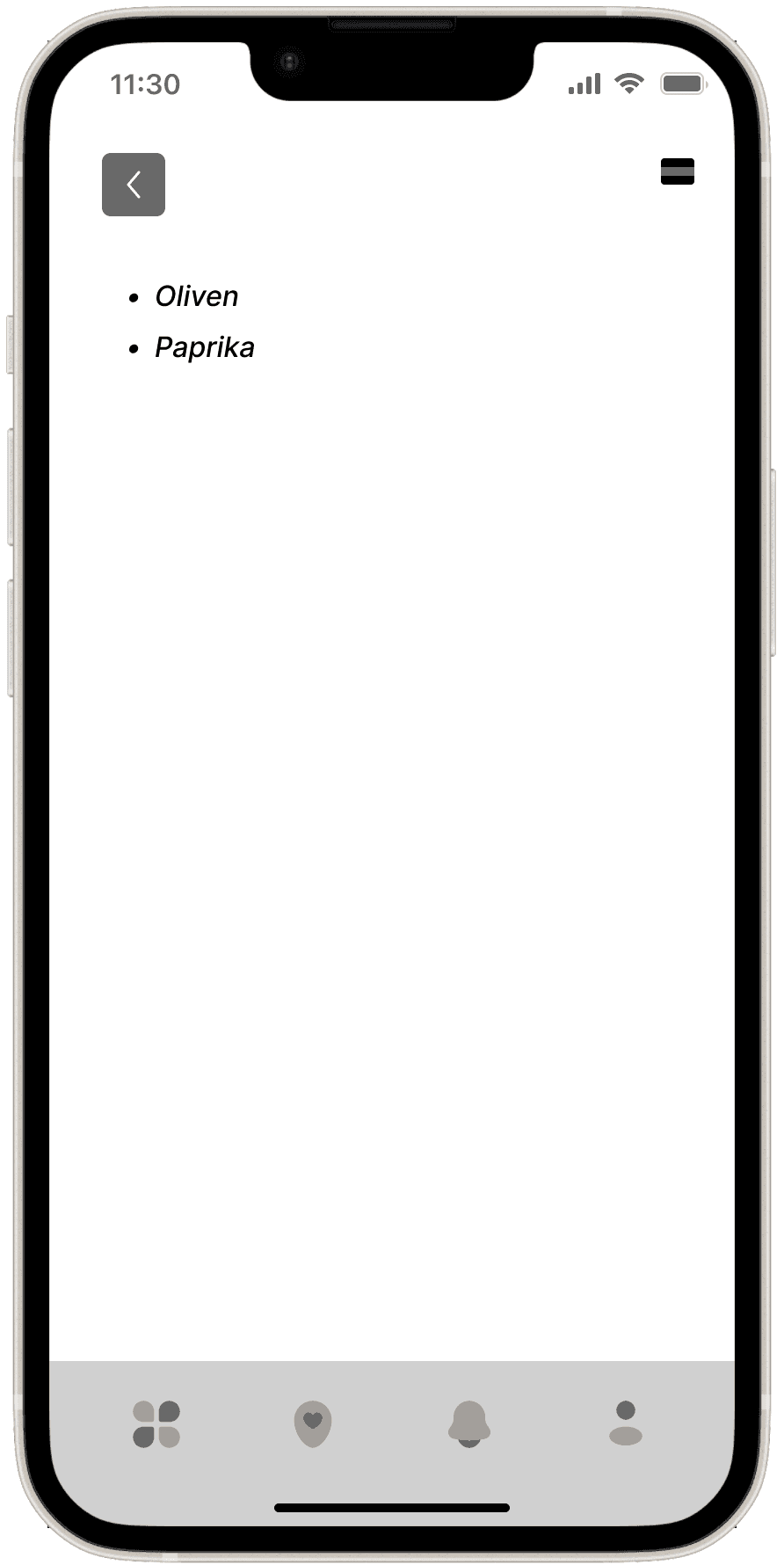
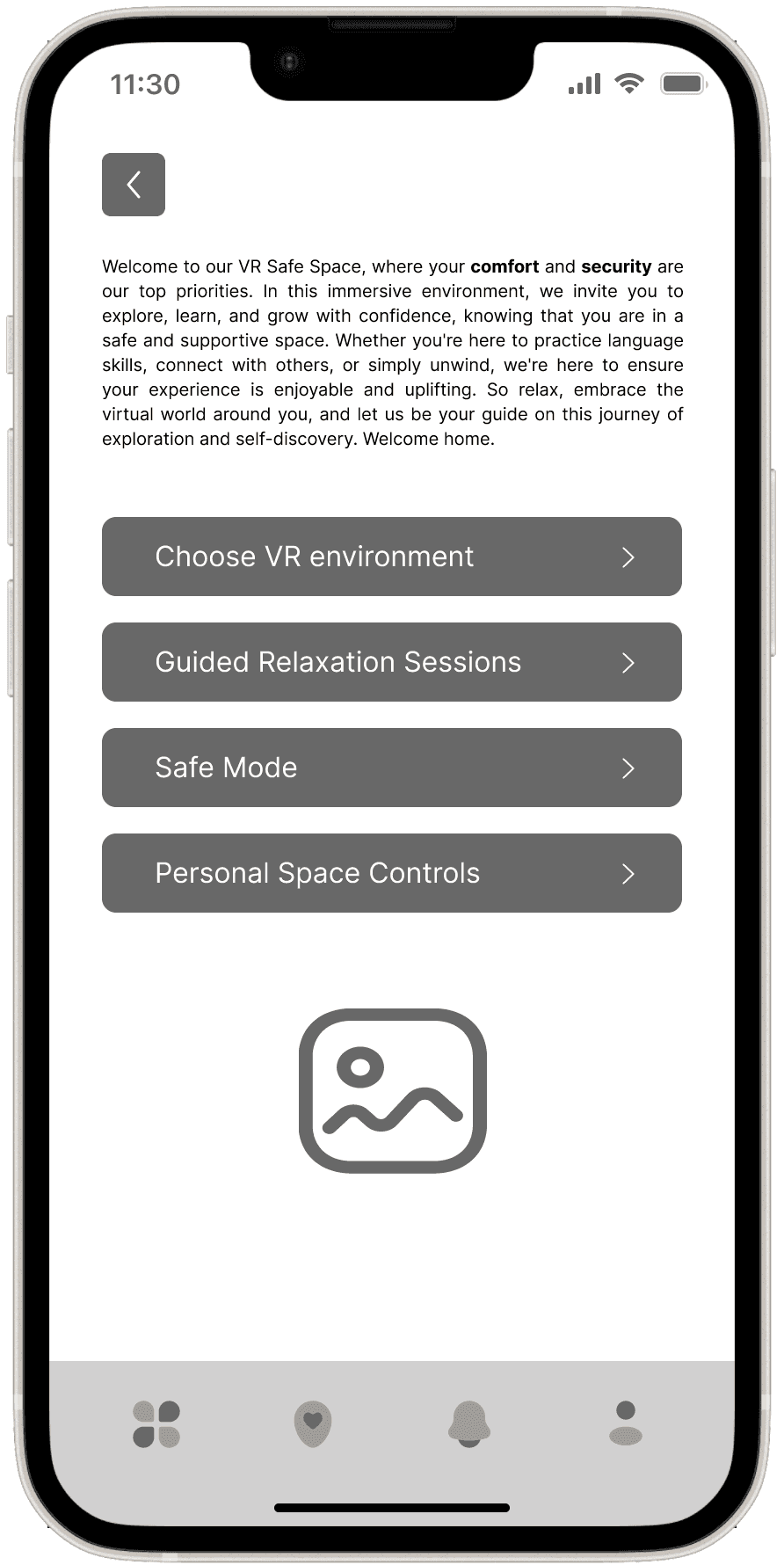
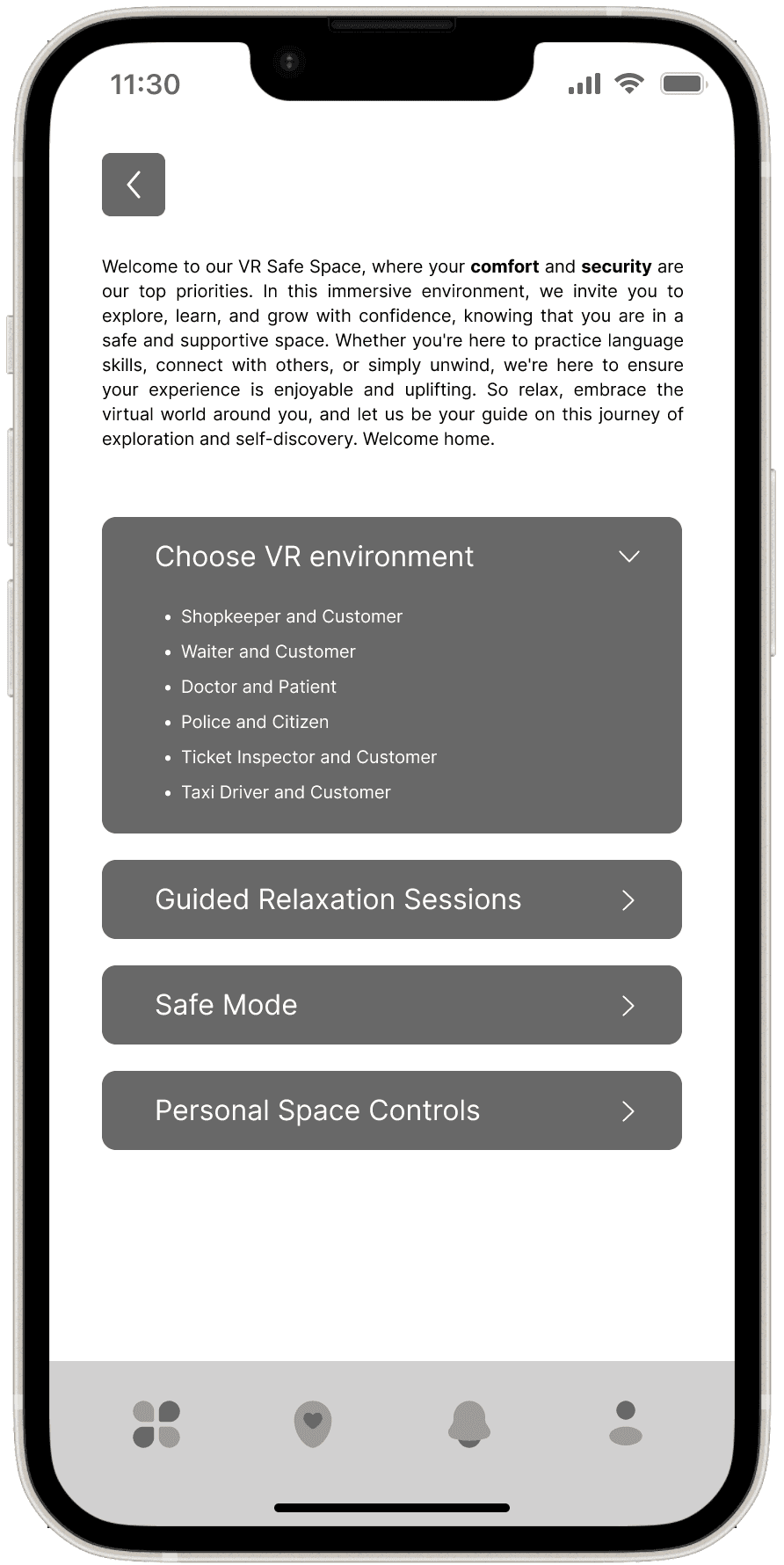
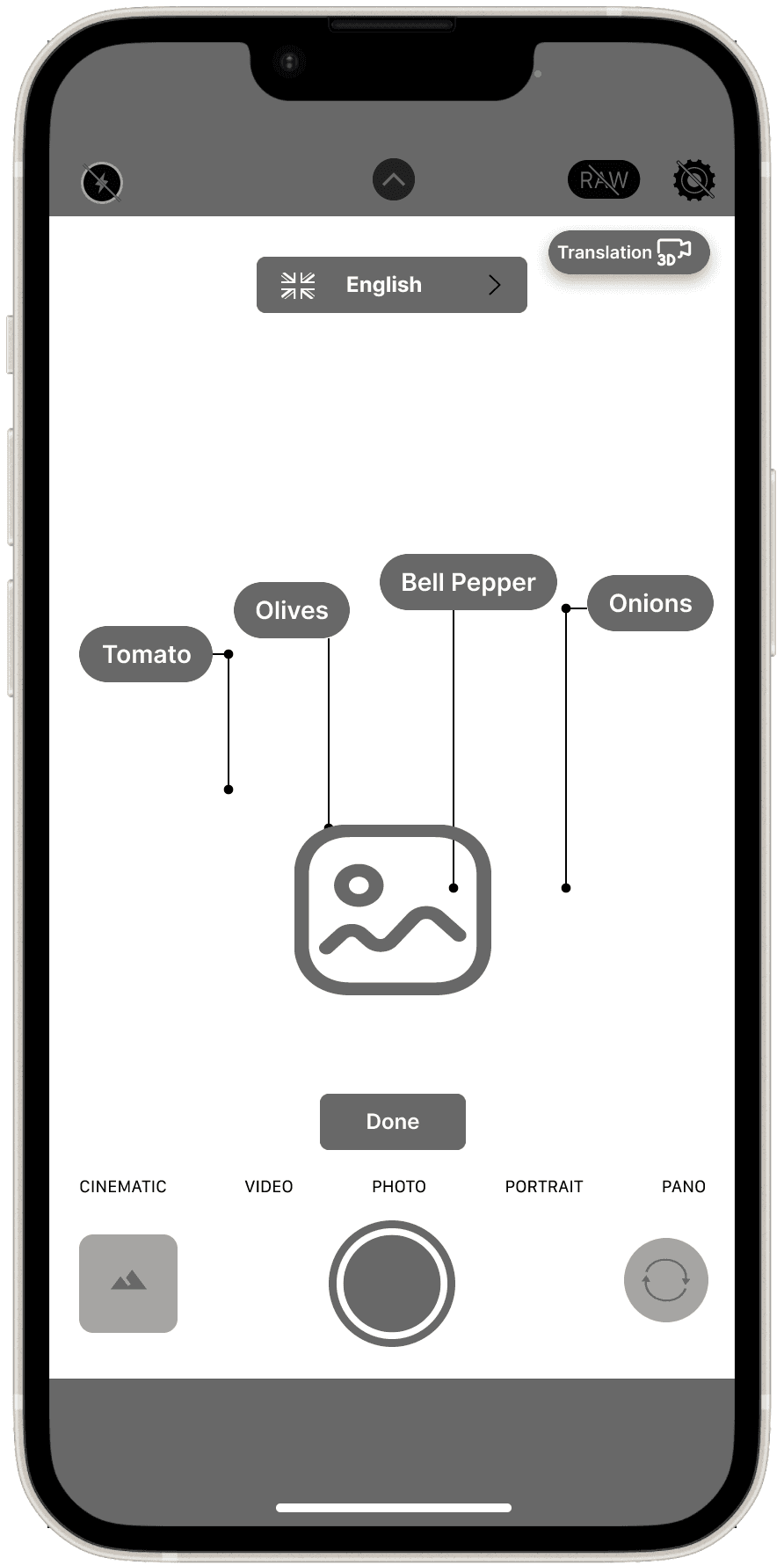
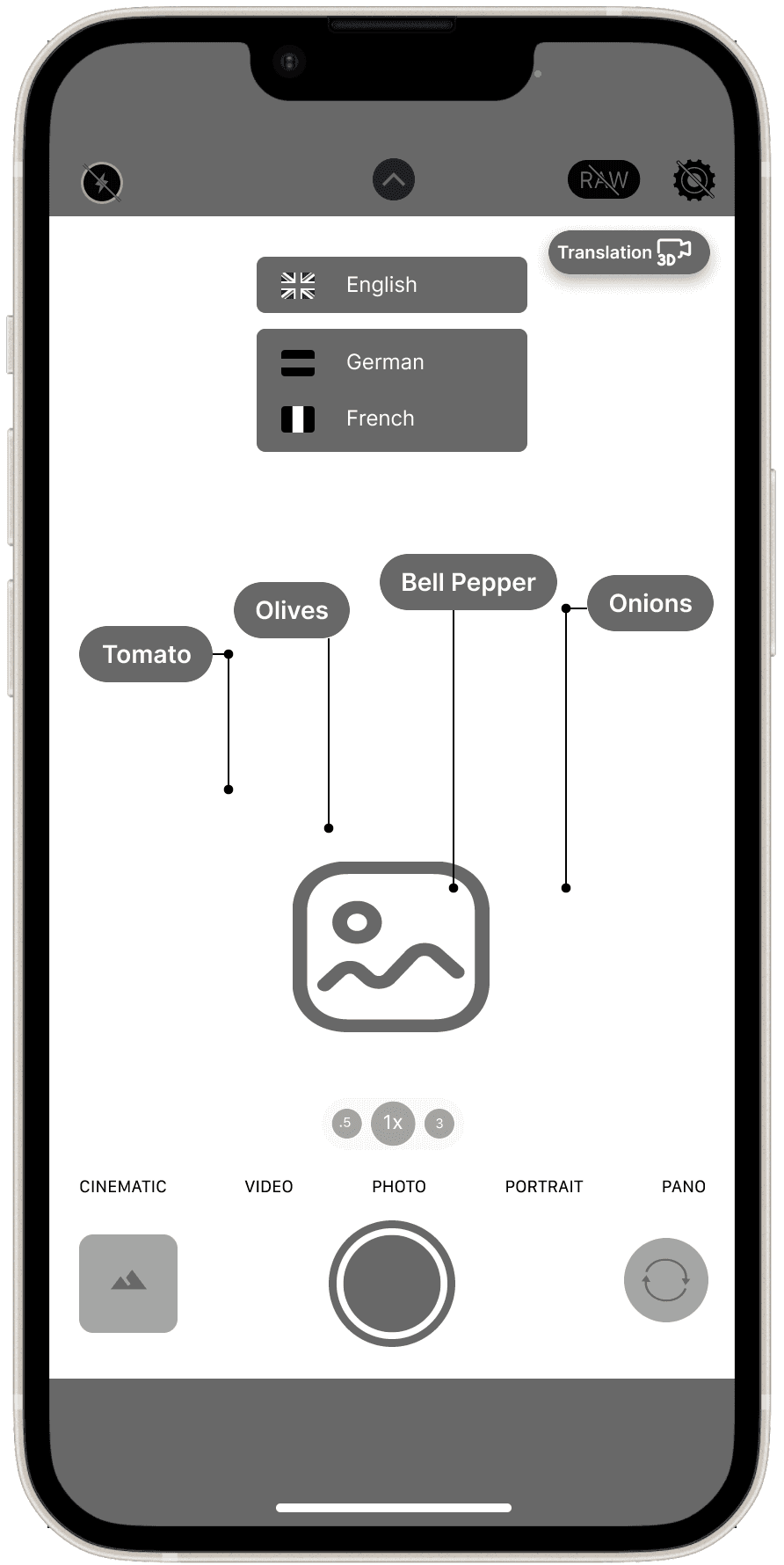
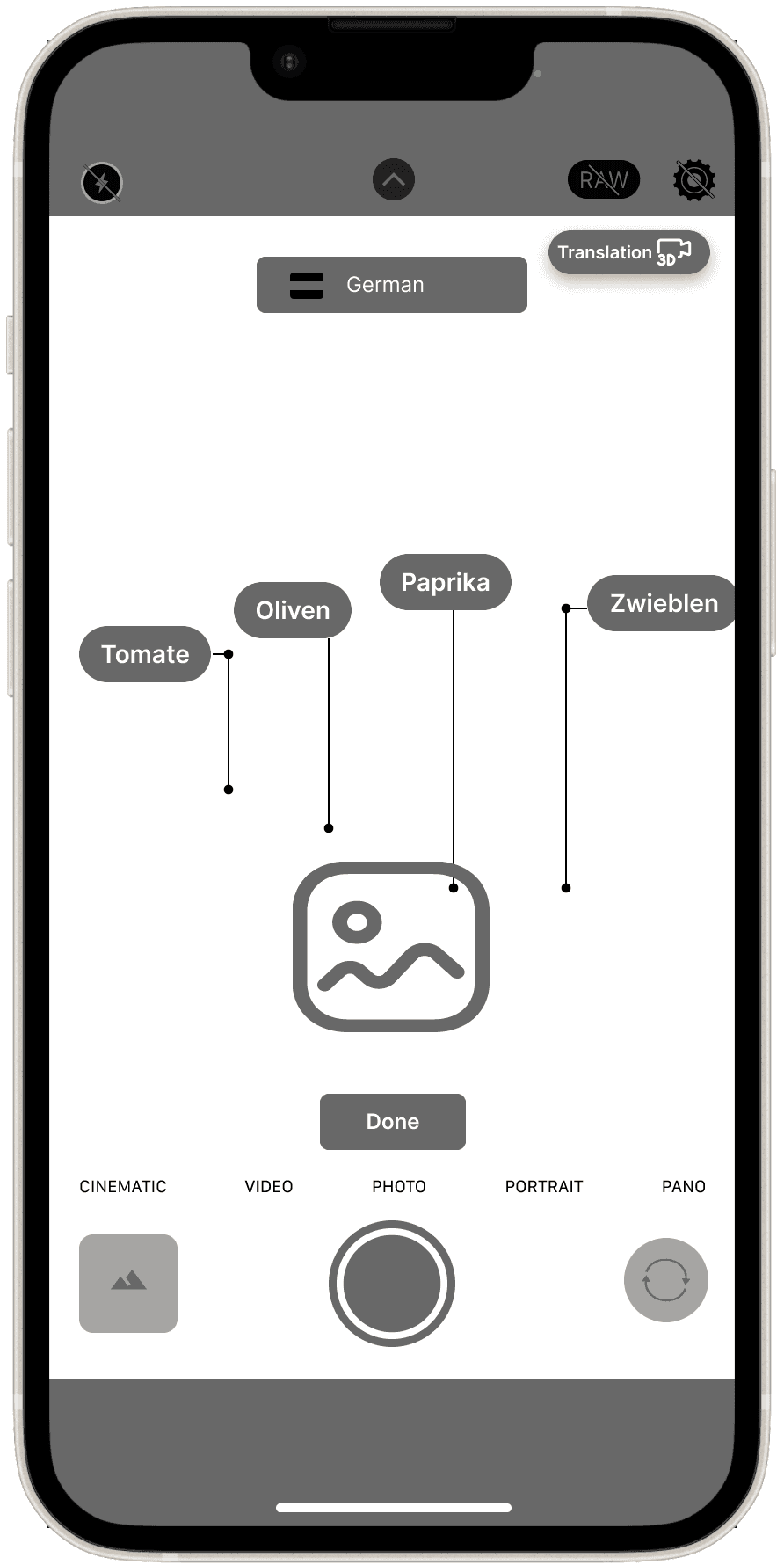
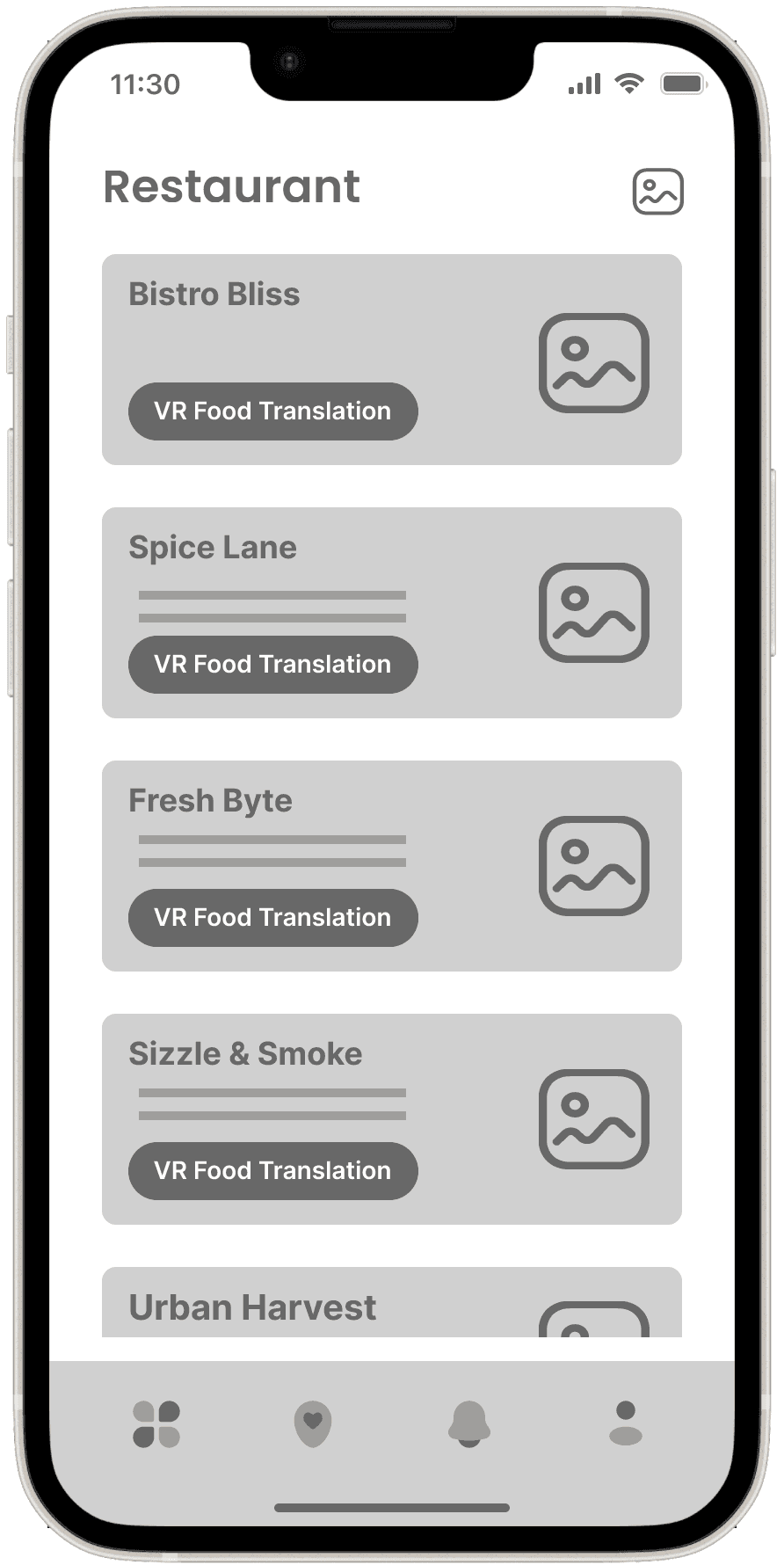
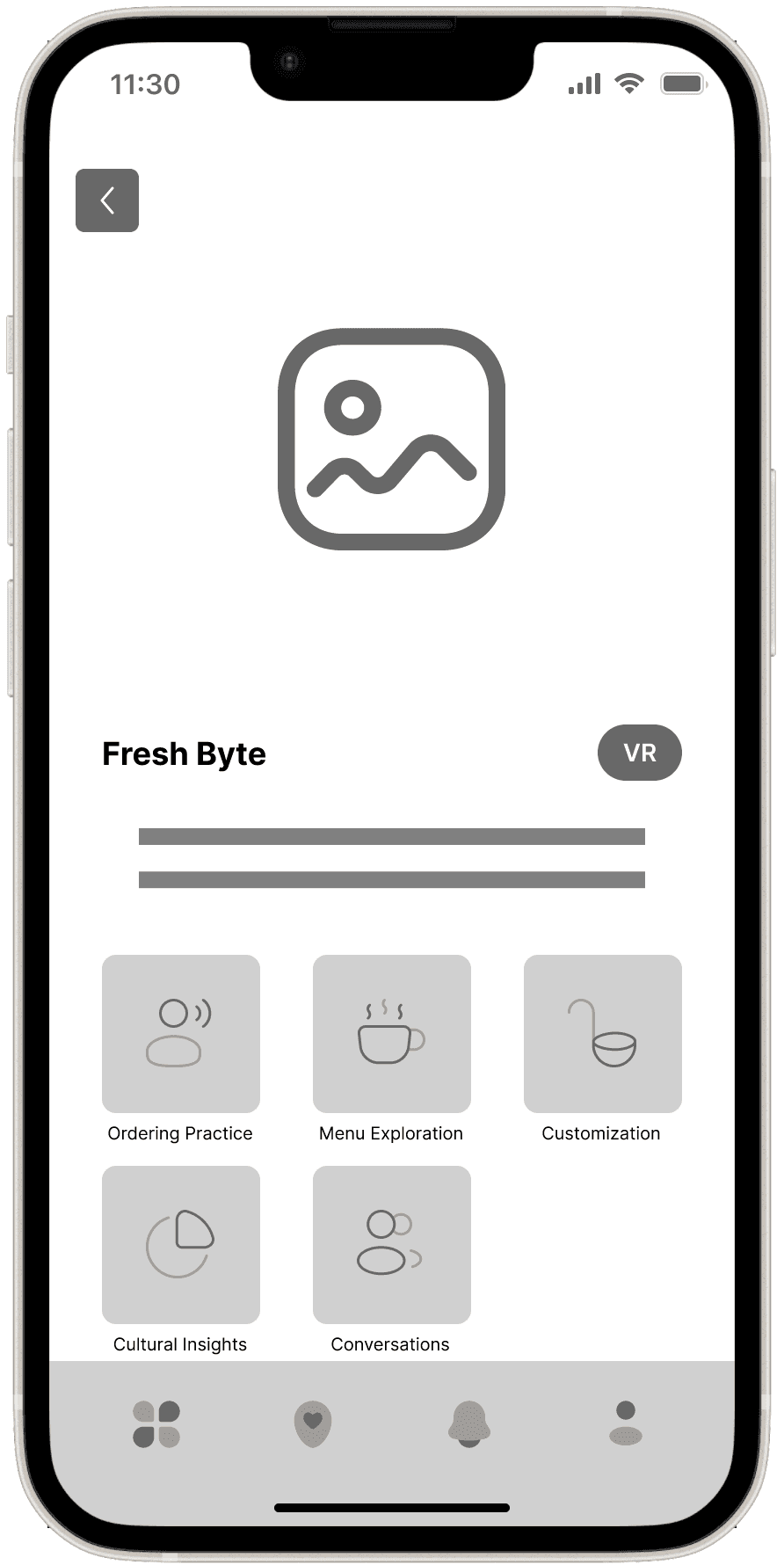
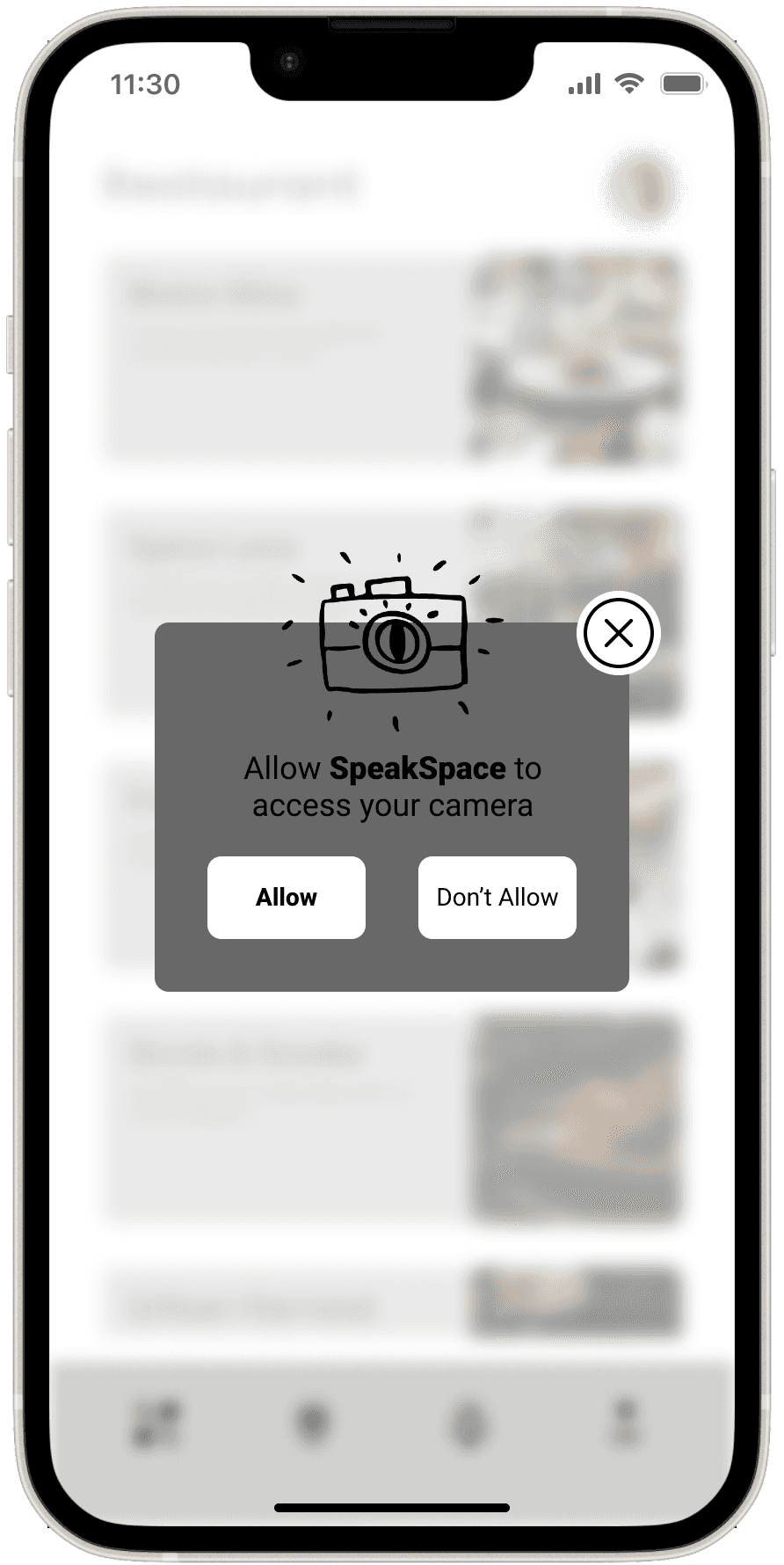
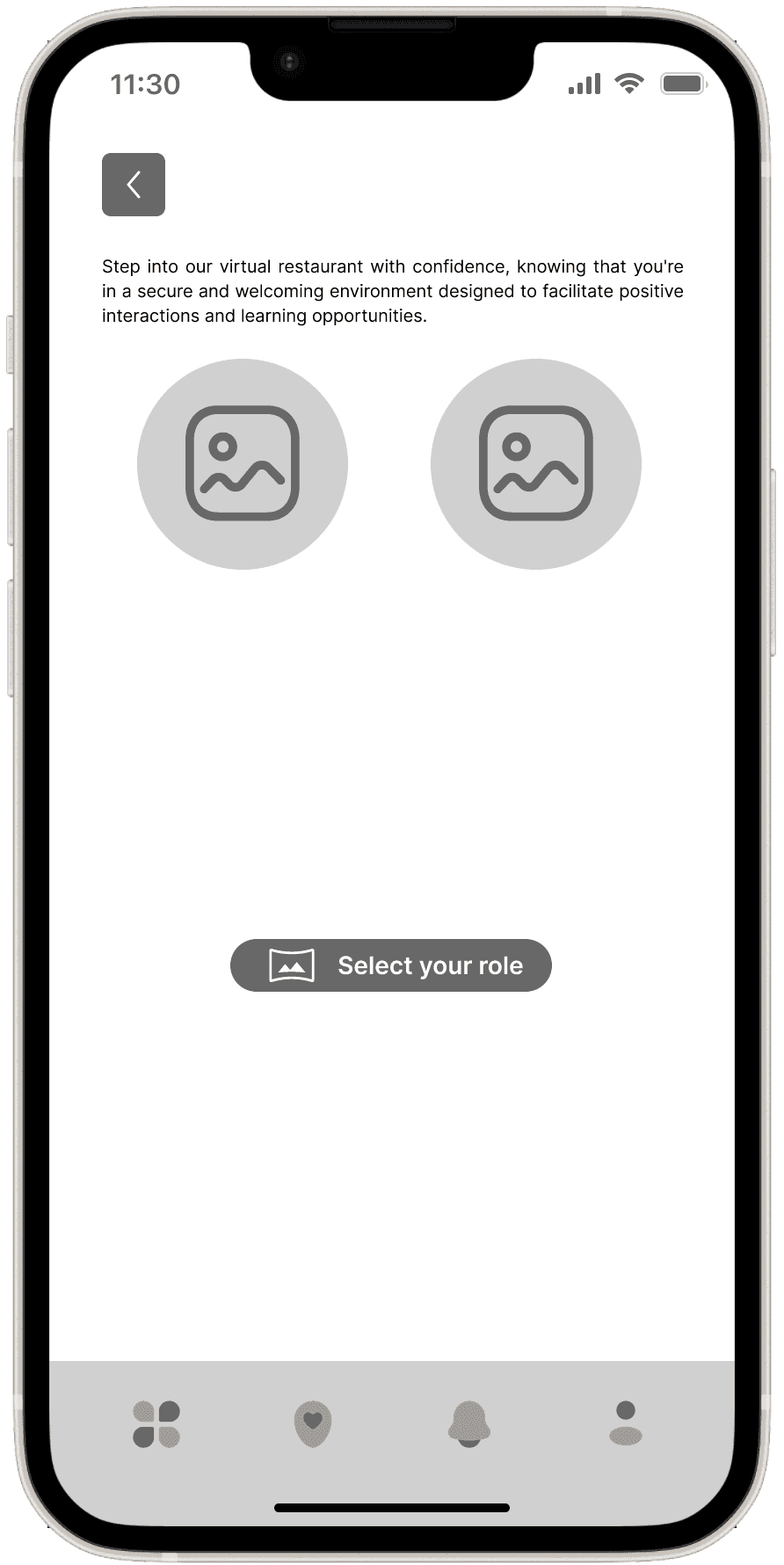
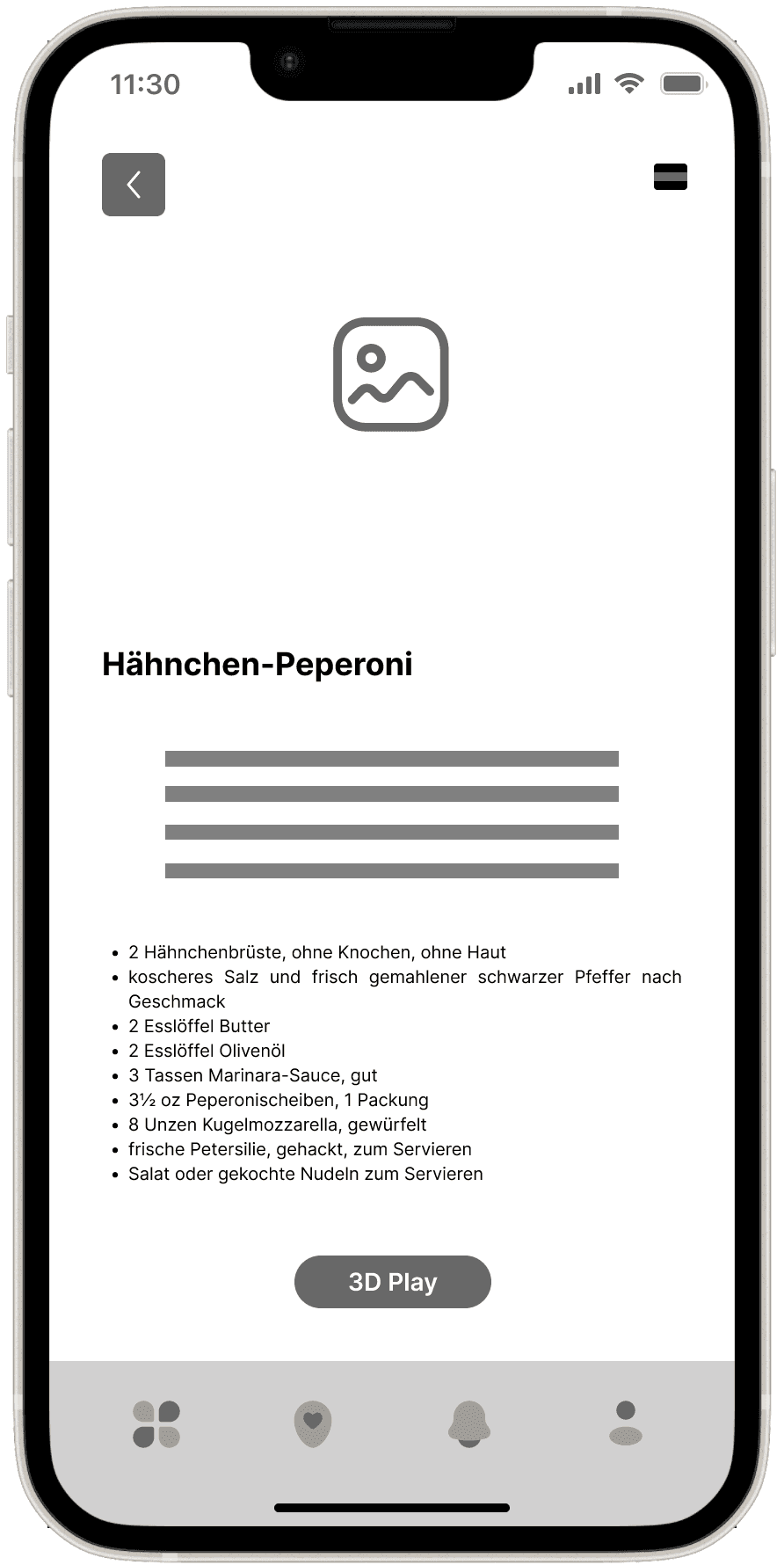
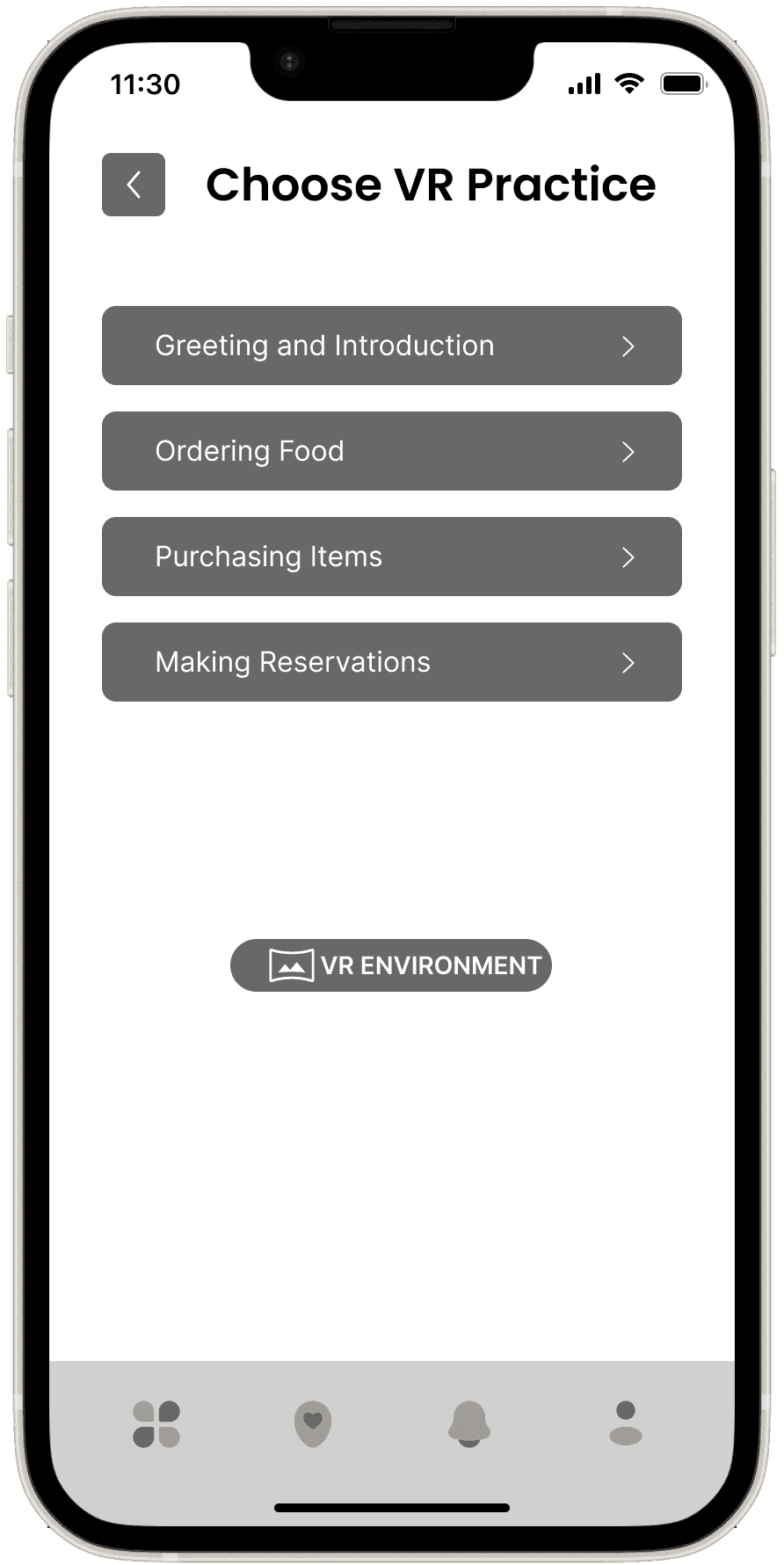
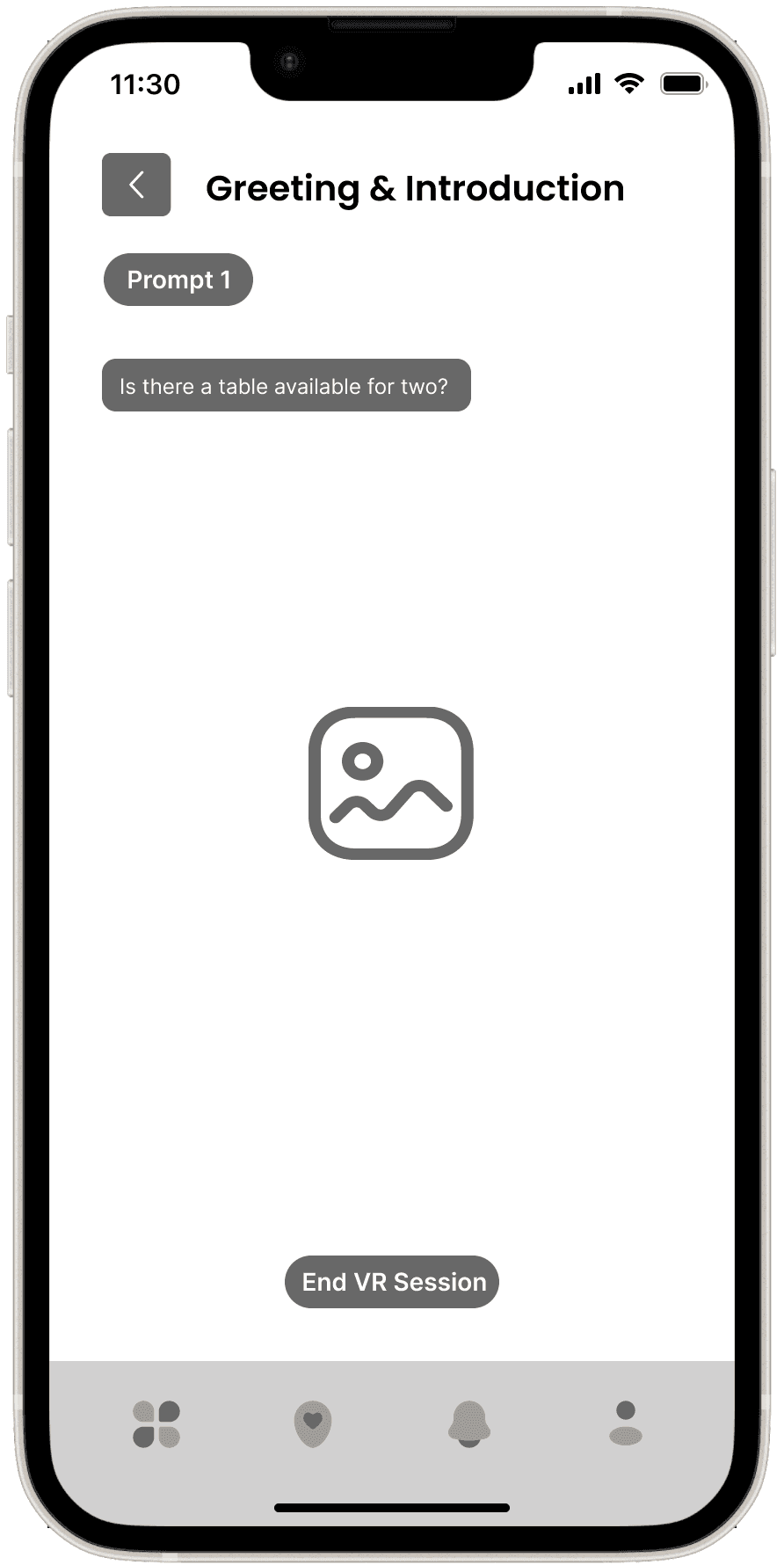
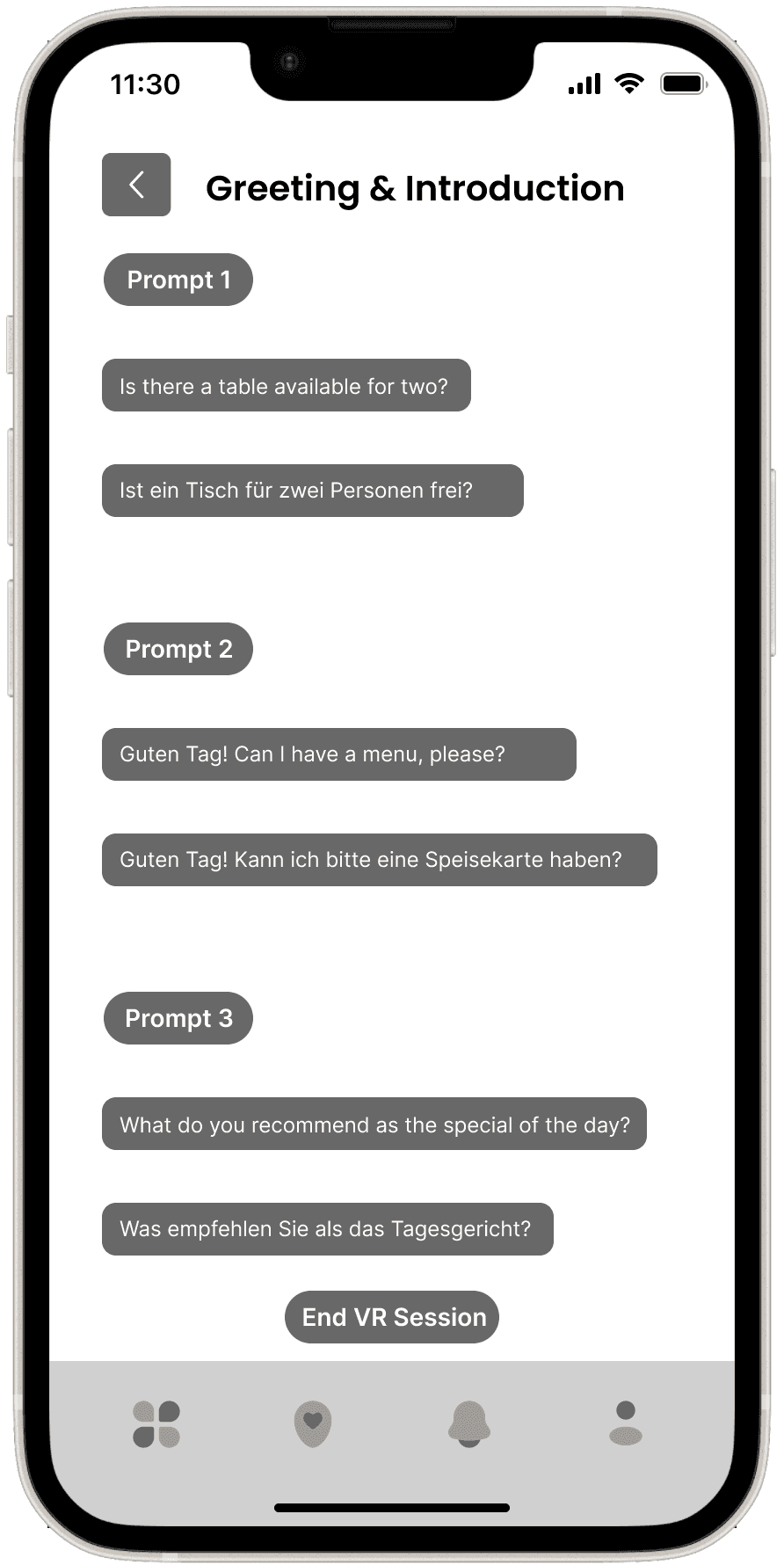
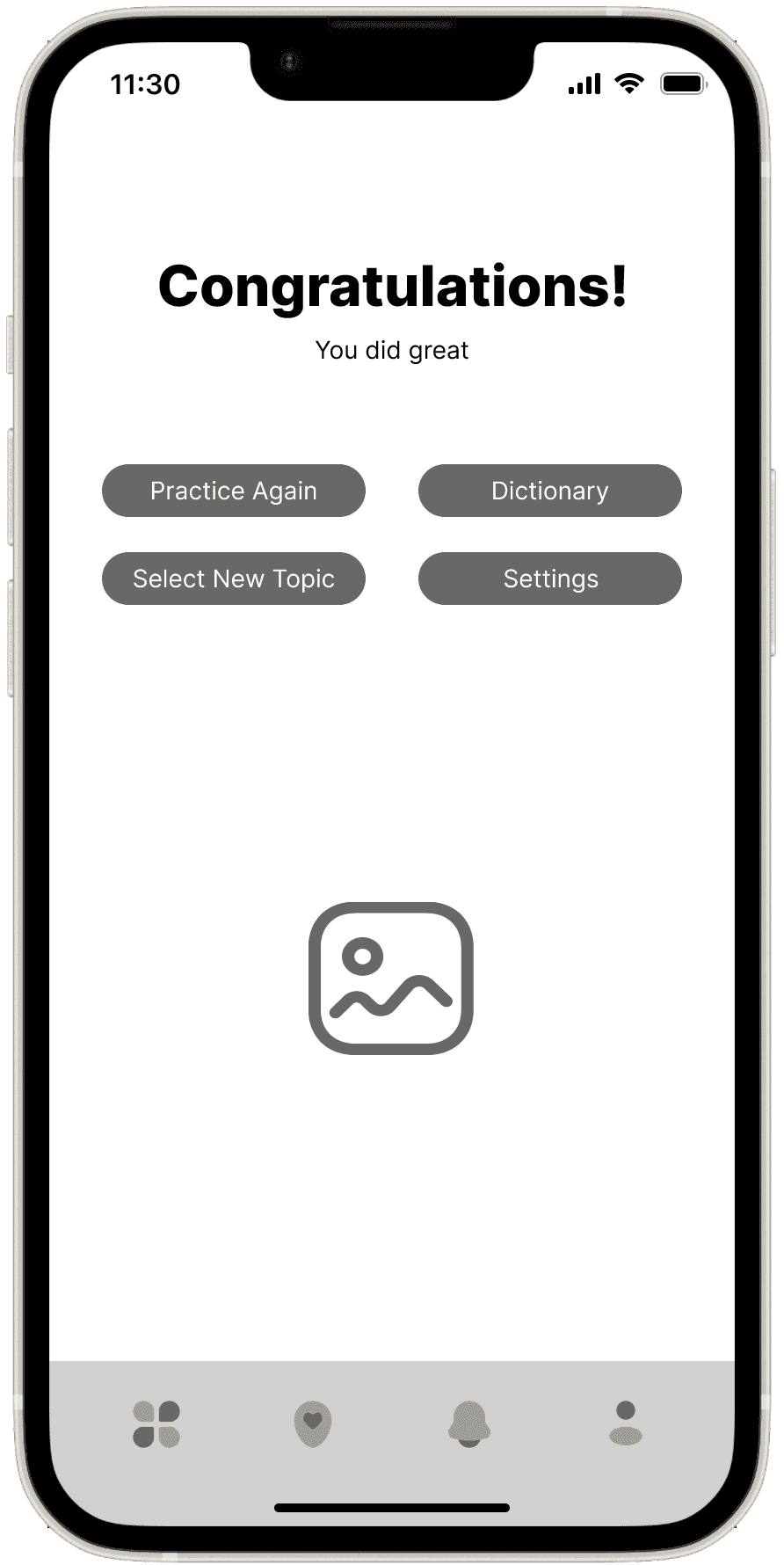
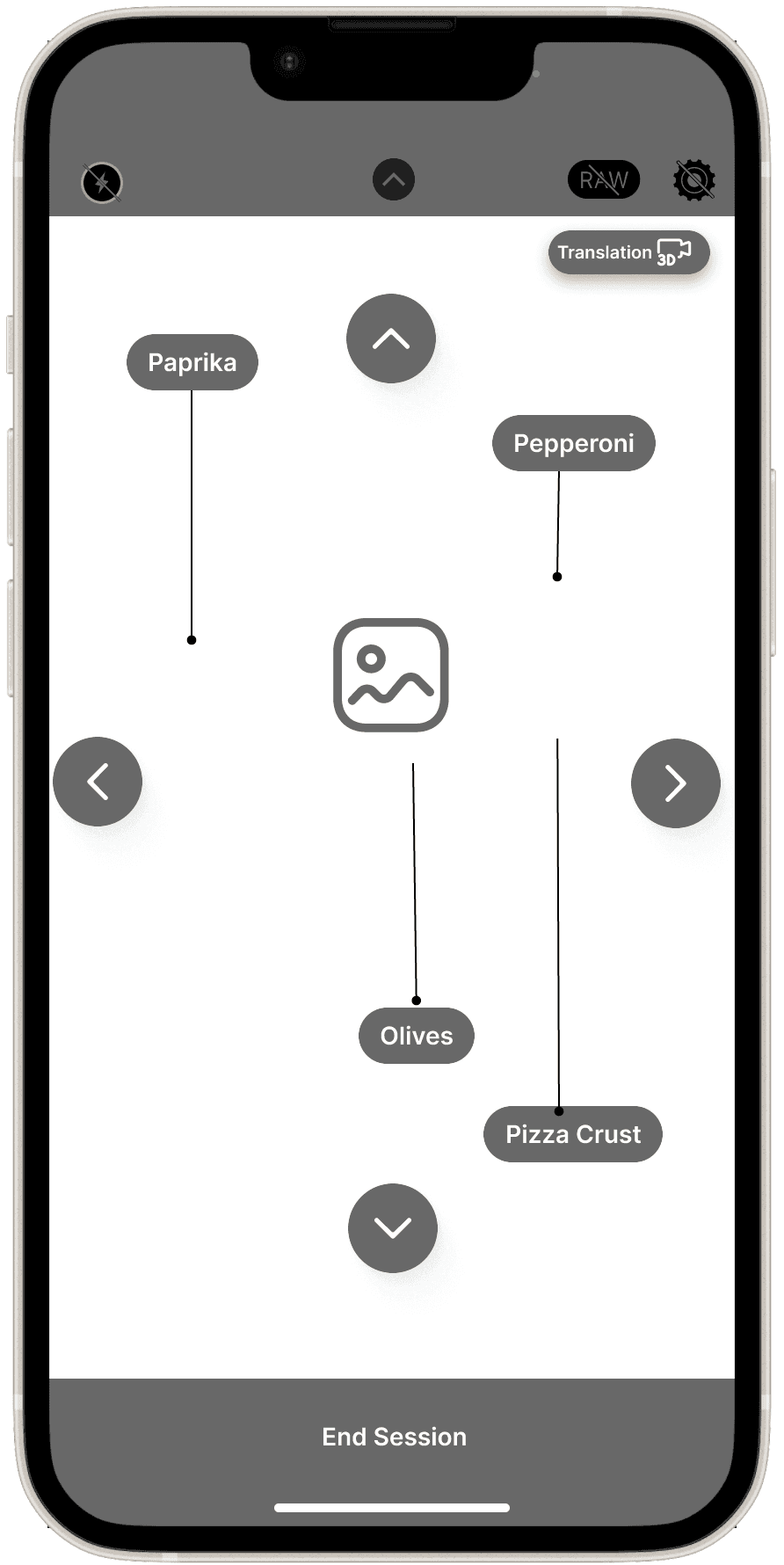
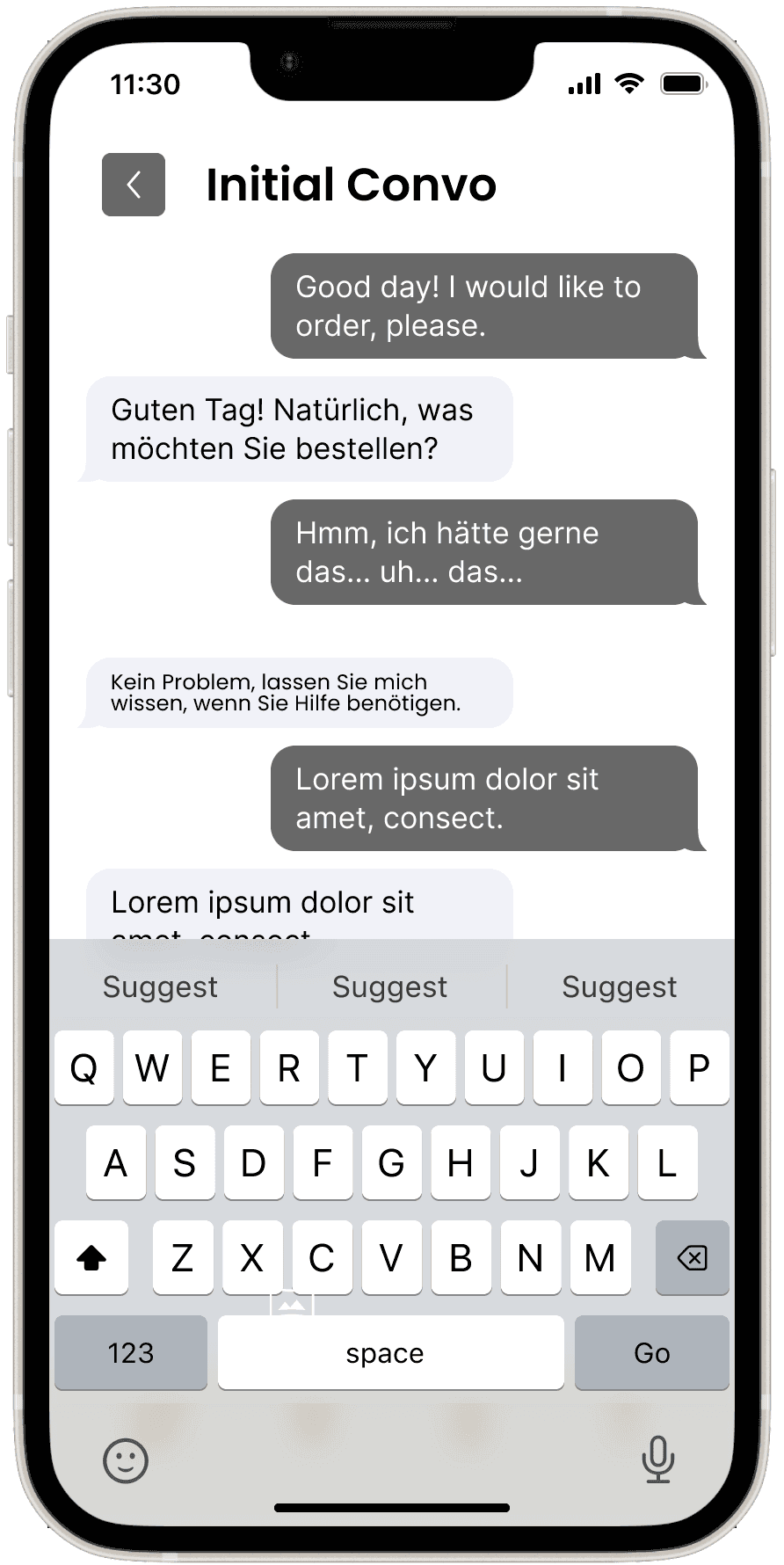
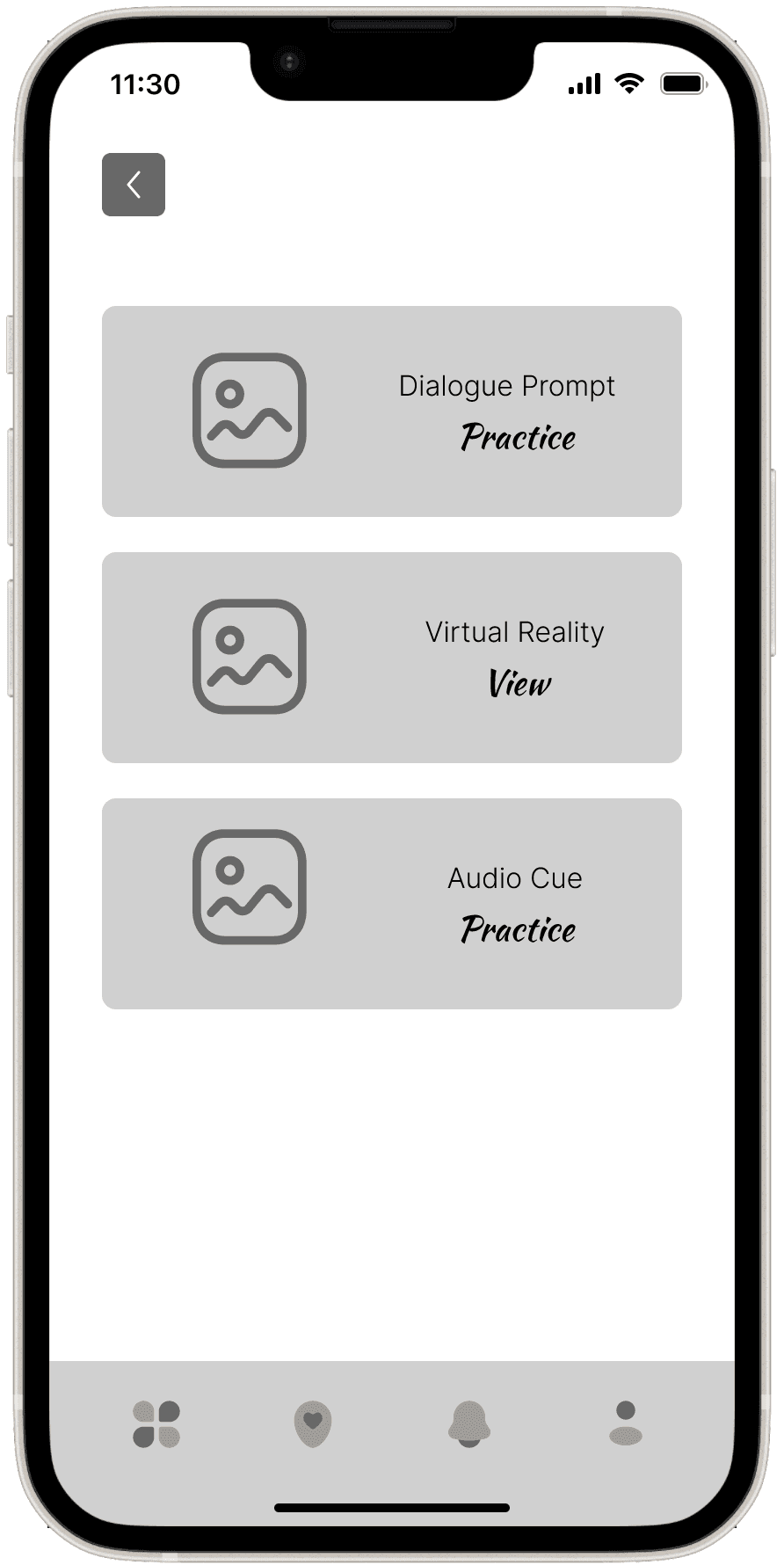
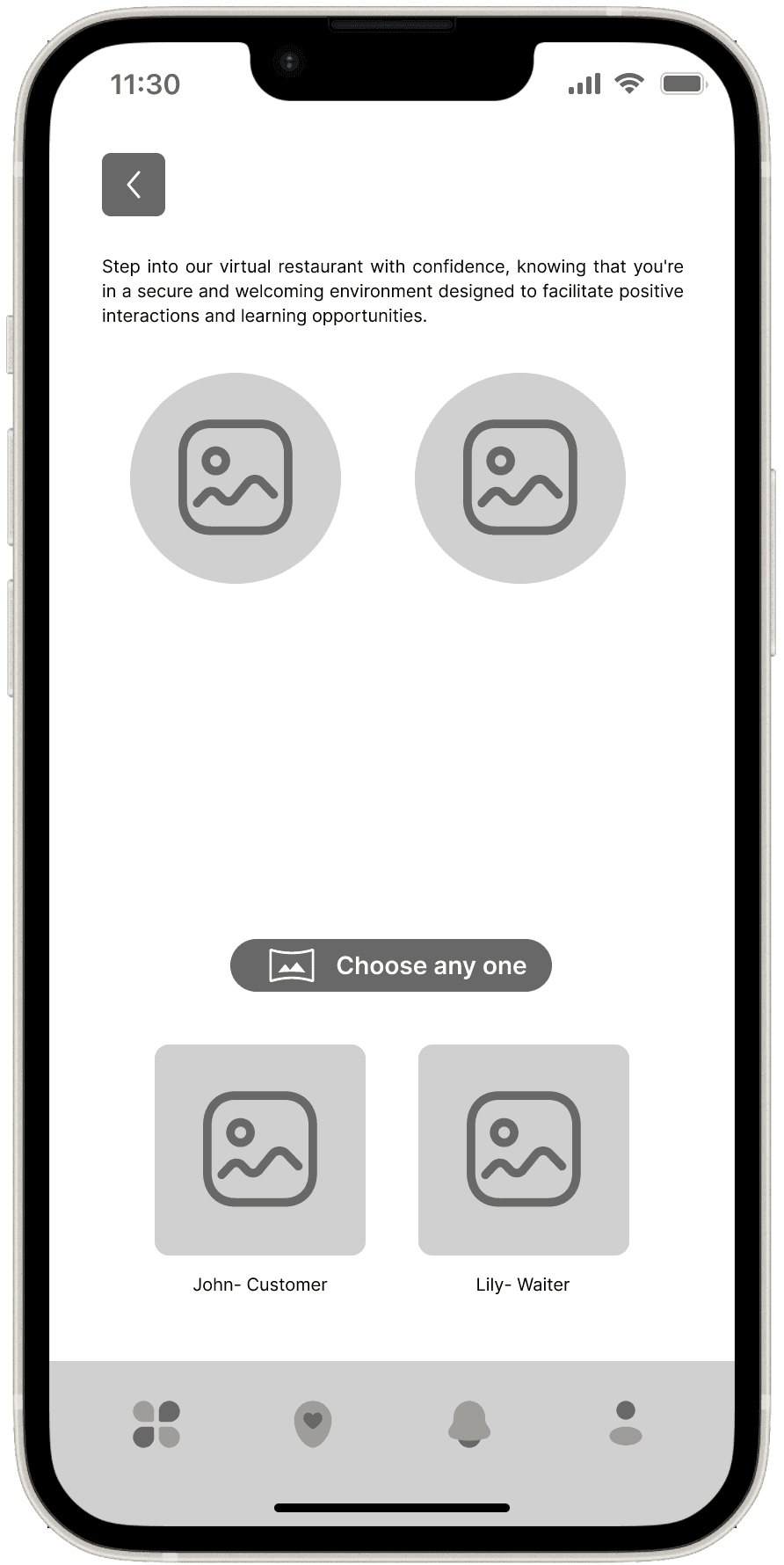
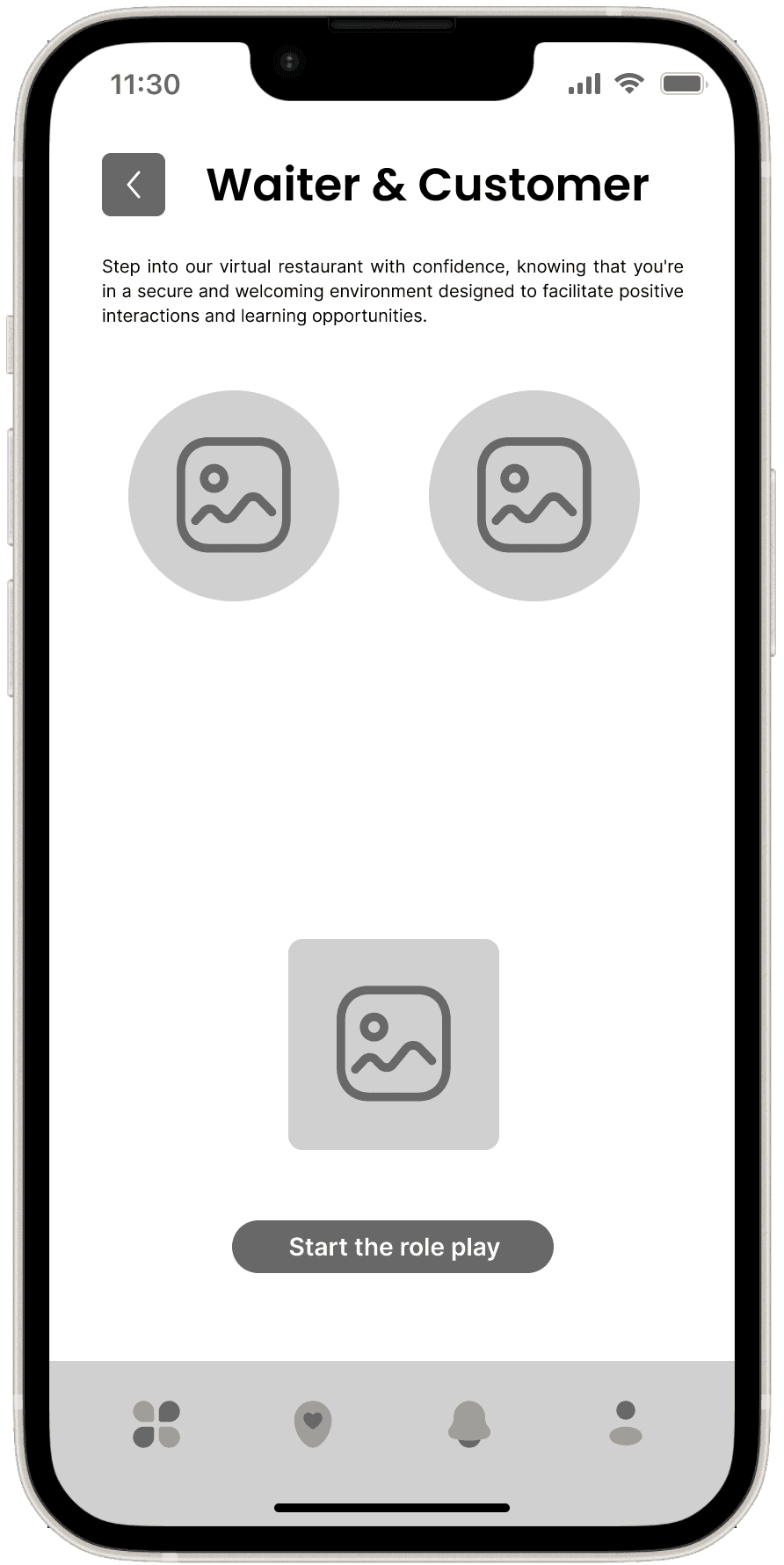
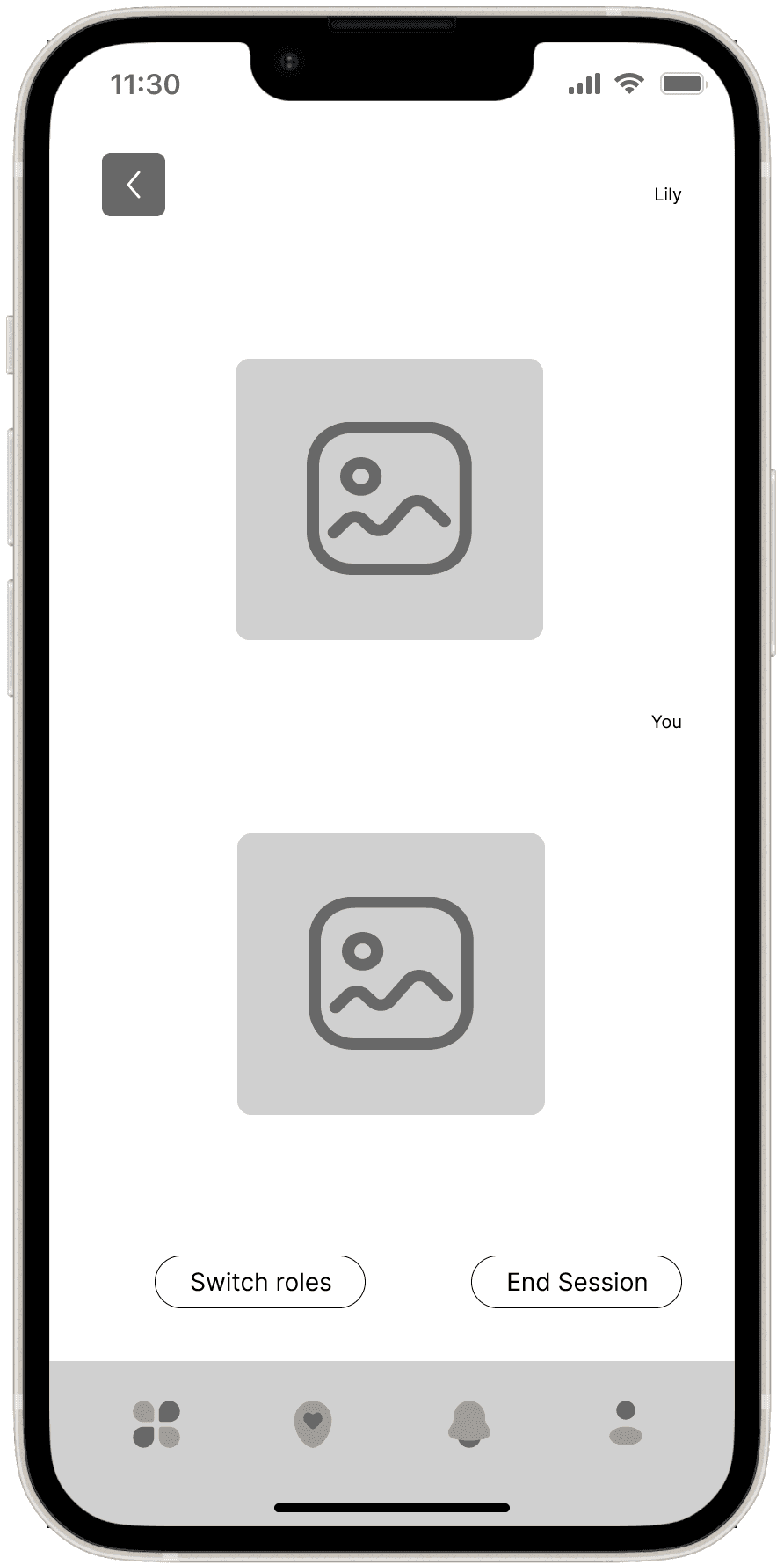
The Wireframes section for the VR Language Learning Application presents a low-fidelity visual outline of the app’s interface and key interactions. These wireframes focus on mapping out the core features and user flows, ensuring that the design supports seamless language practice in an immersive environment.
Key screens designed include the following: VR Translation Screen, Language Selection Screen, Interactive Scenario Menu, Practice Session Screen, and 3D Overlay. These initial wireframes serve as the foundation for further iterations and user testing.

UI Design
UI Library Components
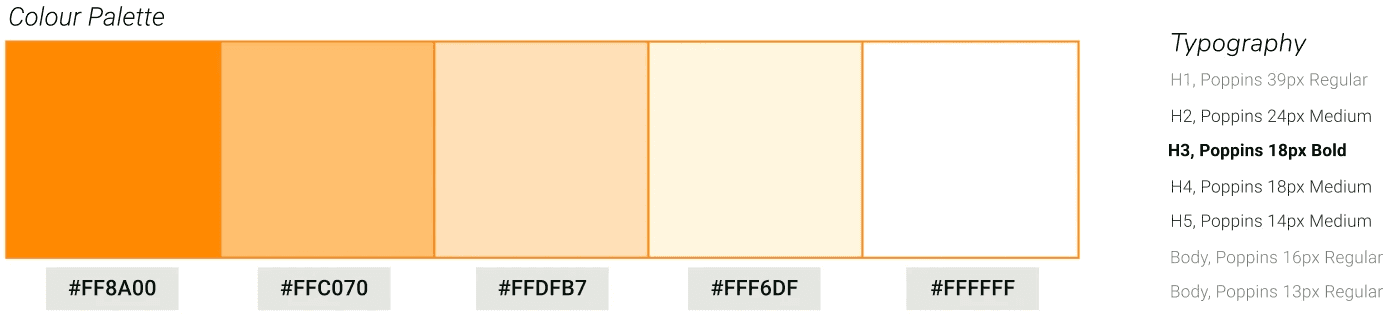
The UI Library for VR Application is a collection of reusable, standardized design elements that ensure consistency and efficiency throughout the app. It includes a set of buttons, icons, input fields, modals, and navigation bars designed with a minimalist aesthetic to promote user focus and ease of use. Typography, colour palette are the main elements I’ve outlined at this stage.
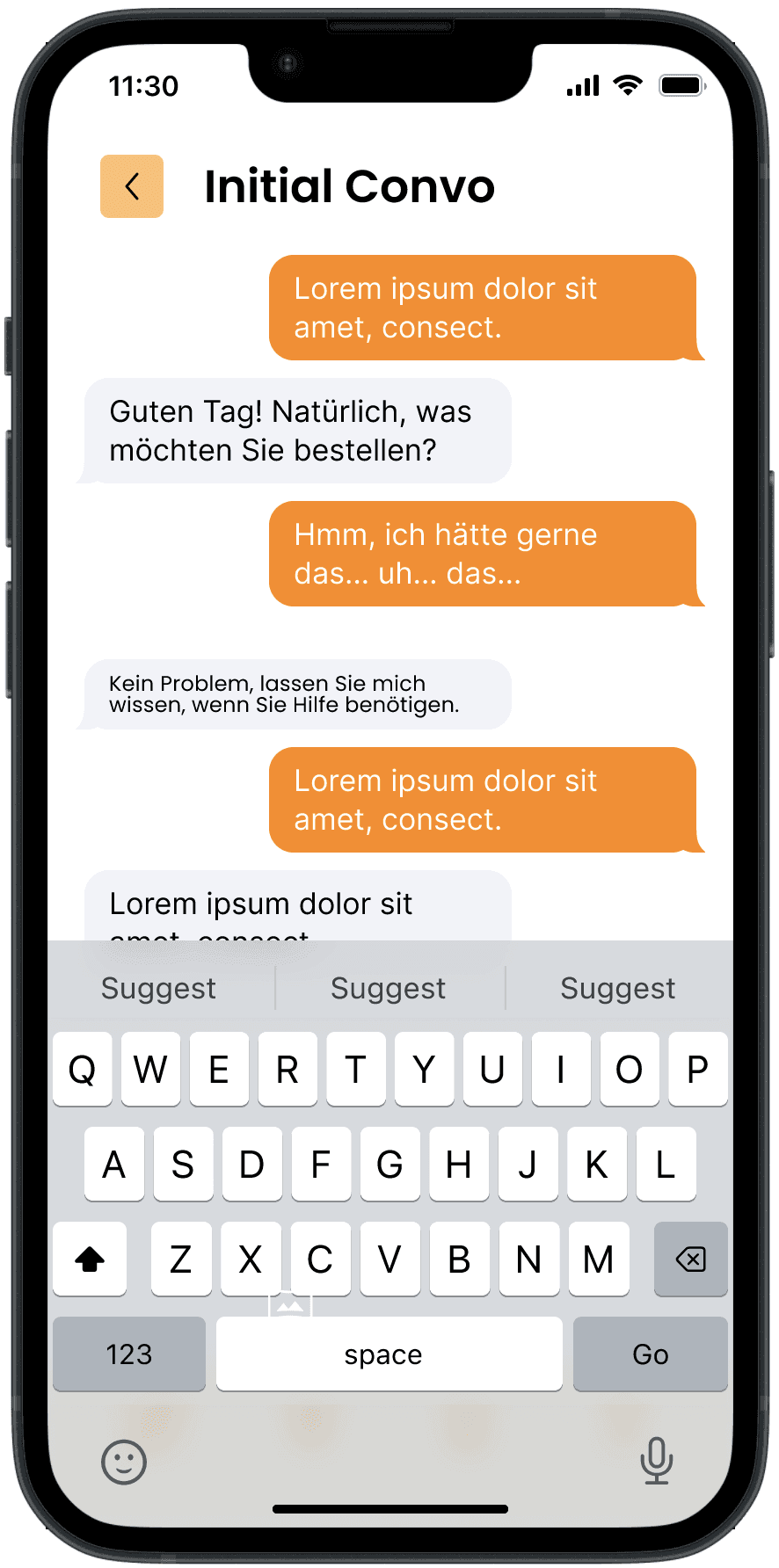
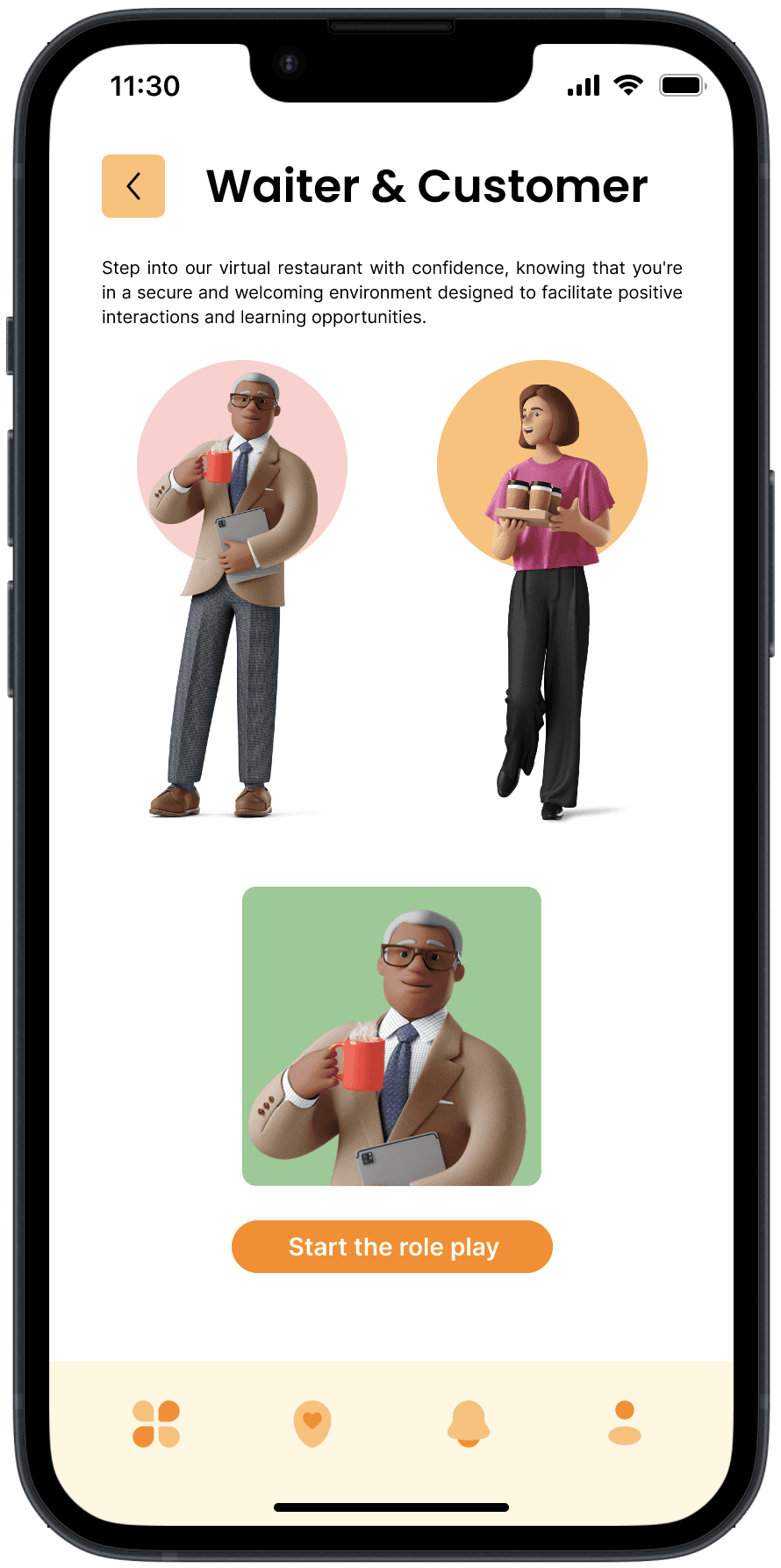
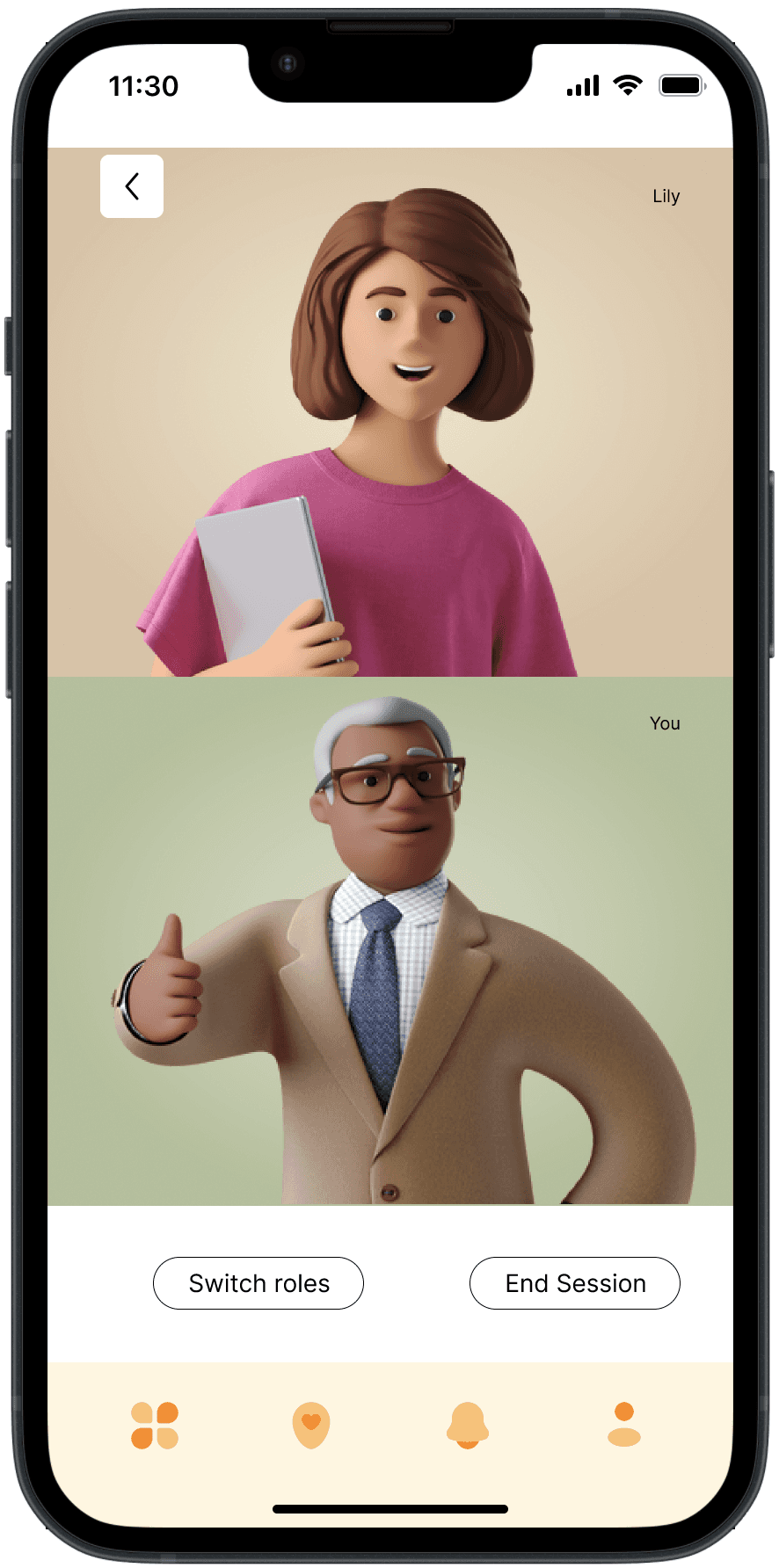
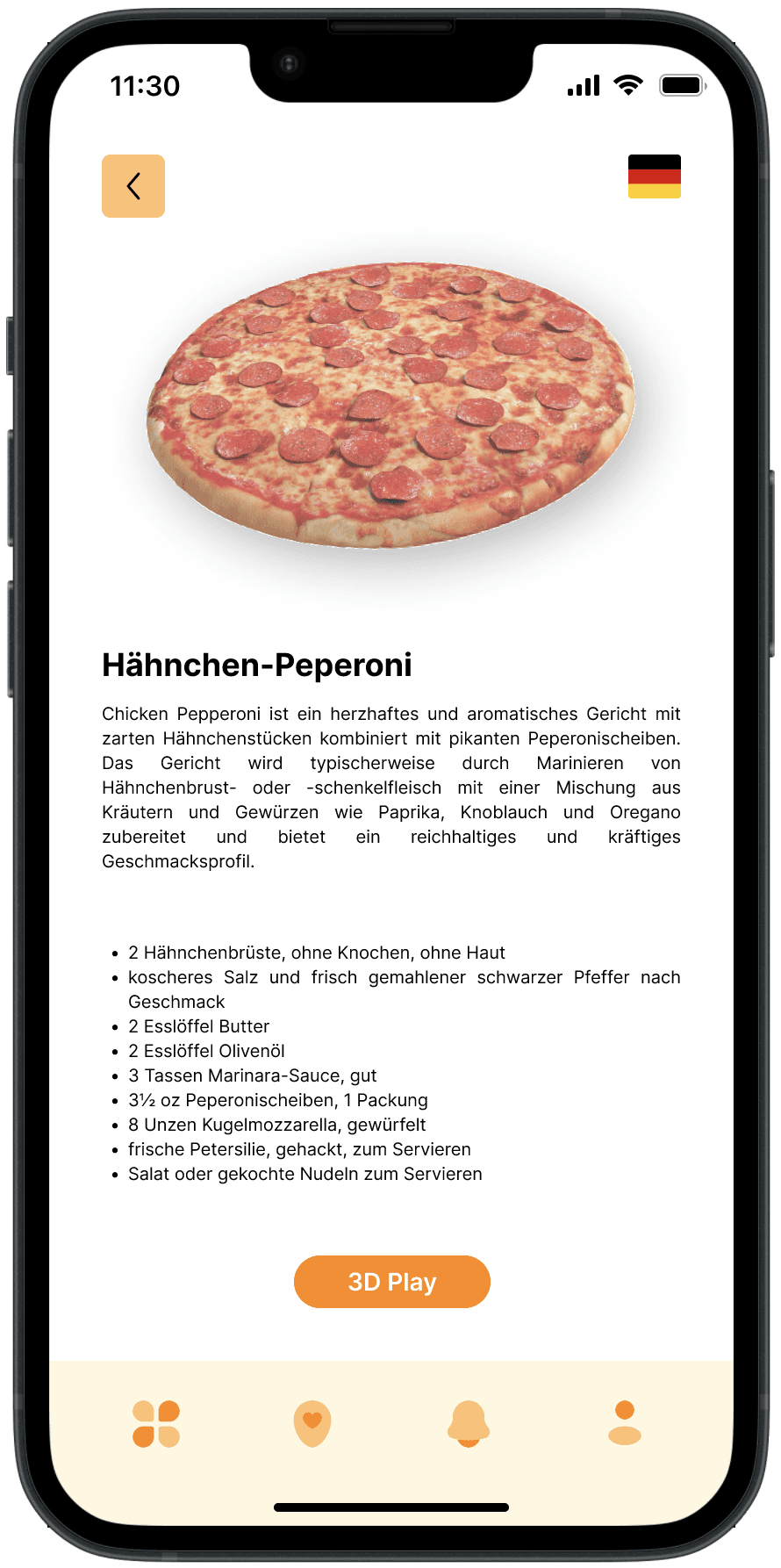
High-Fidelity Screens
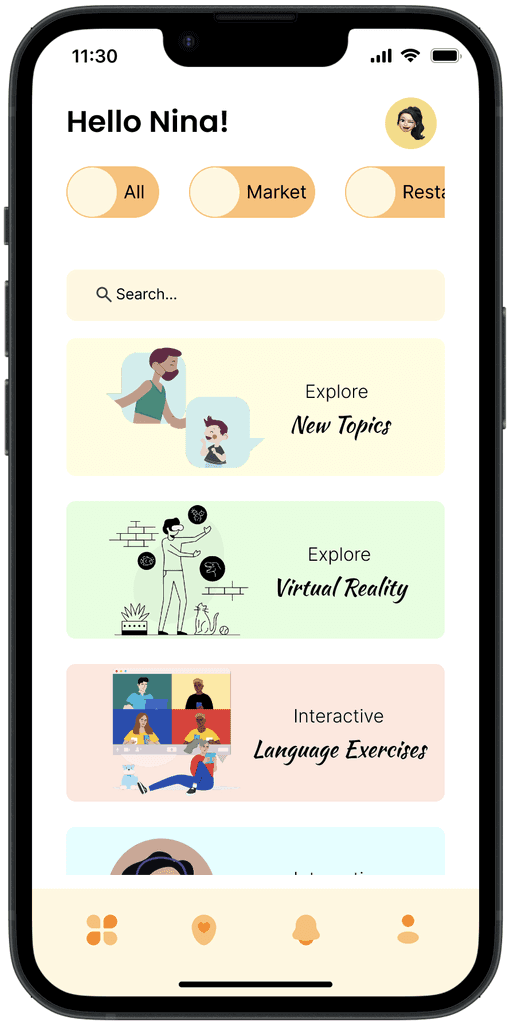
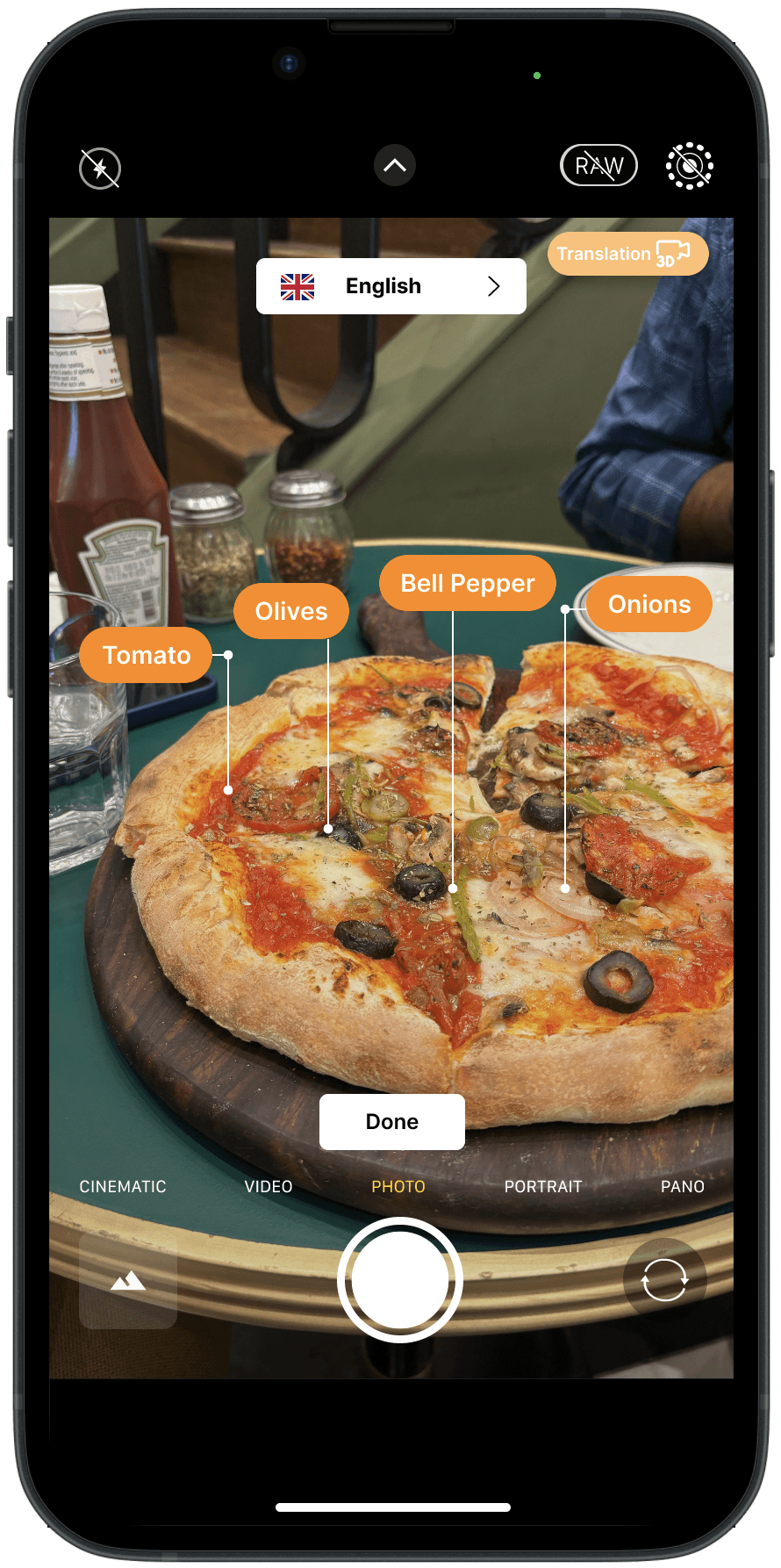
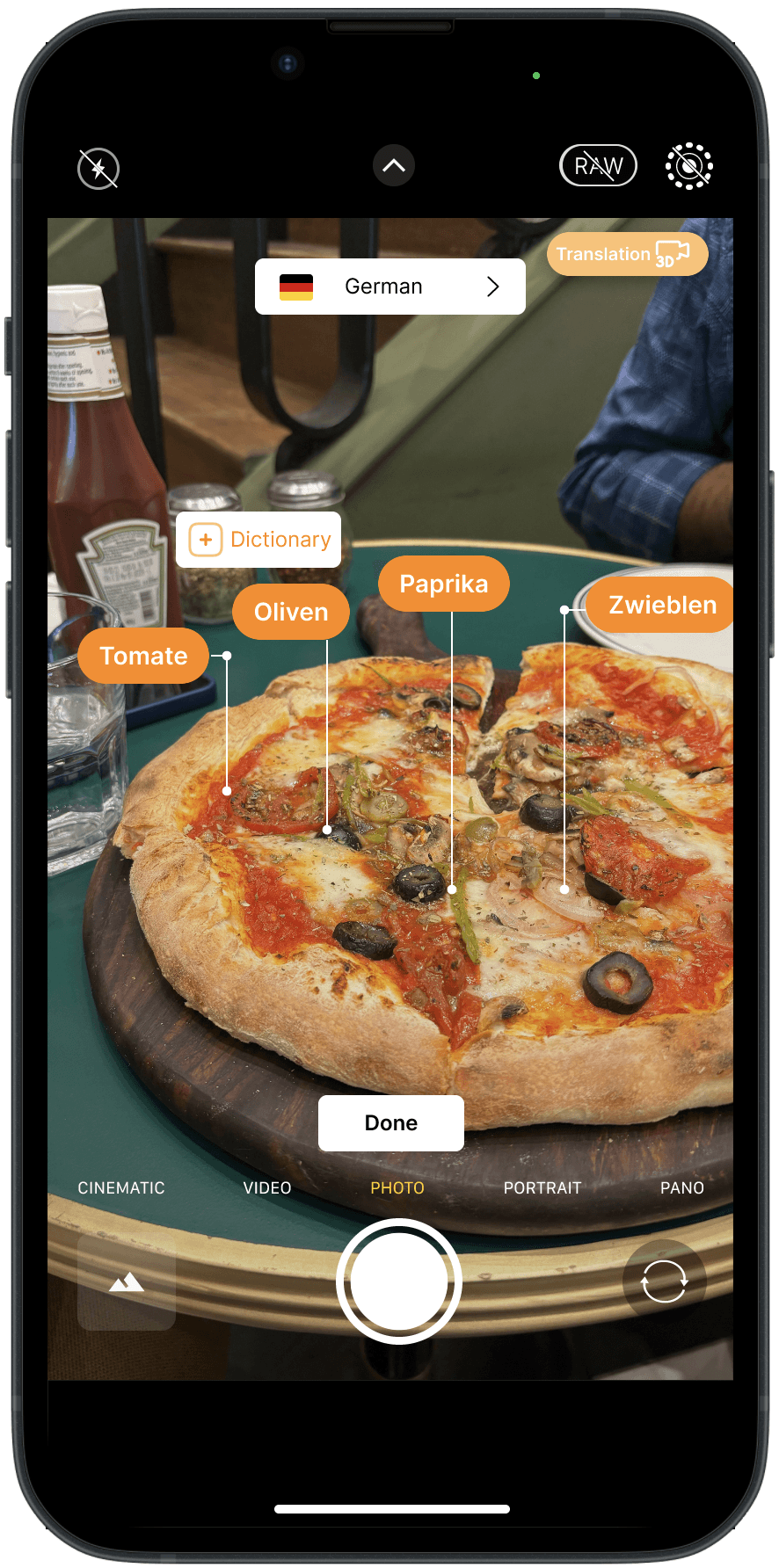
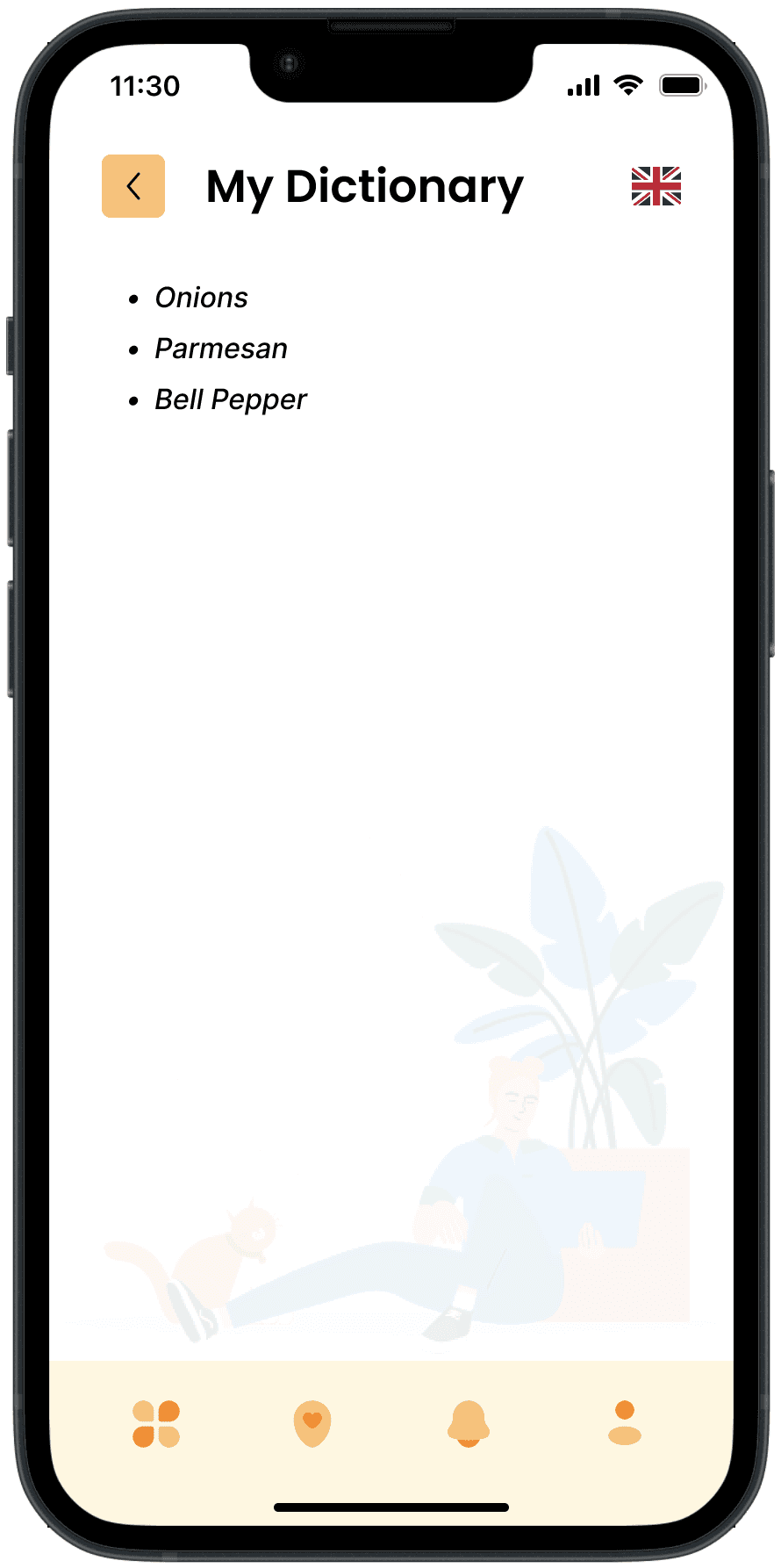
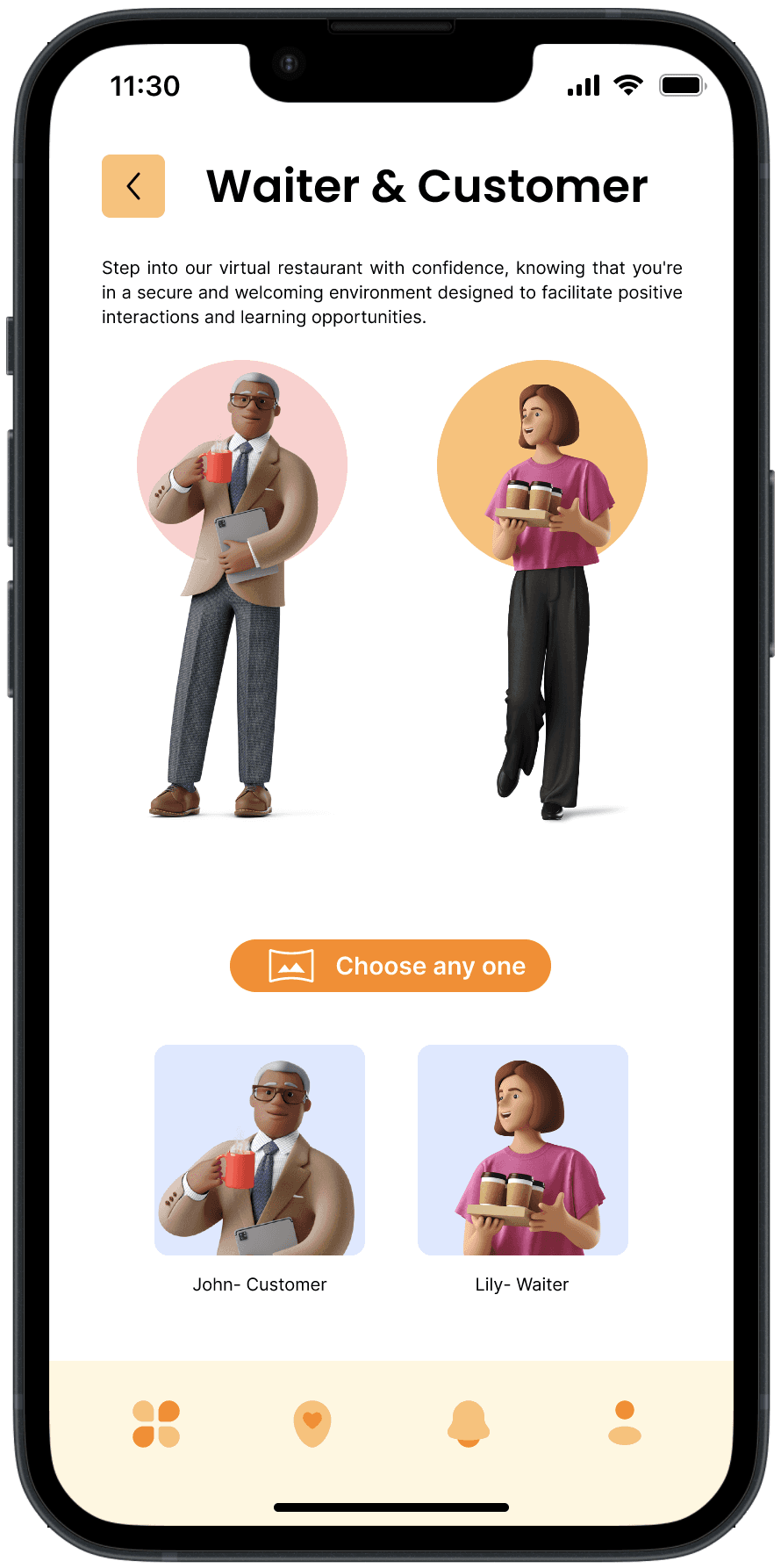
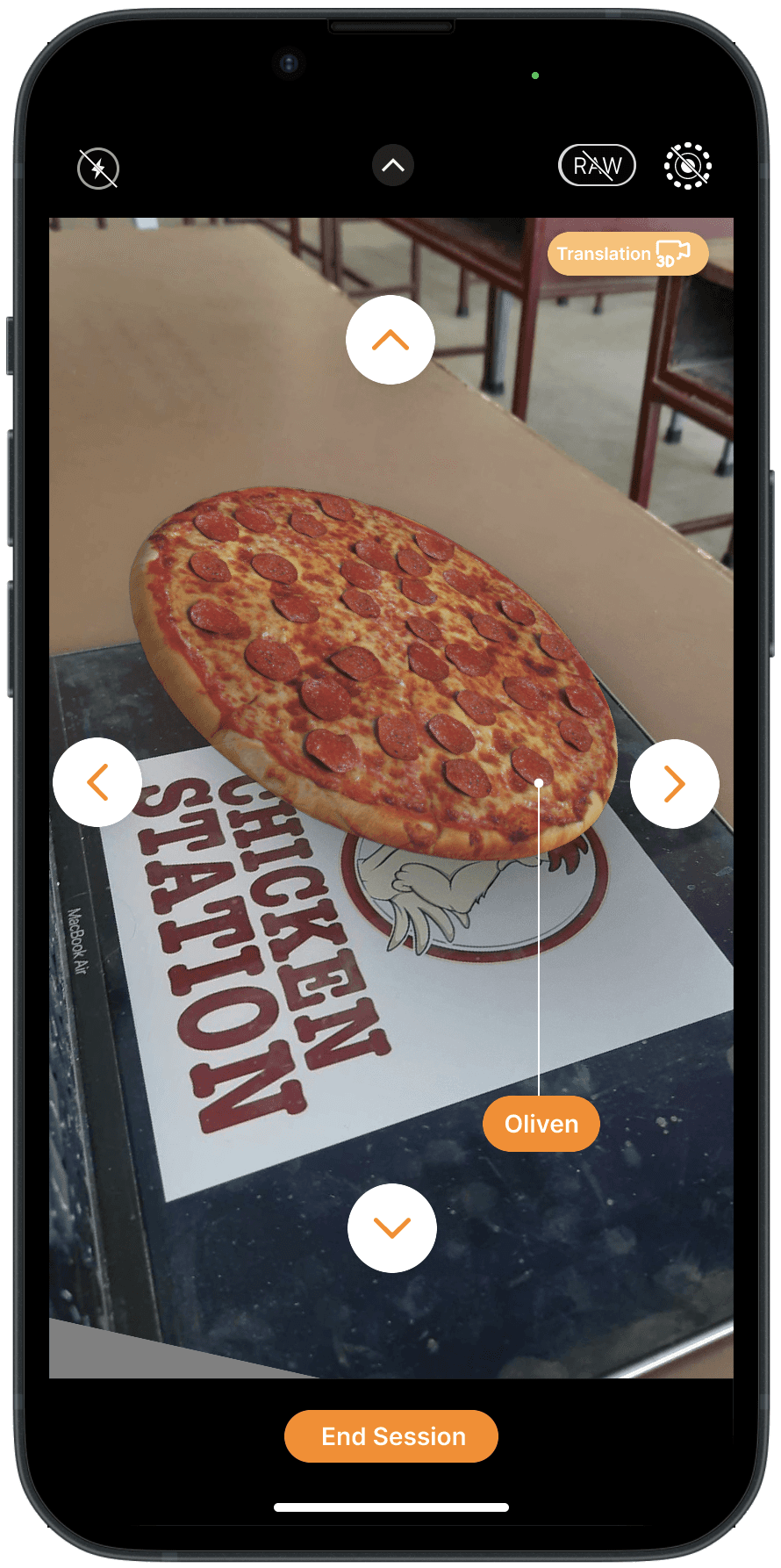
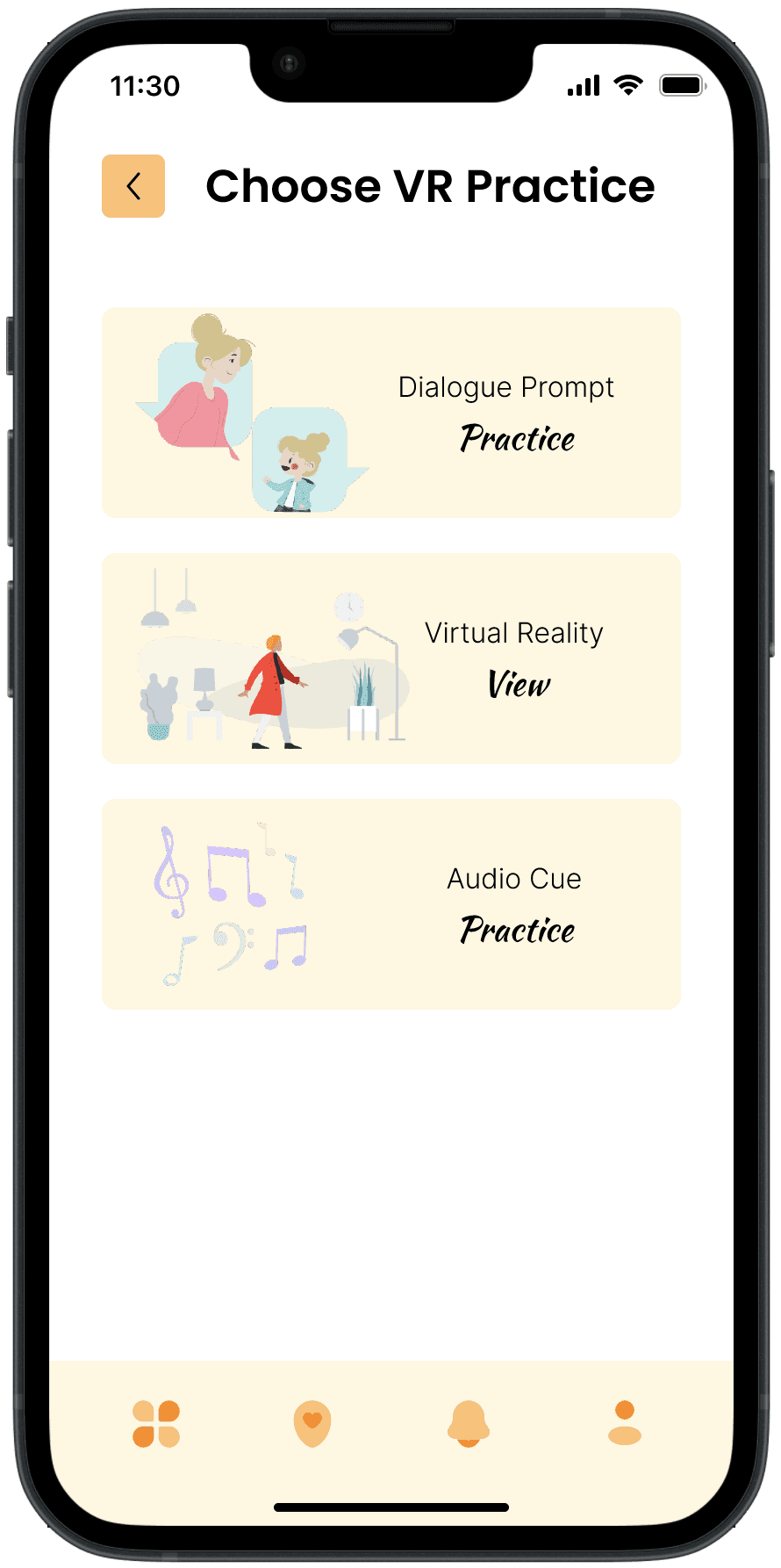
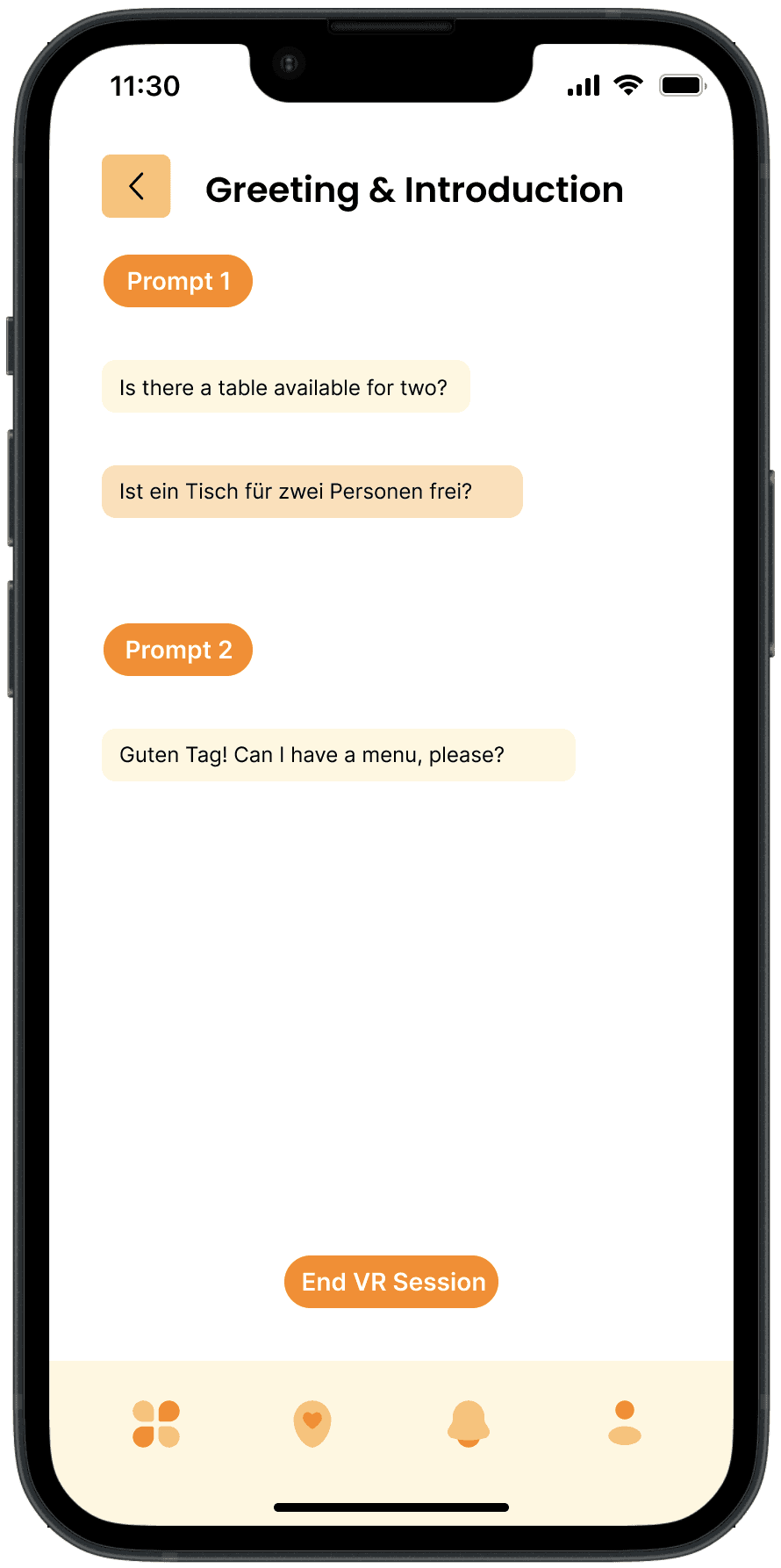
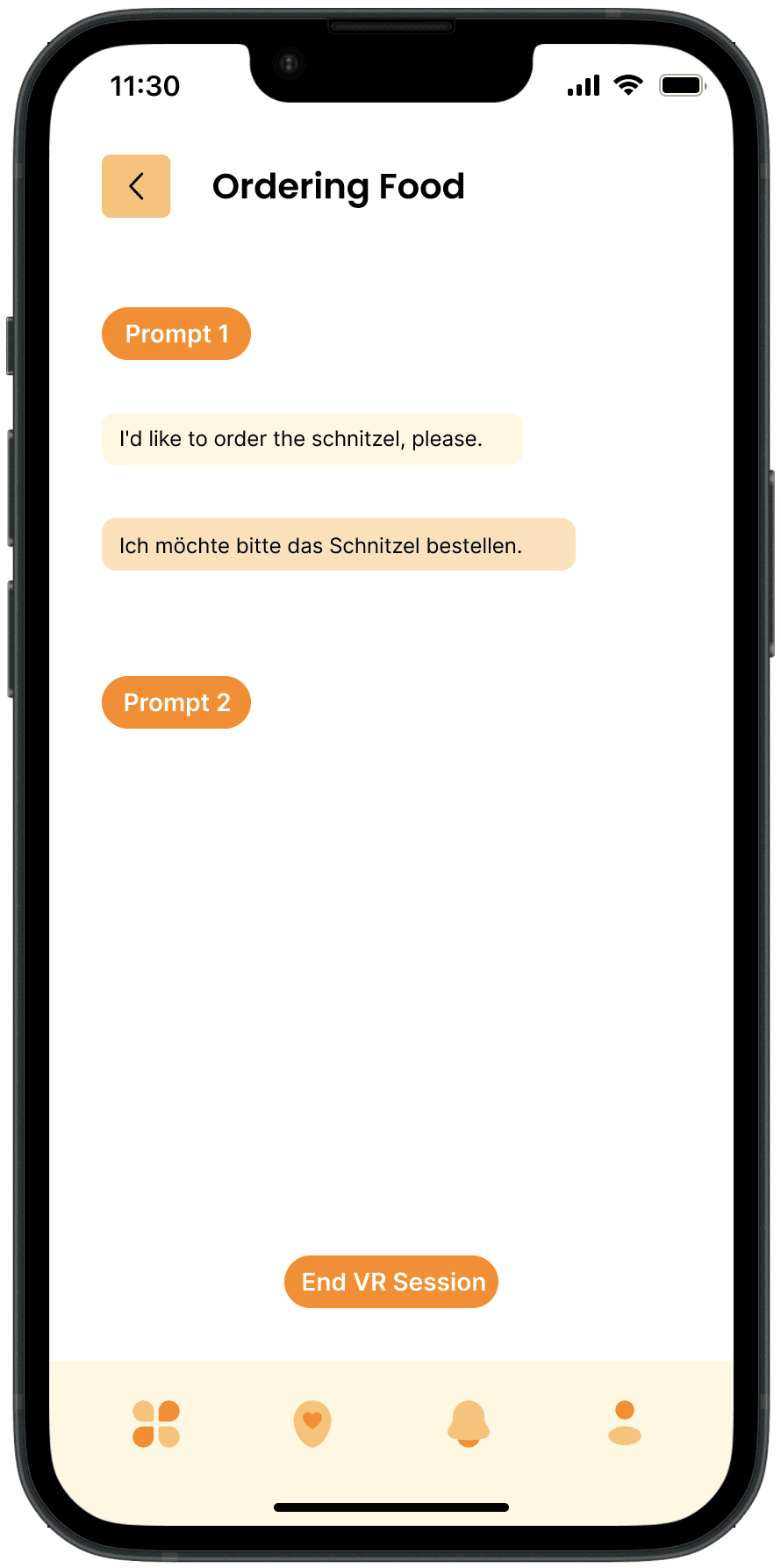
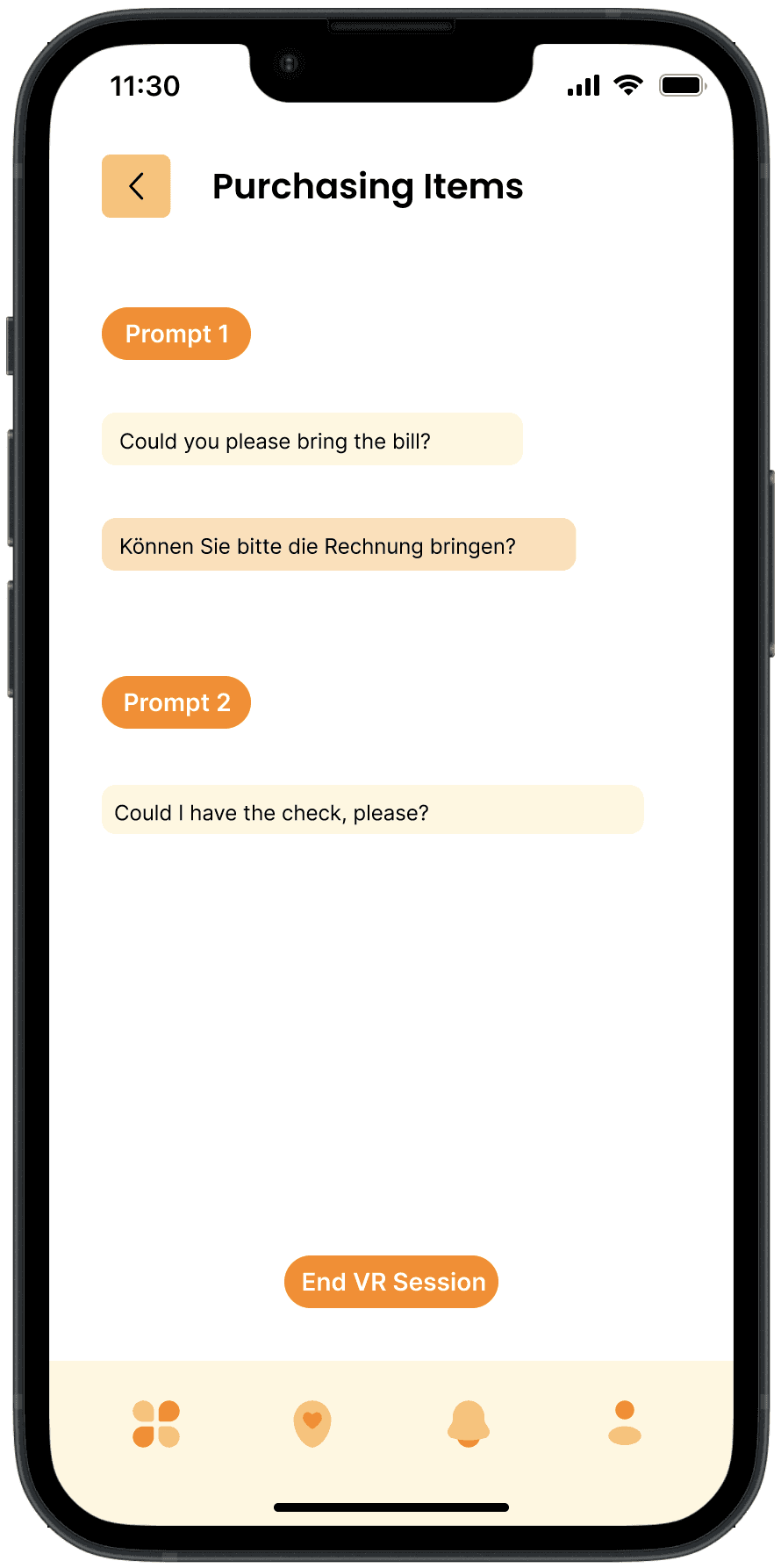
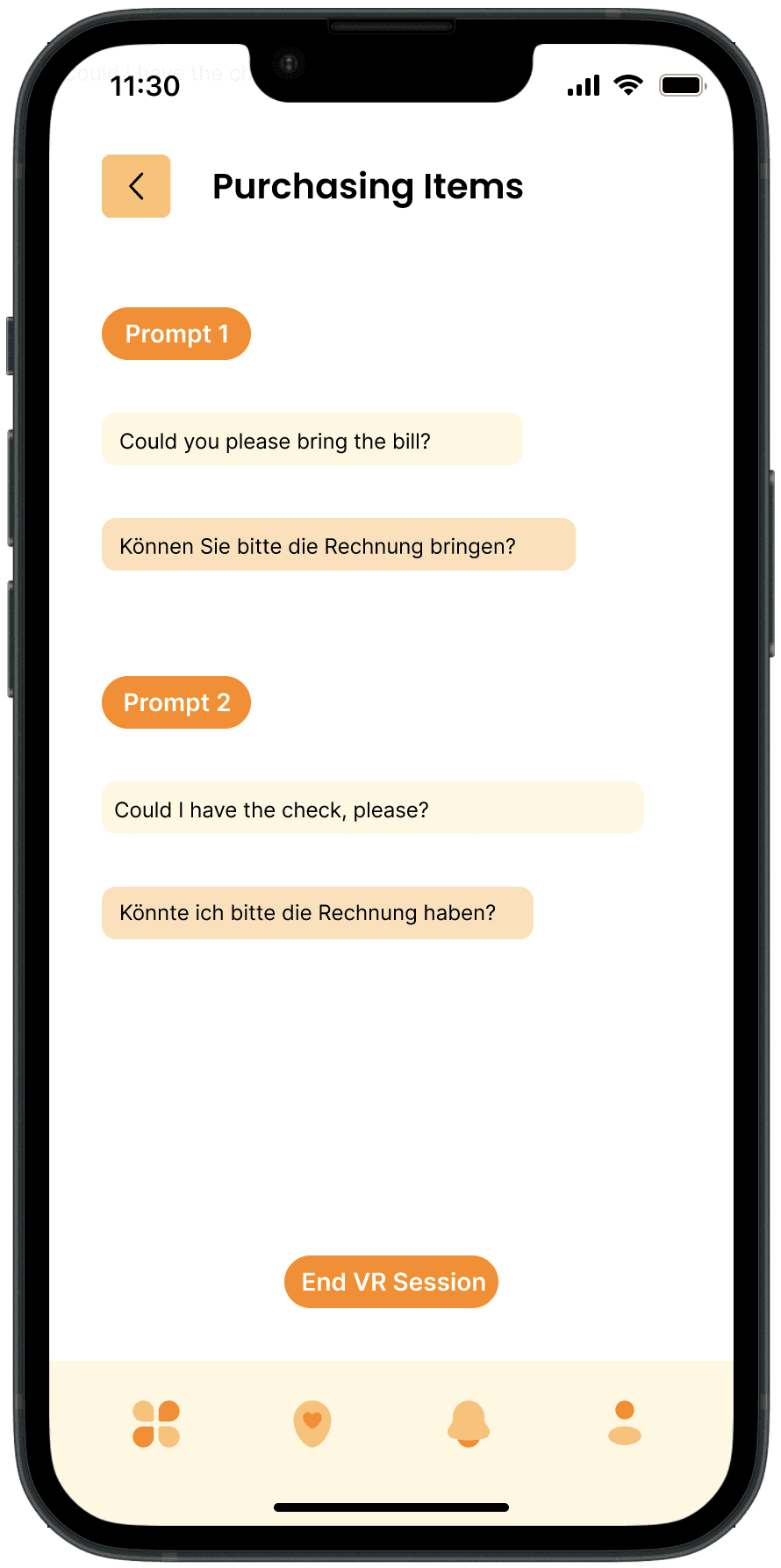
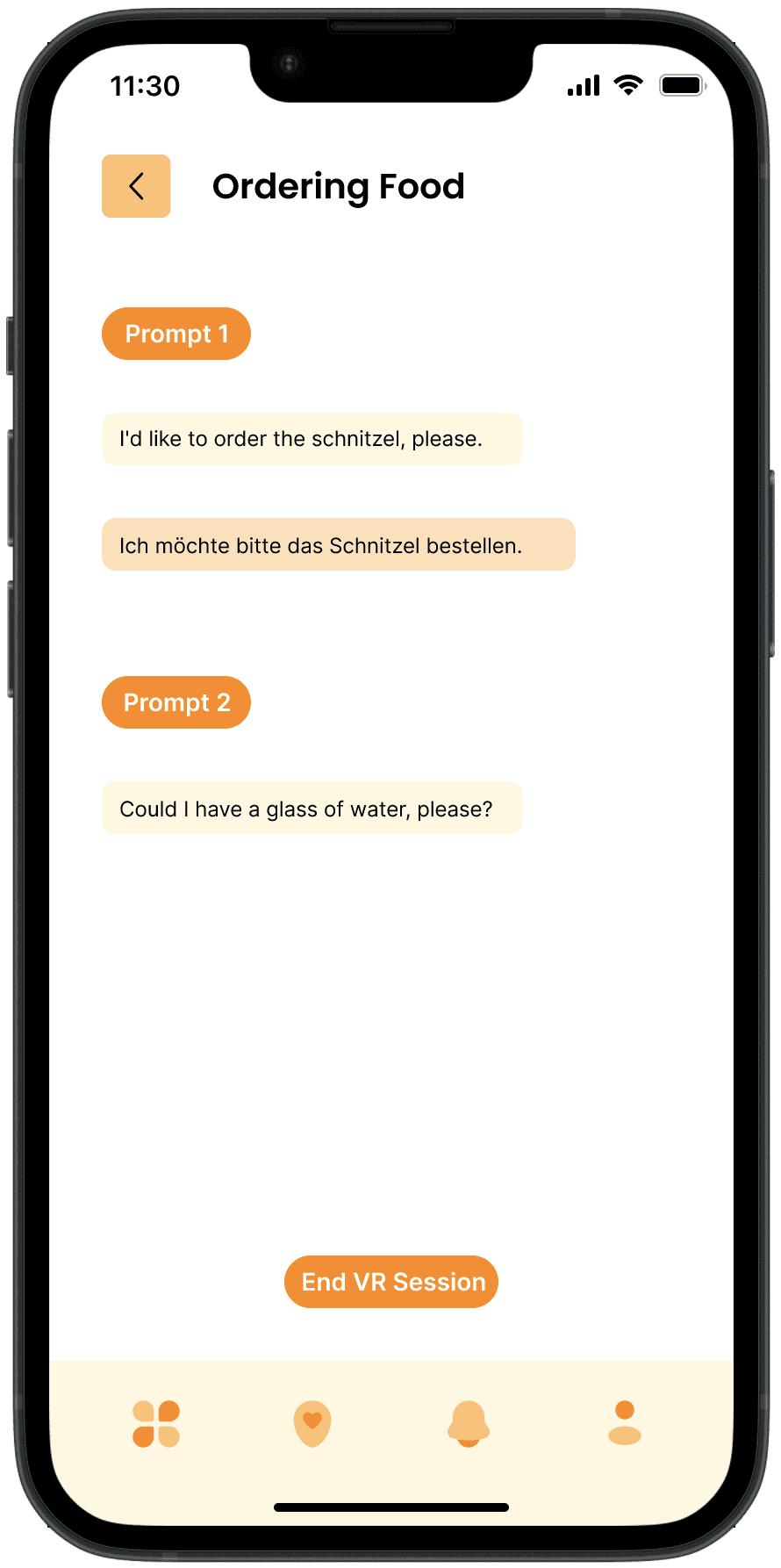
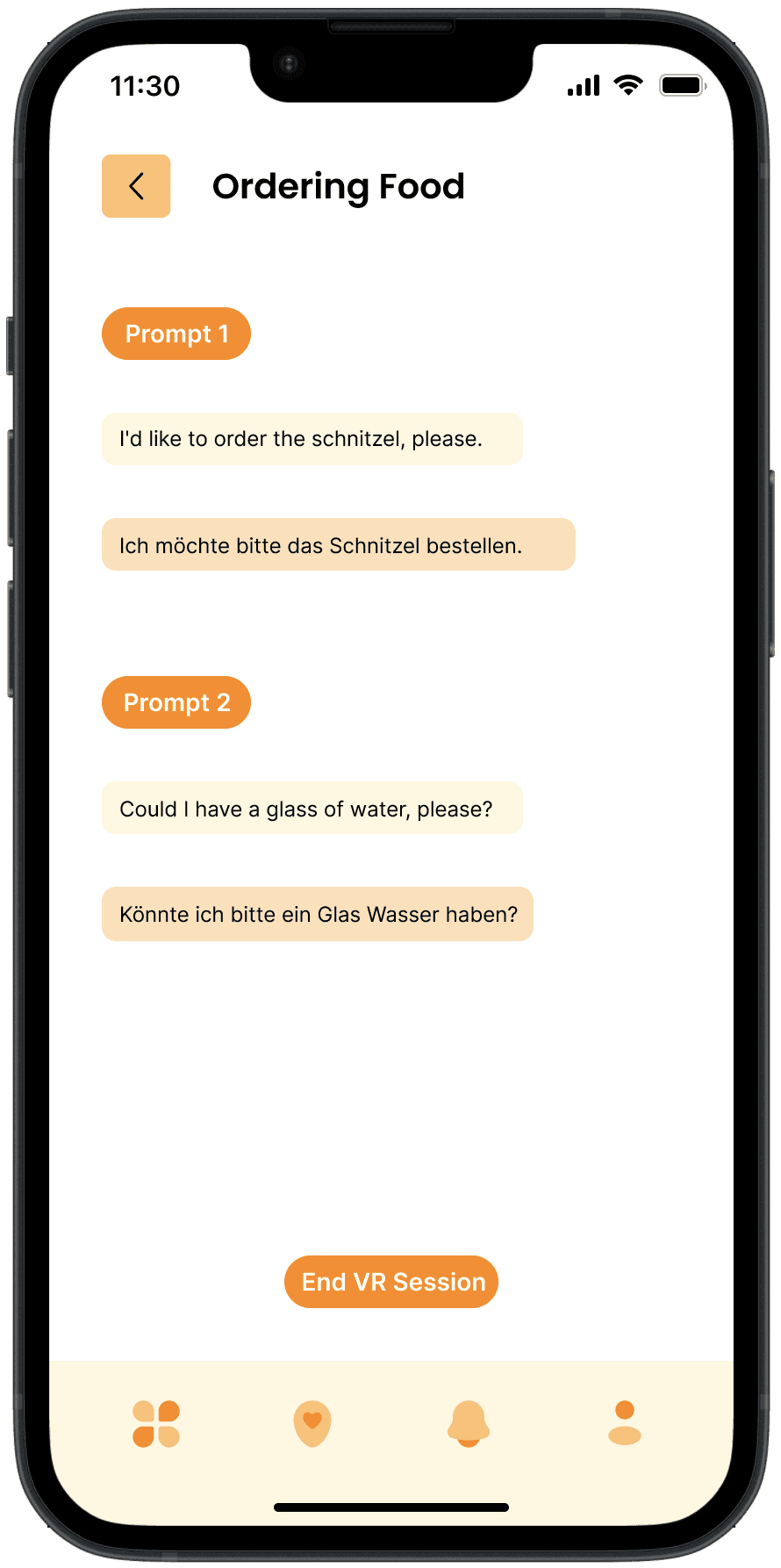
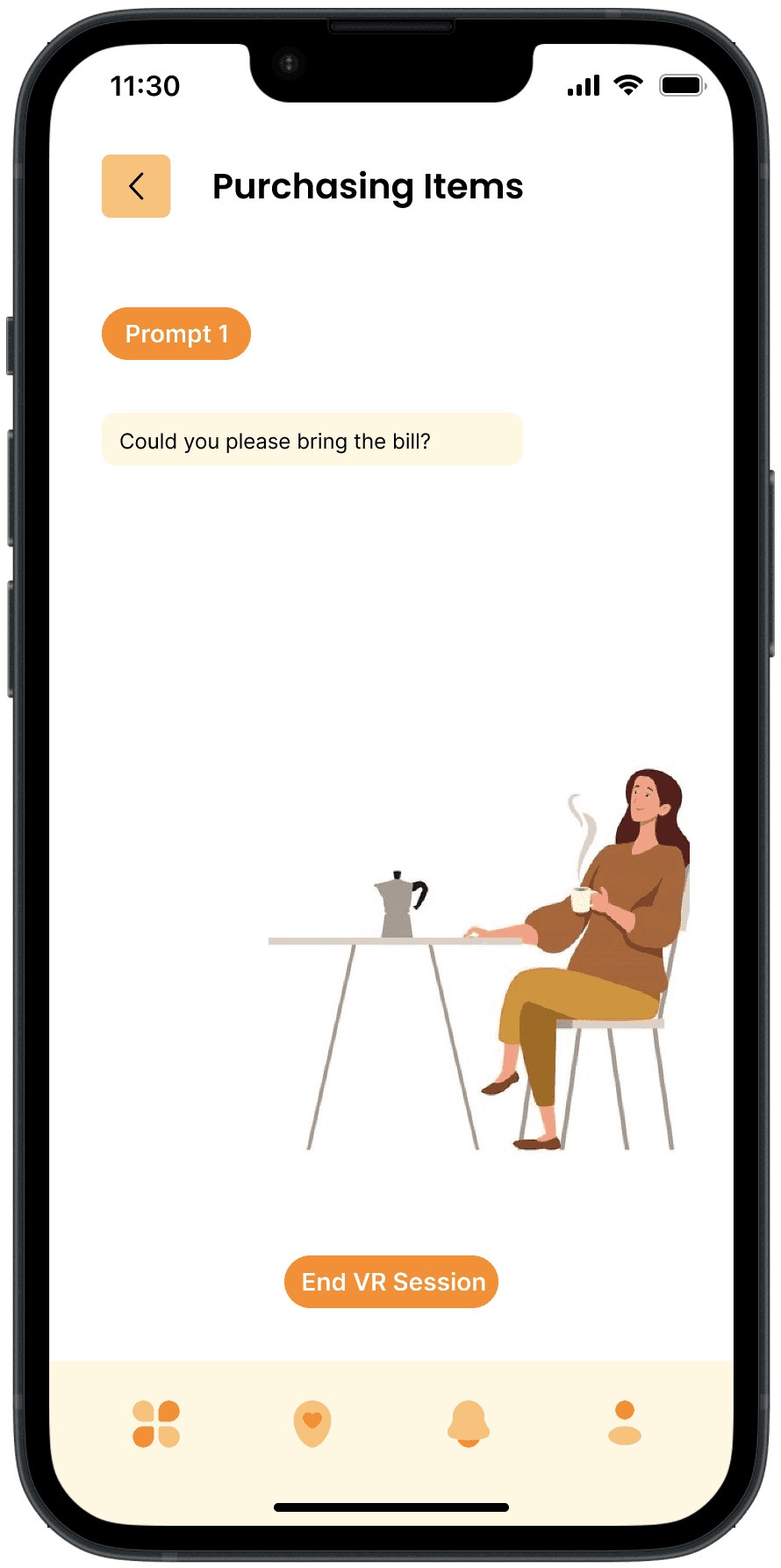
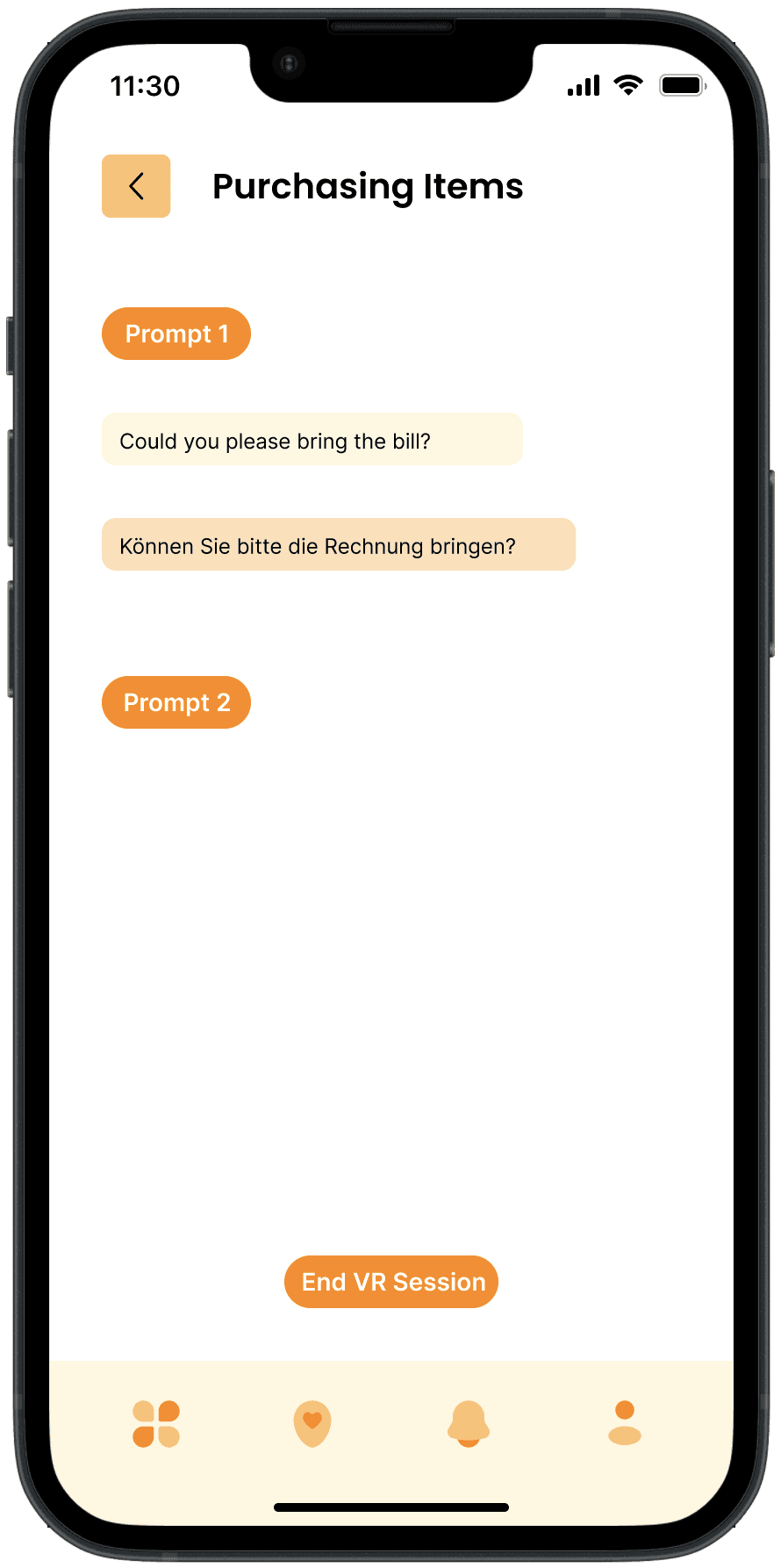
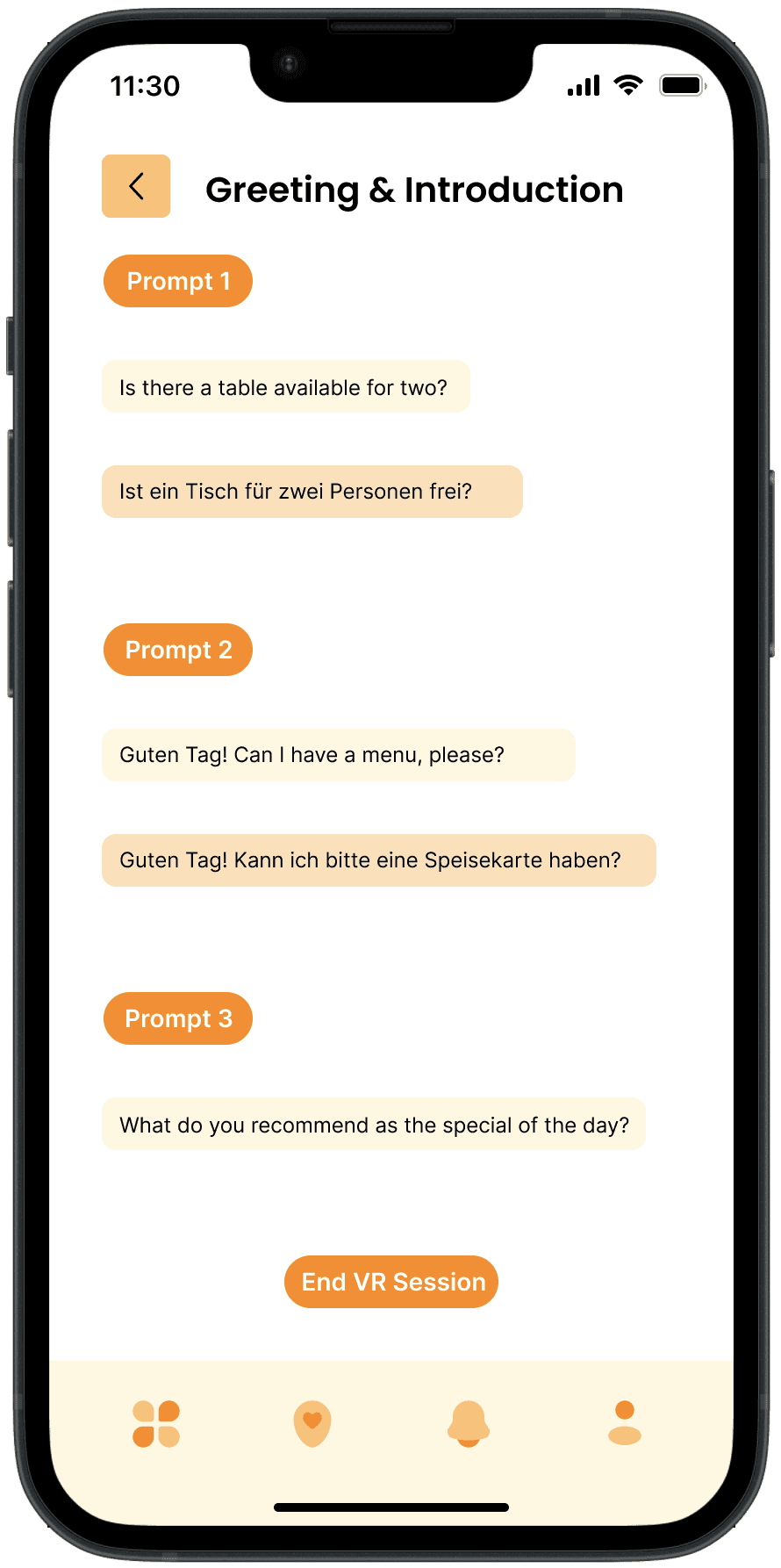
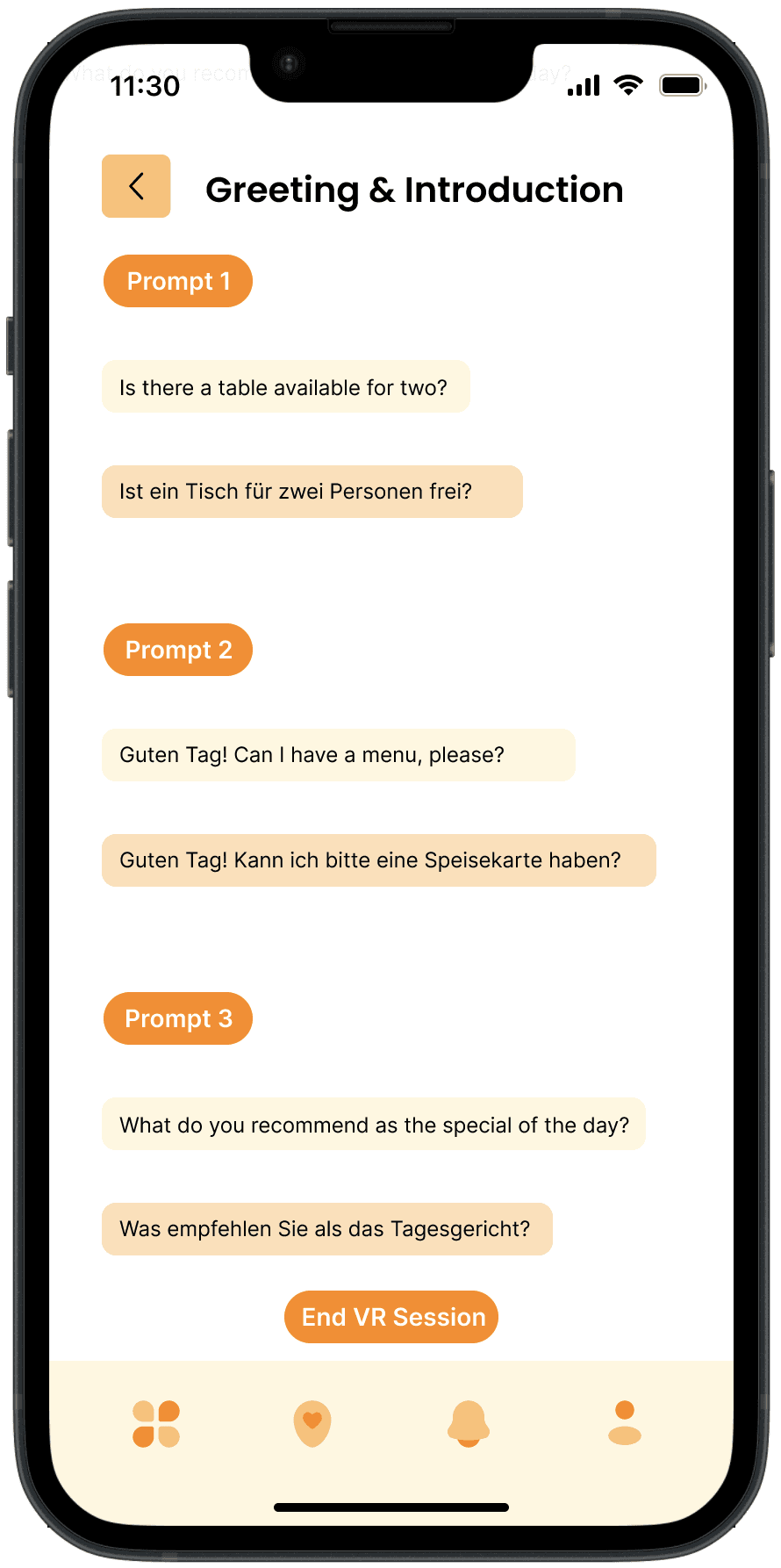
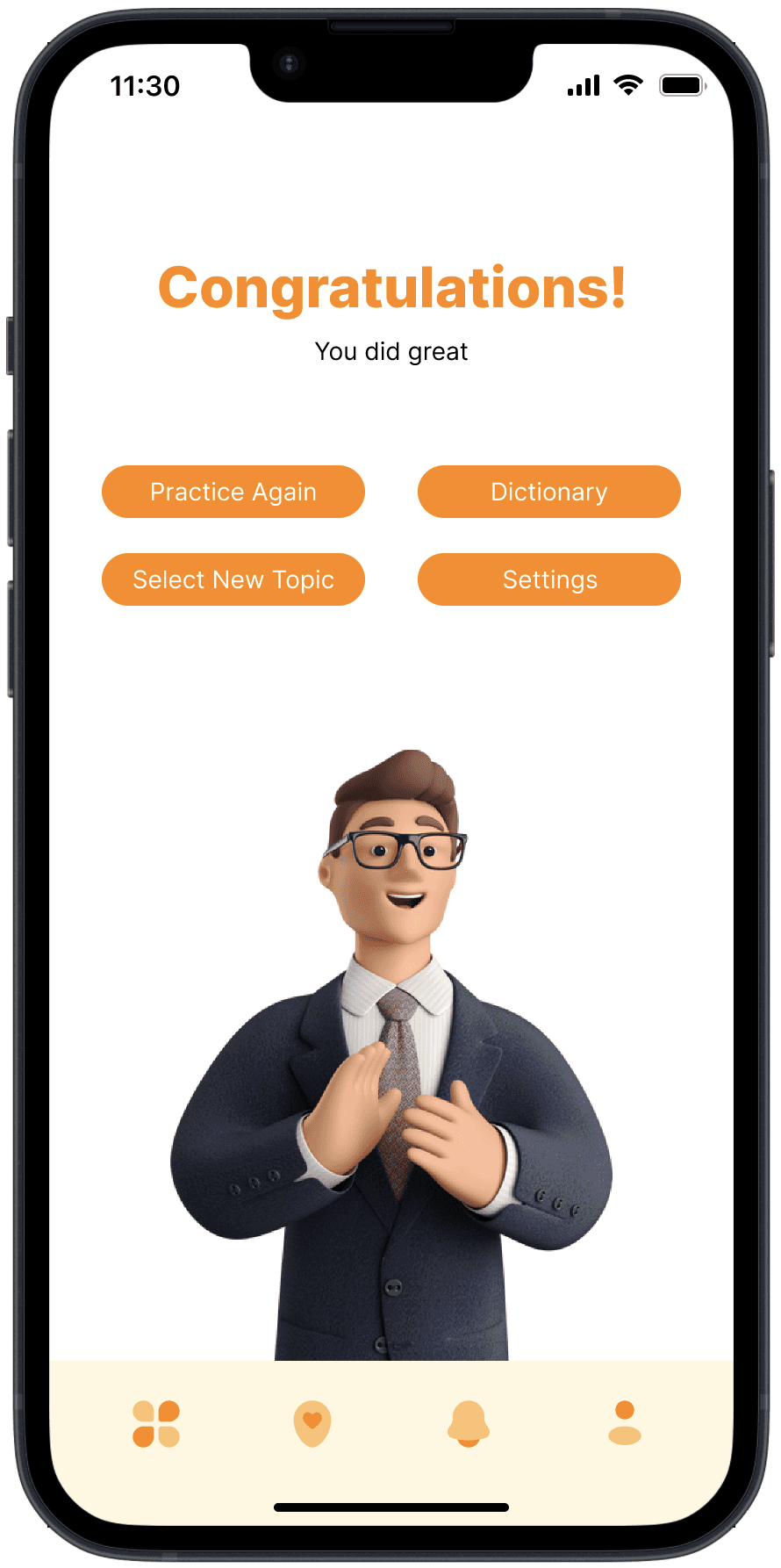
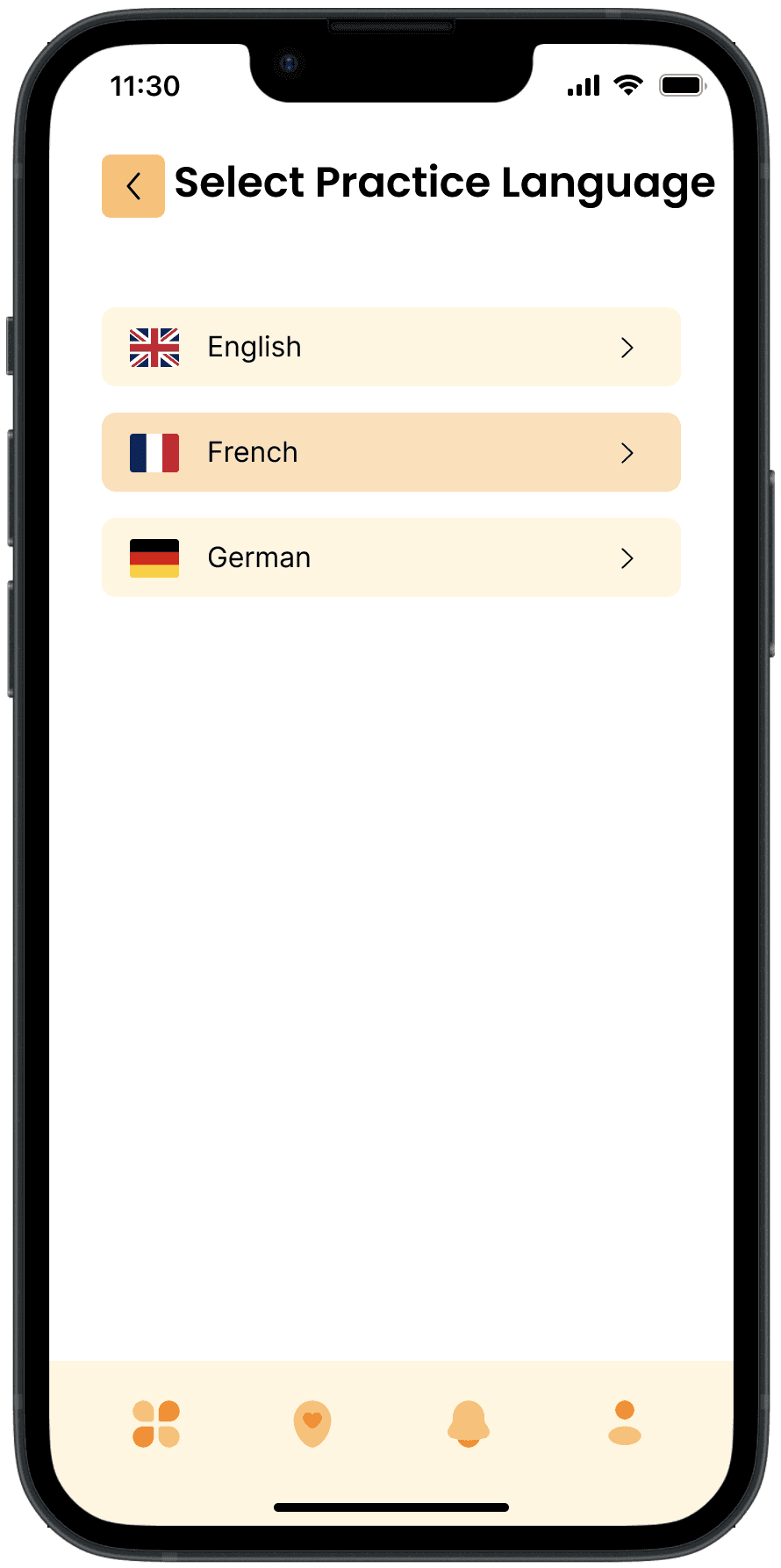
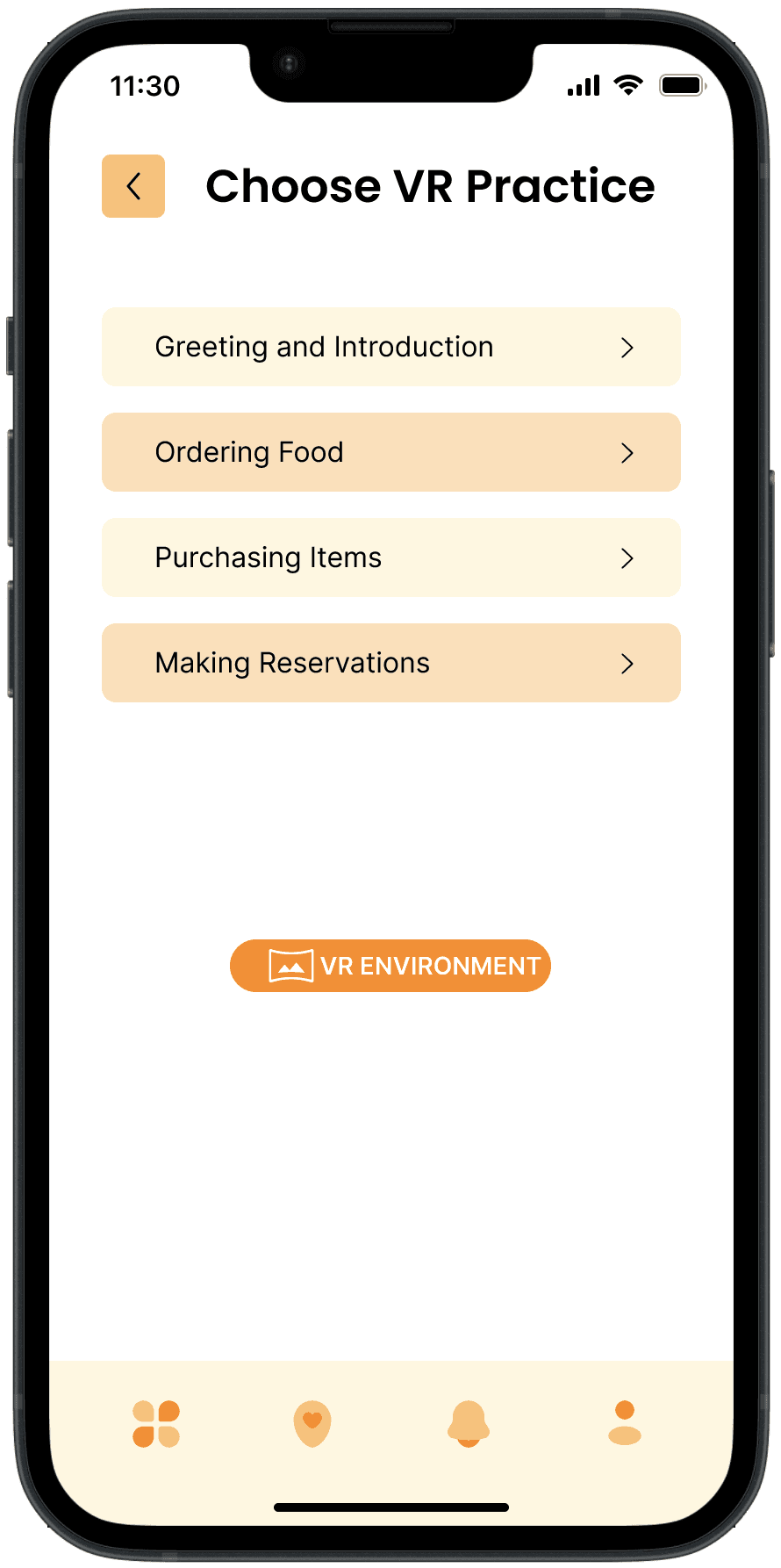
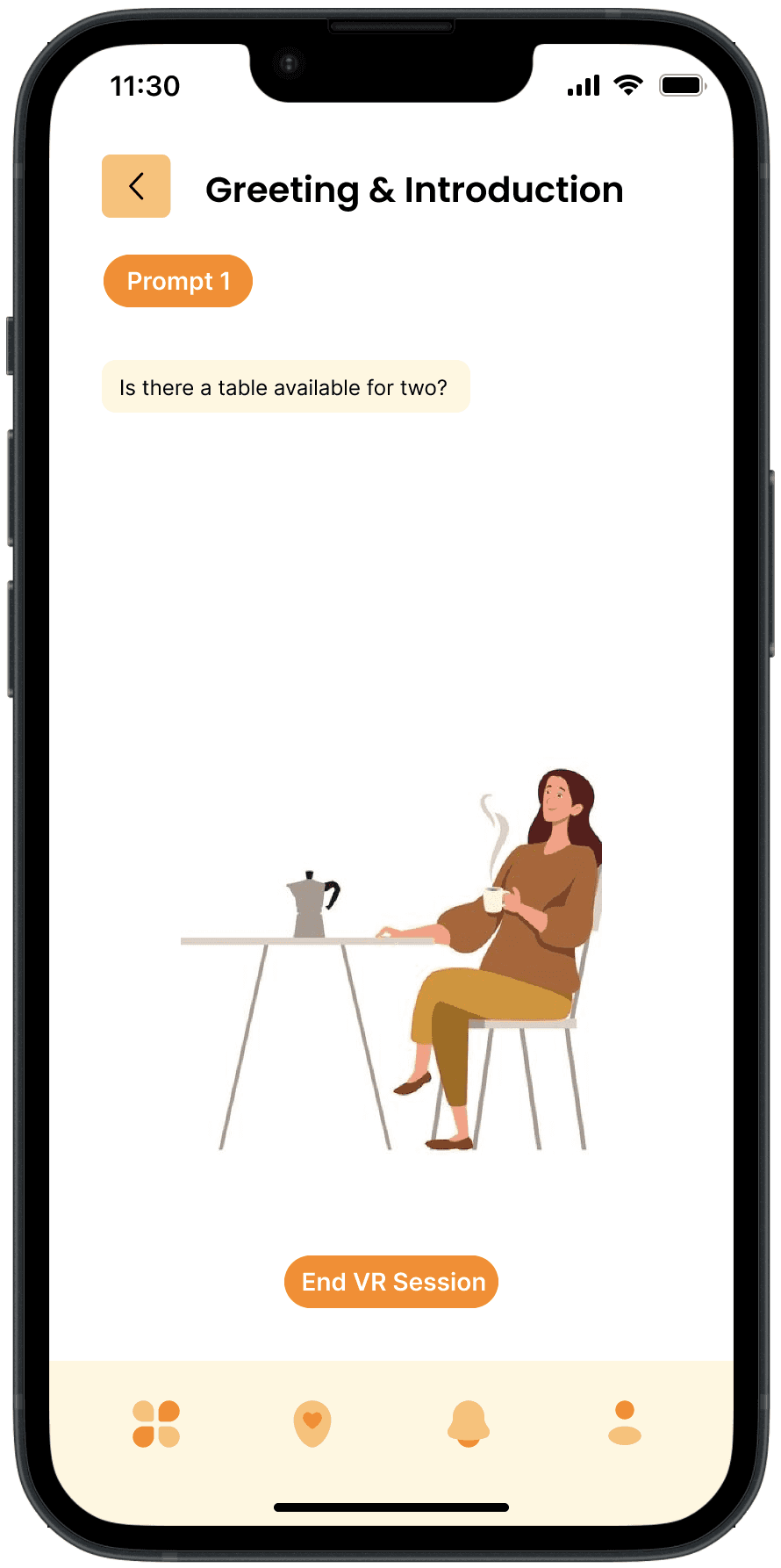
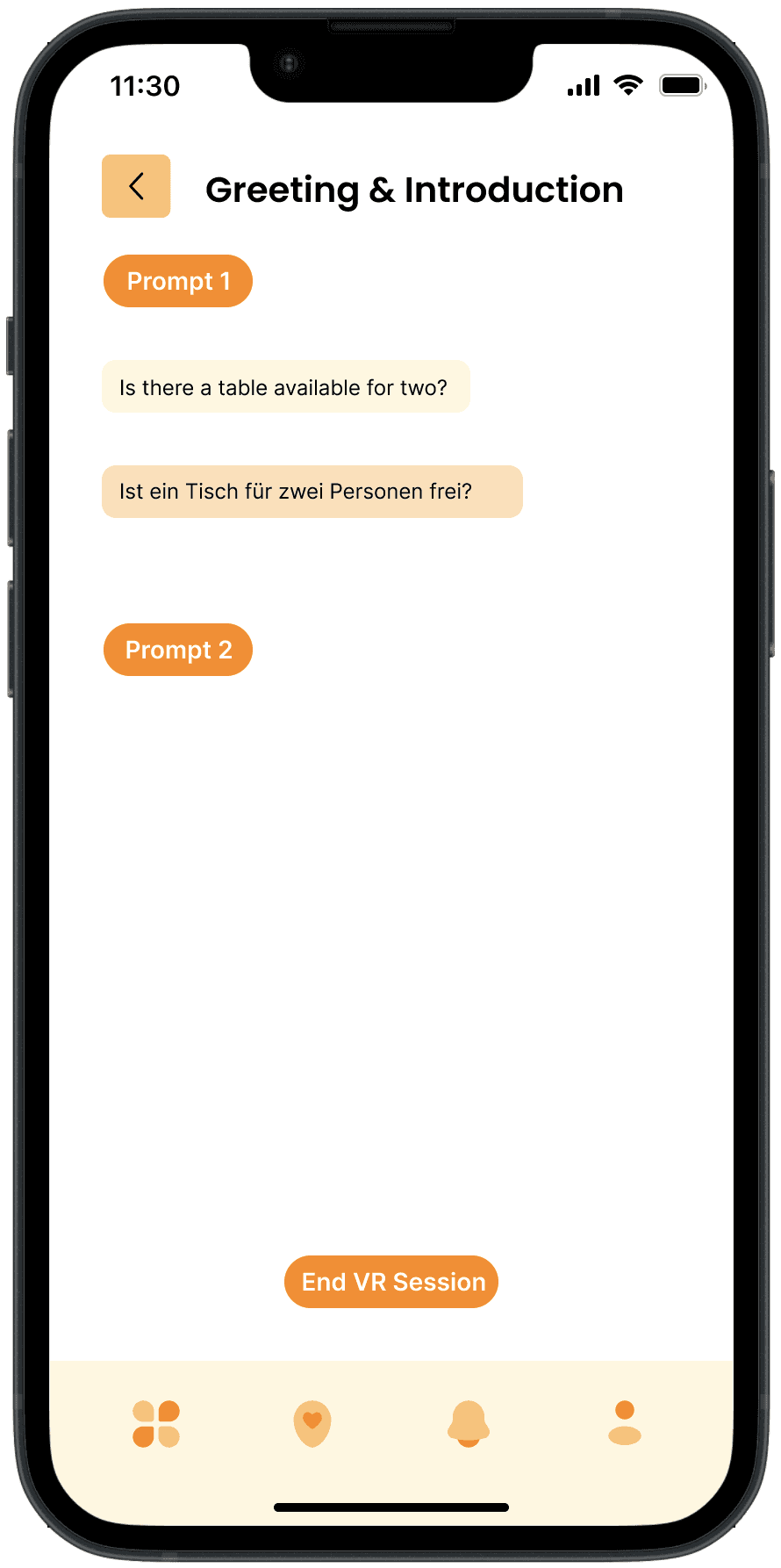
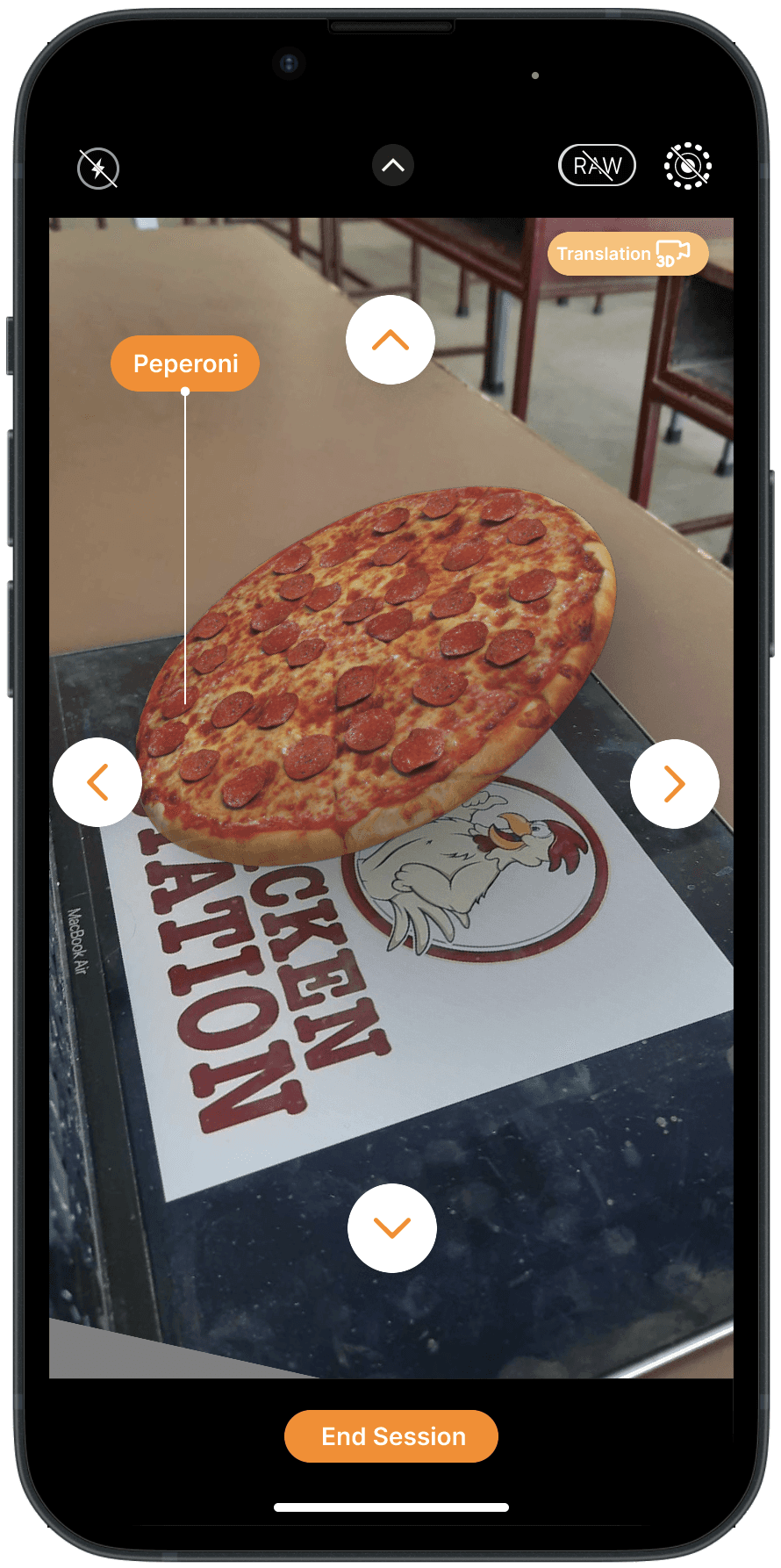
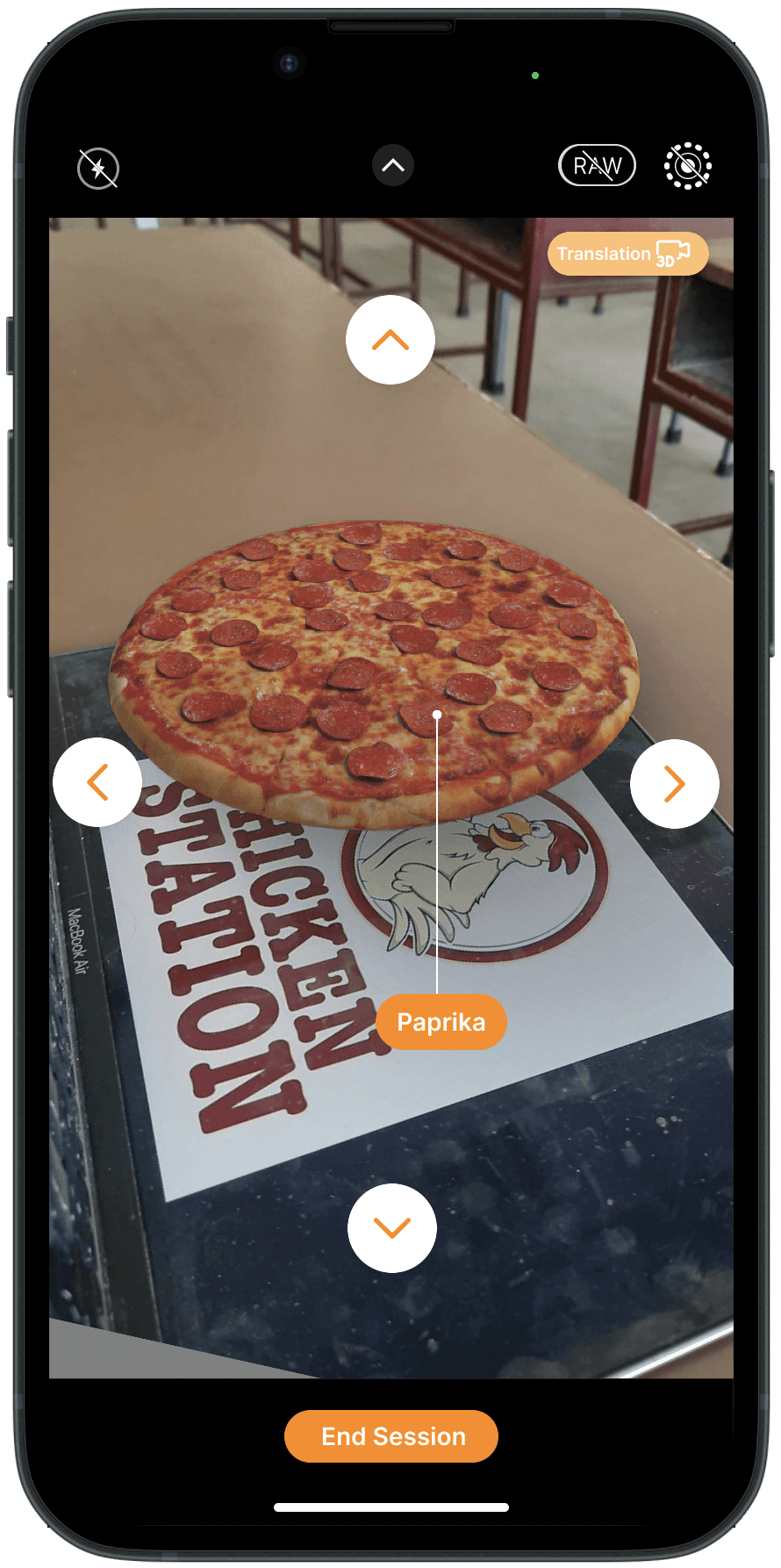
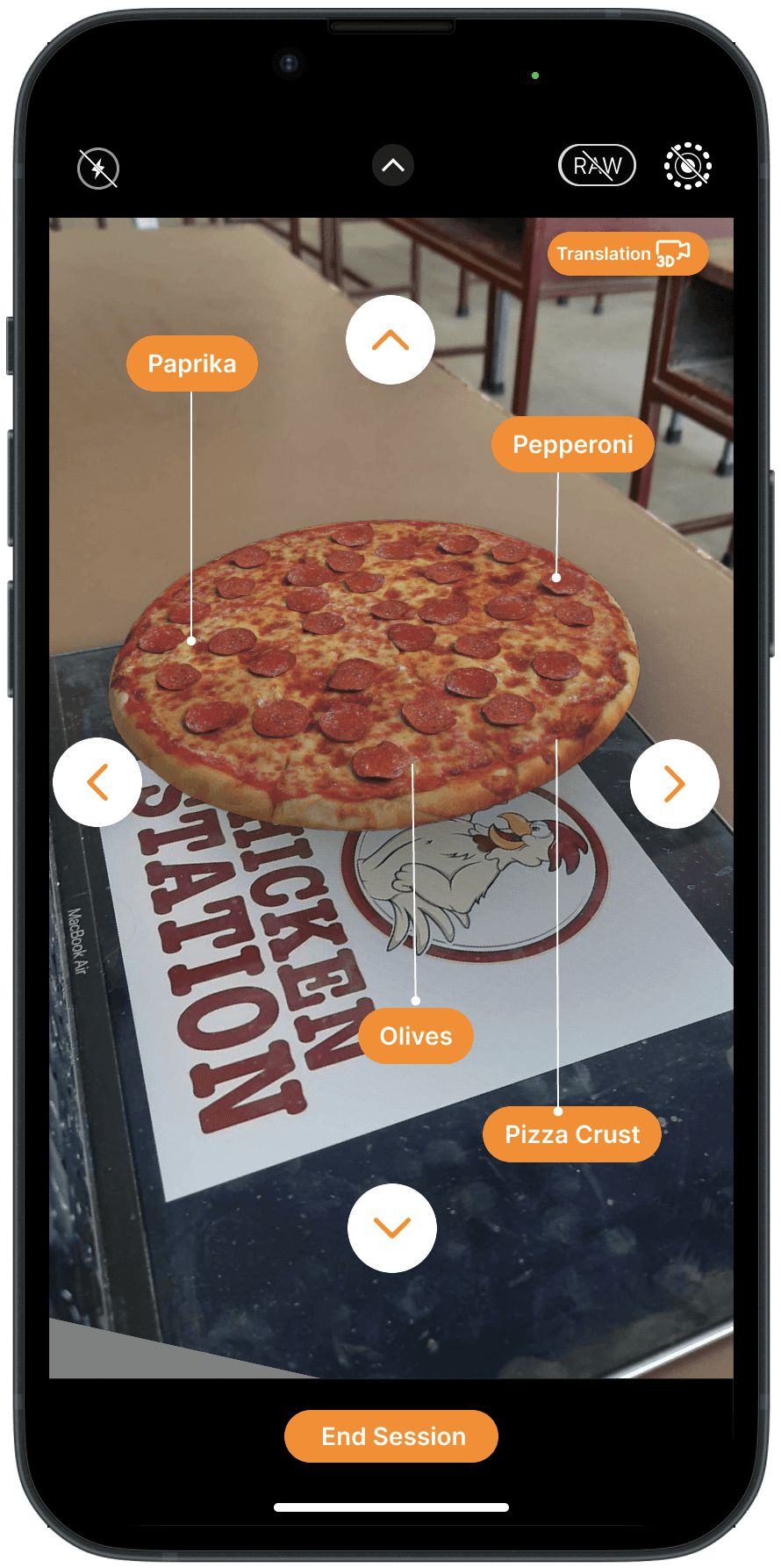
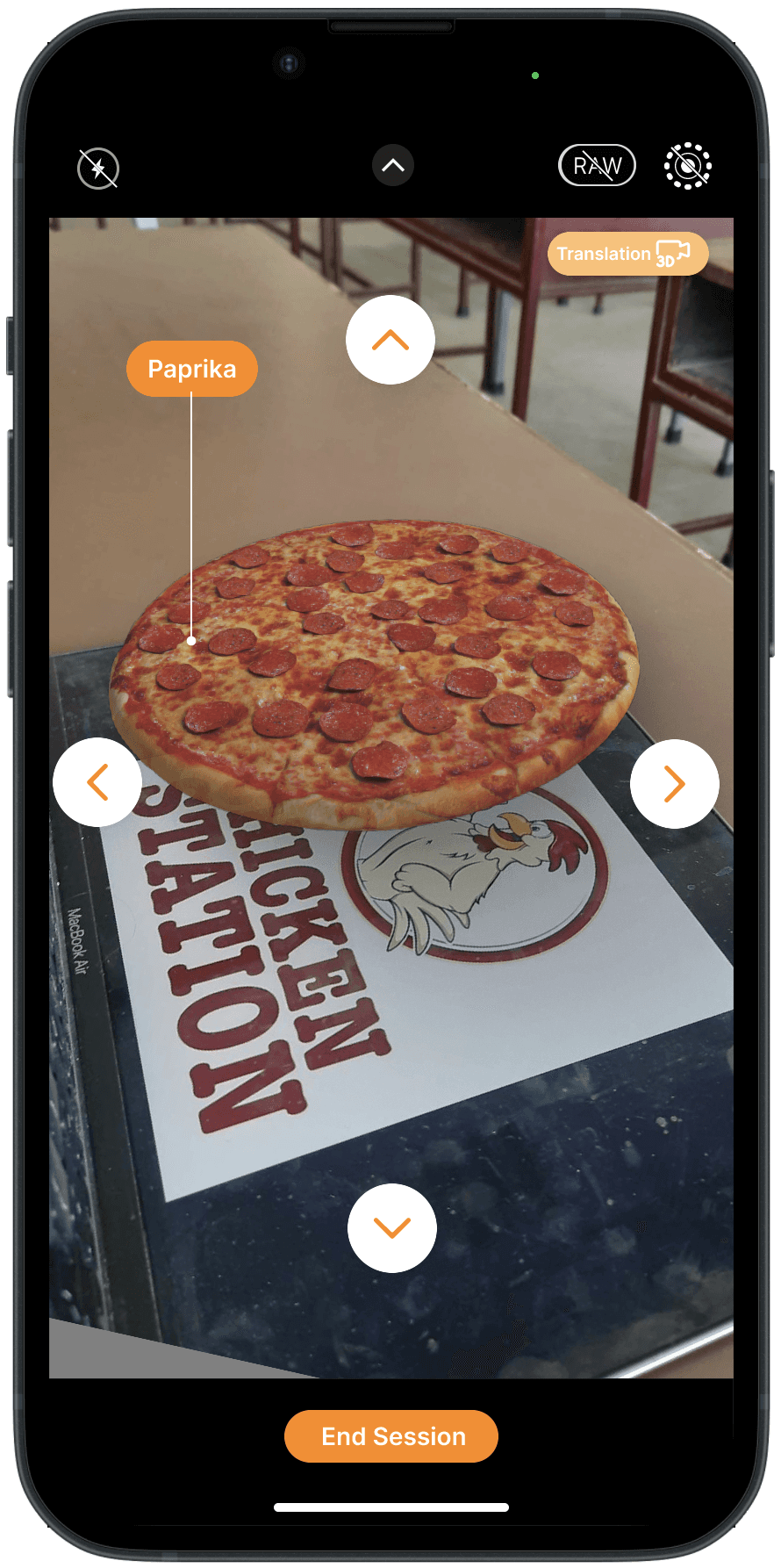
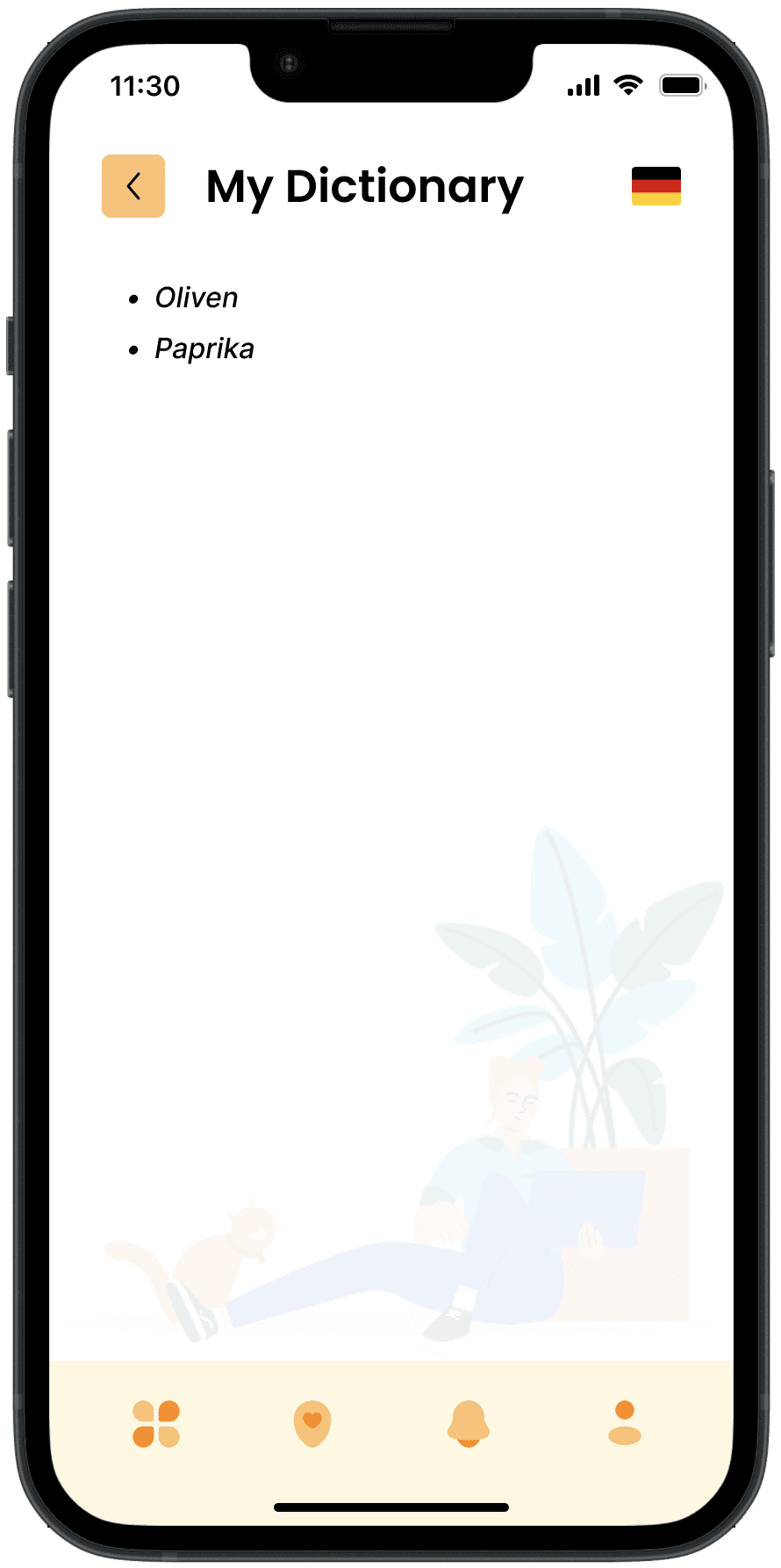
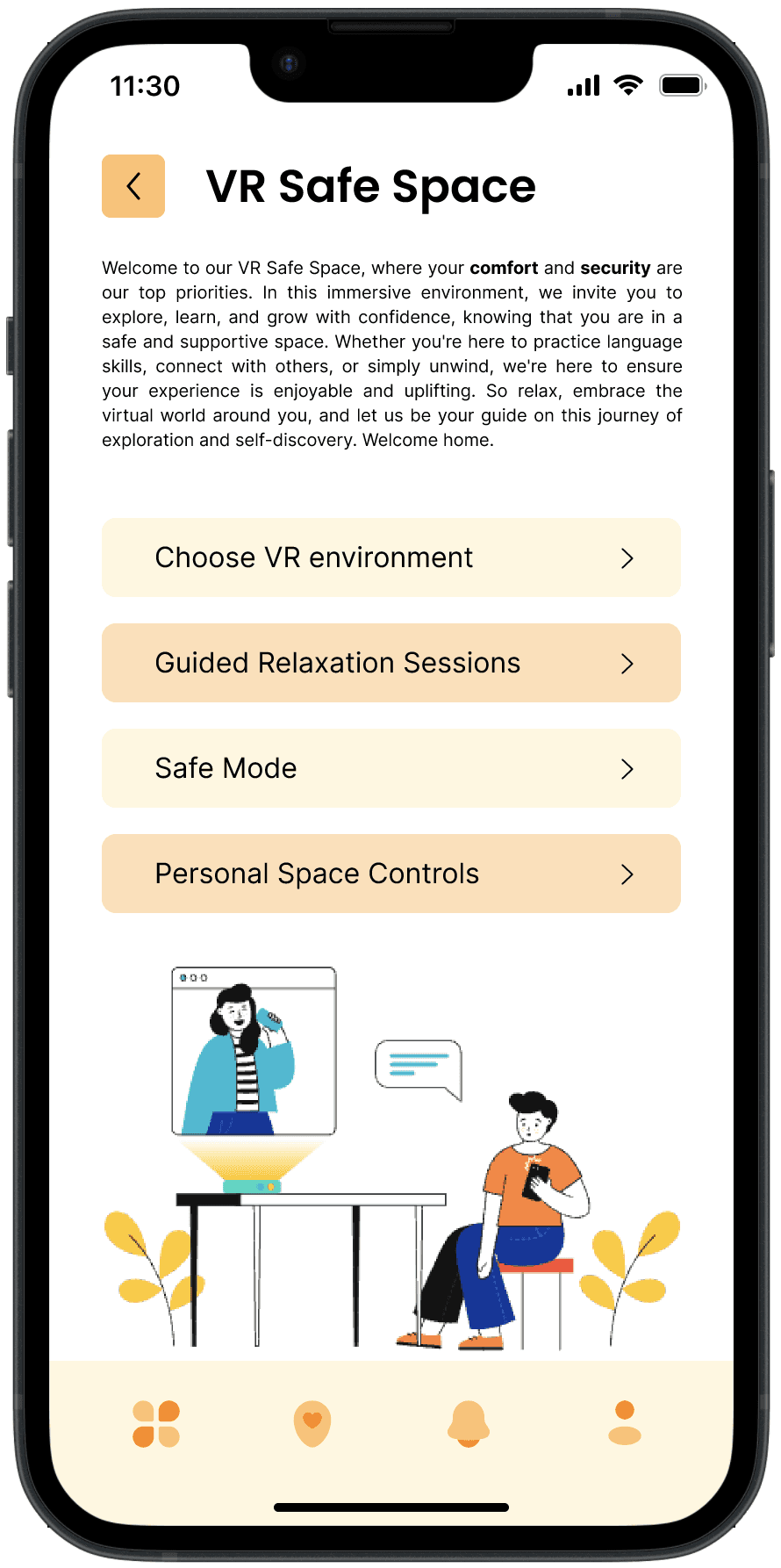
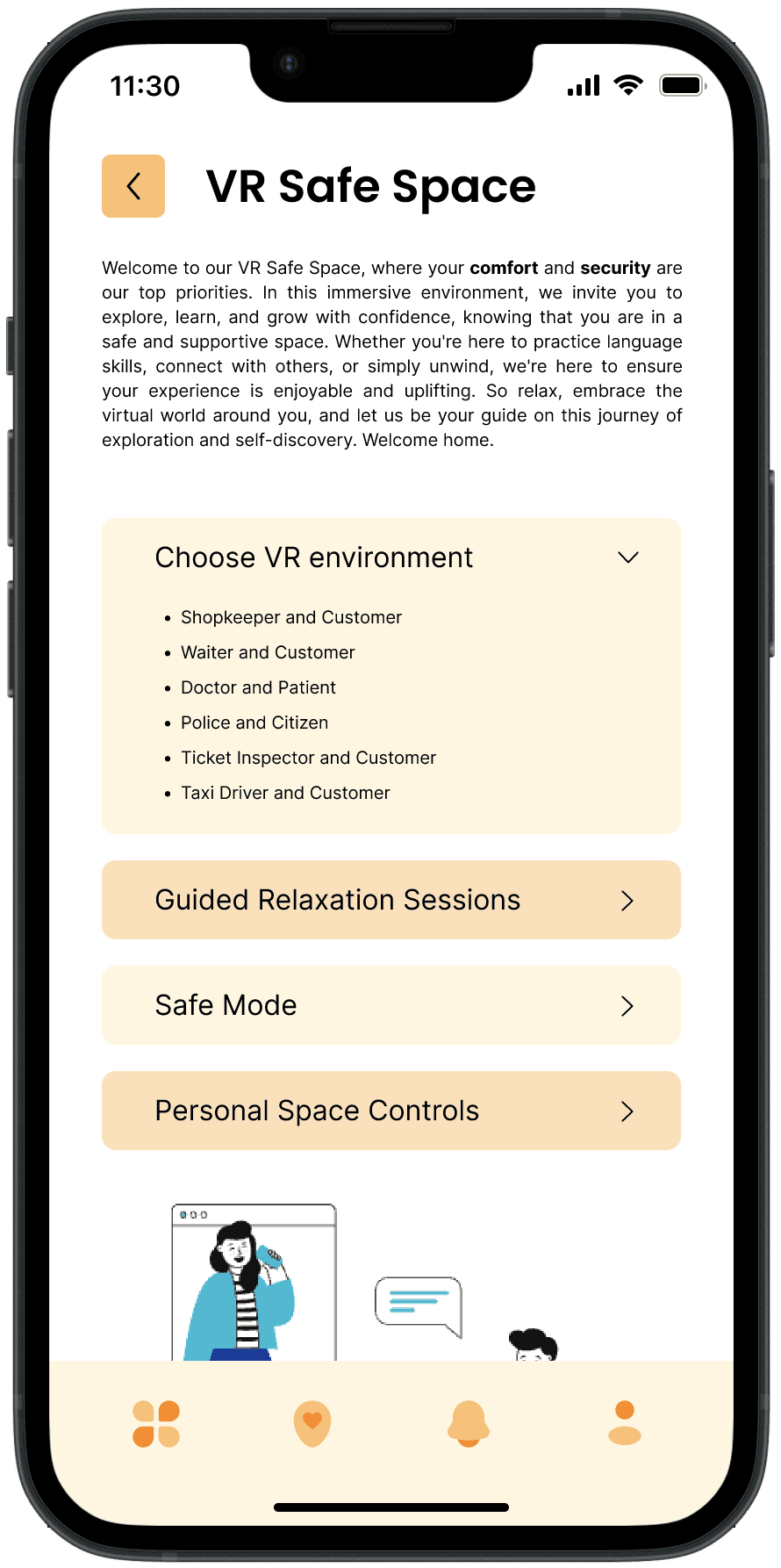
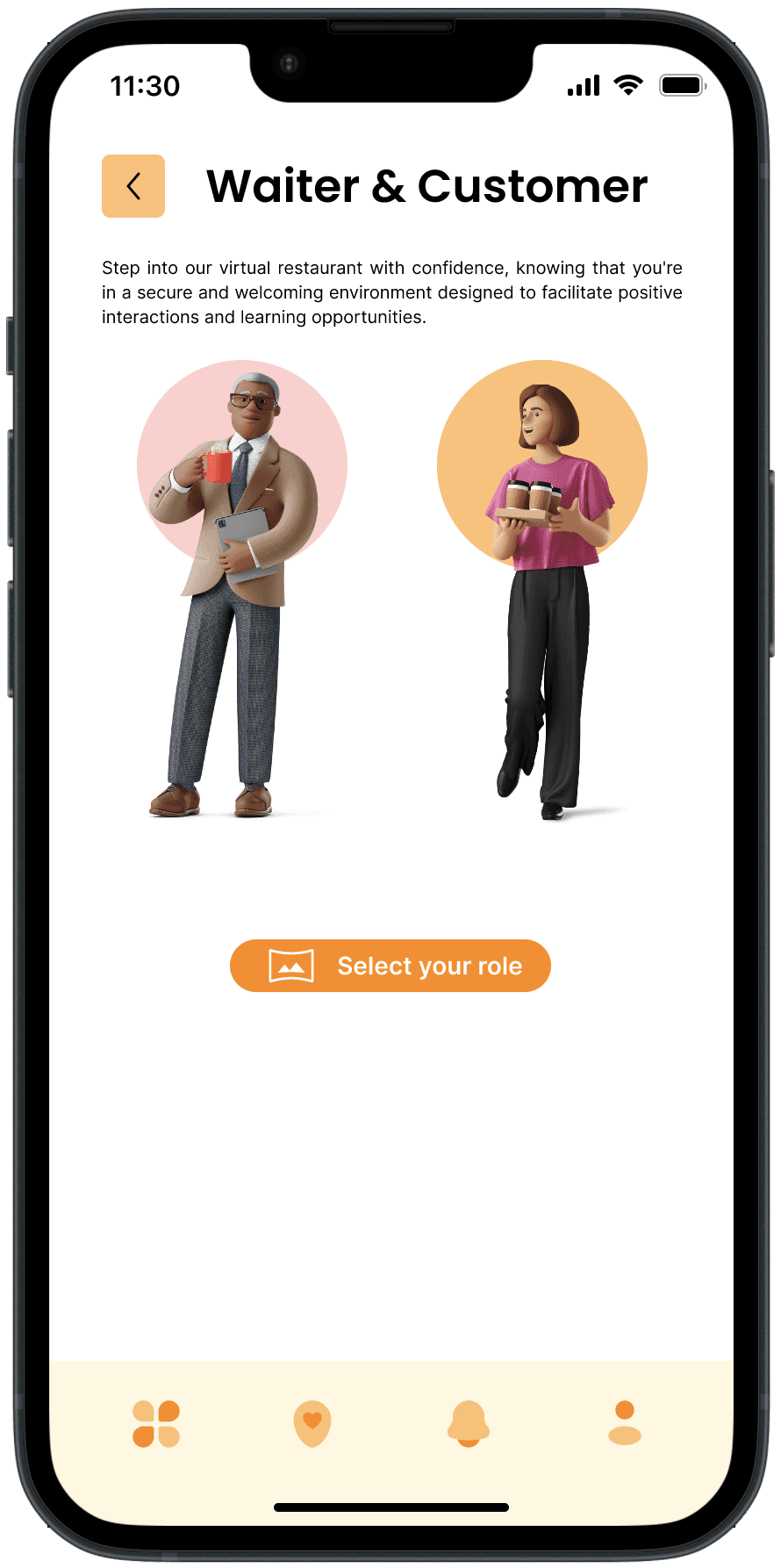
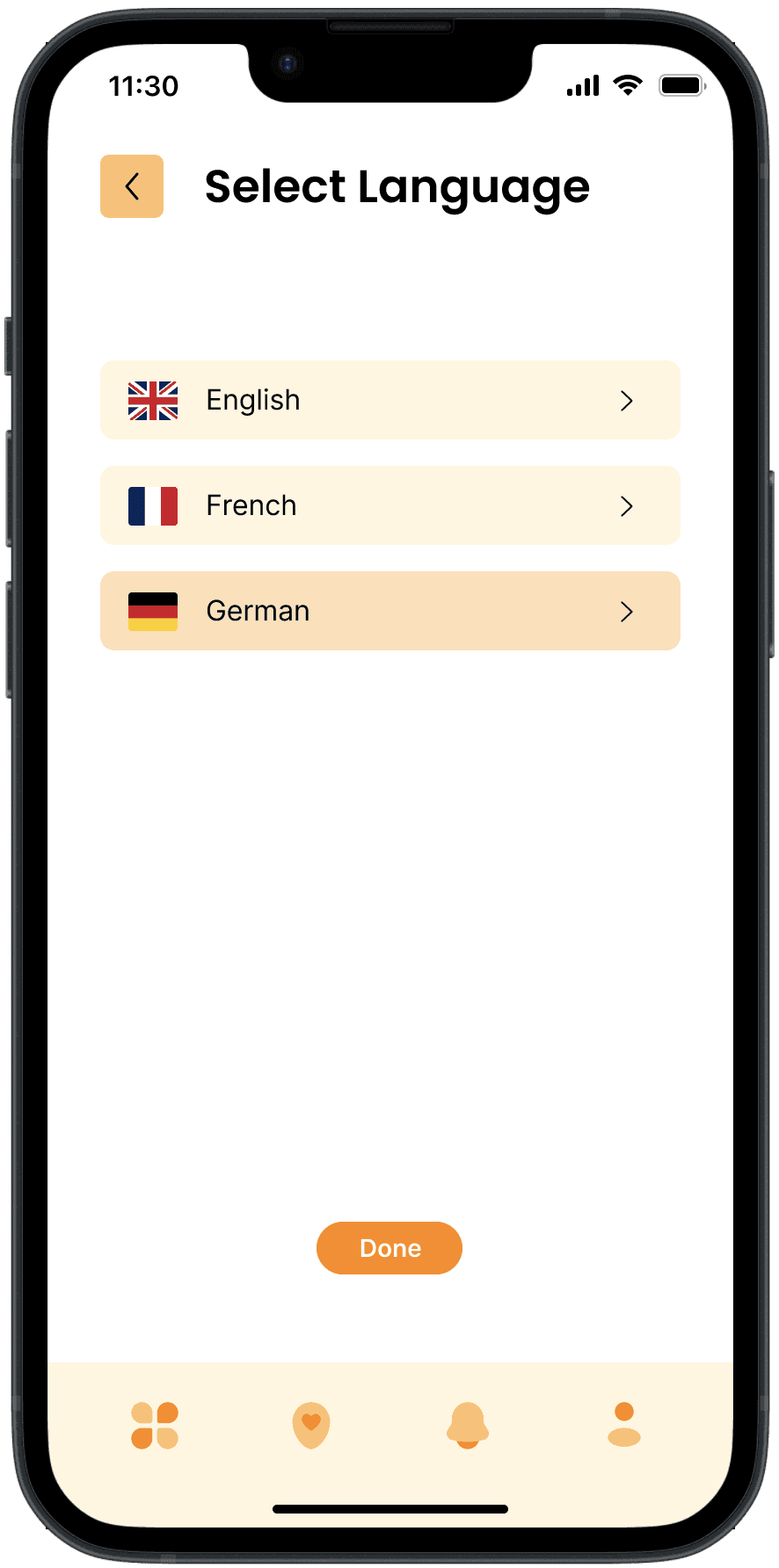
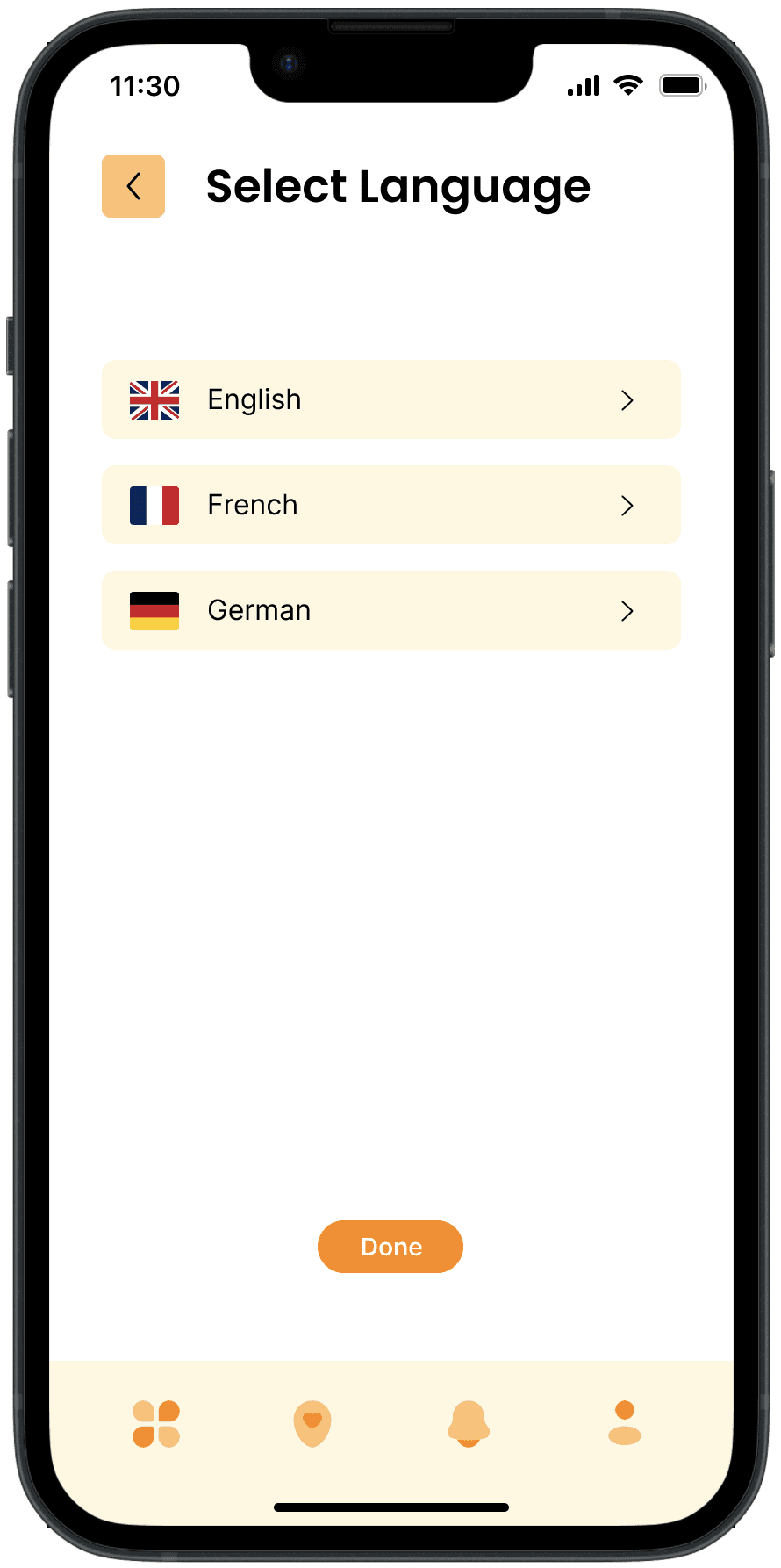
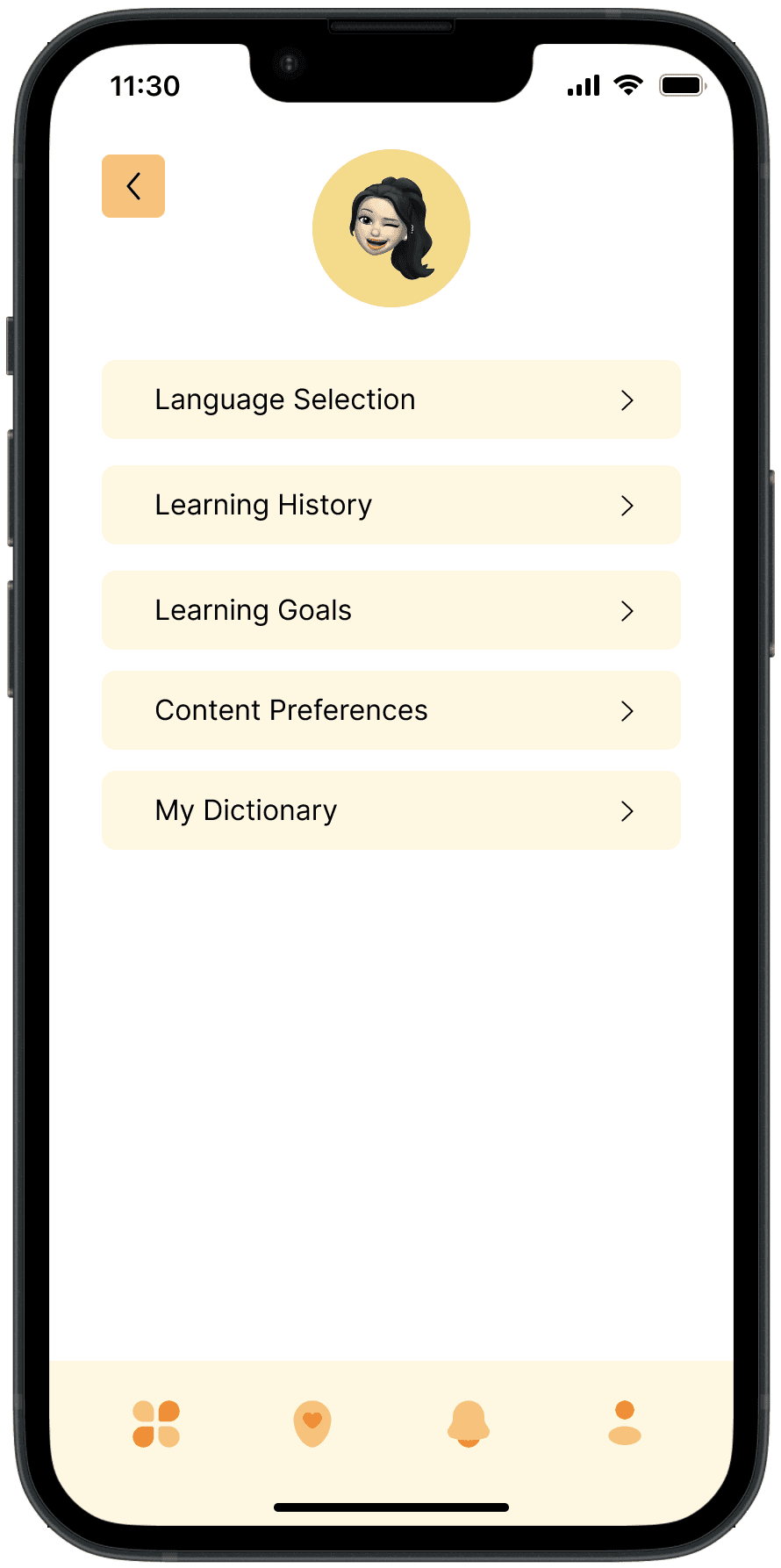
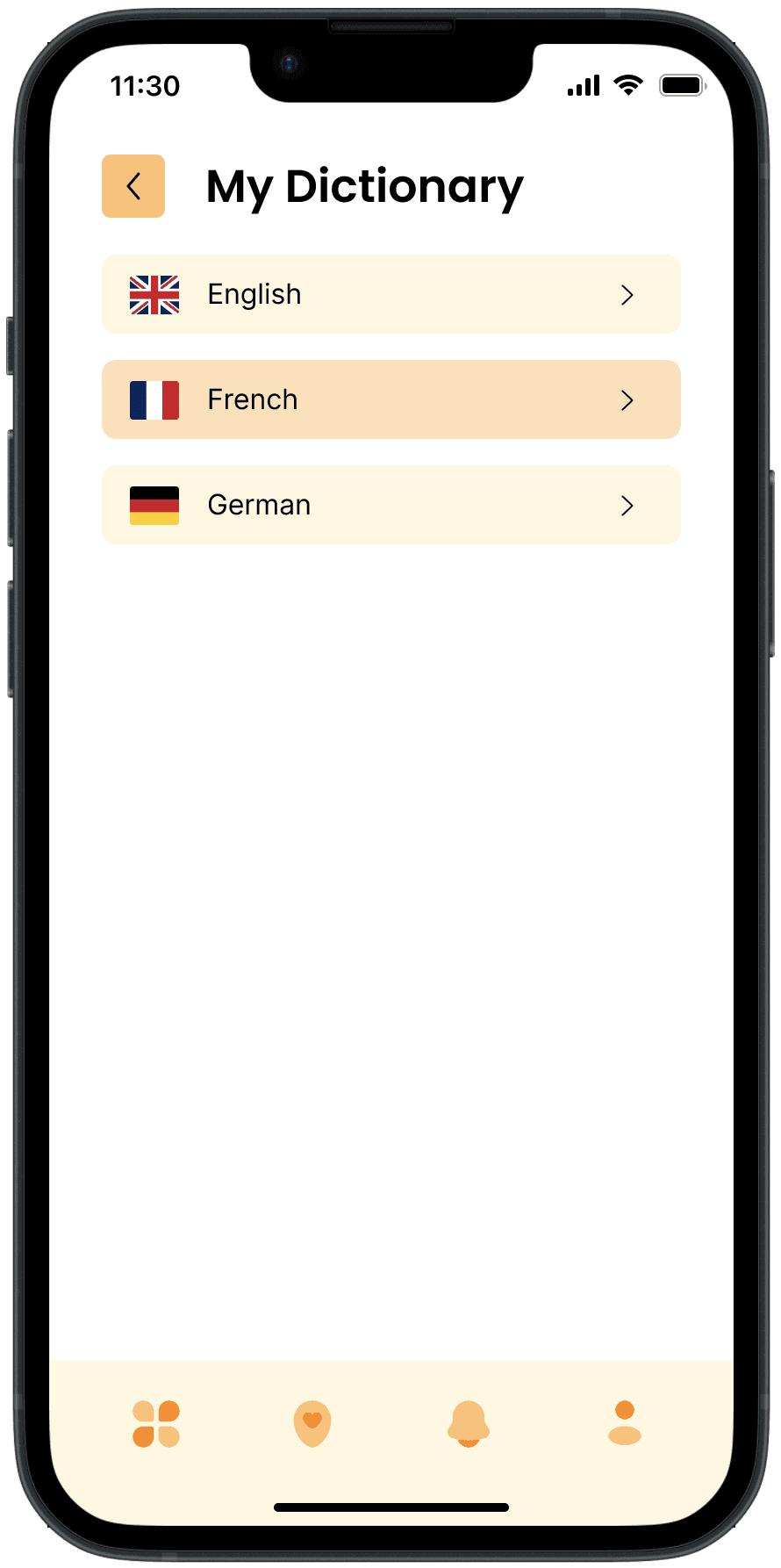
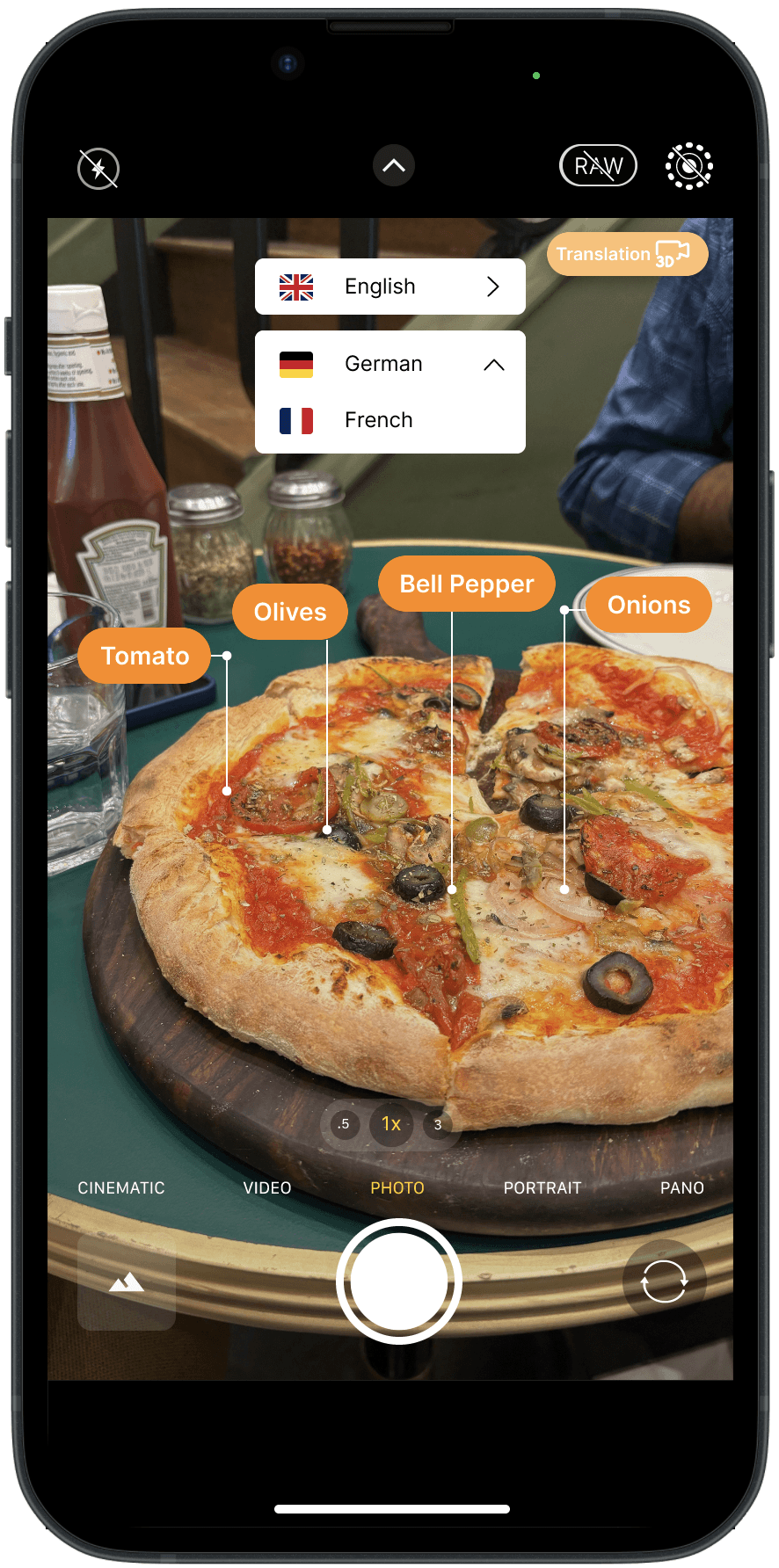
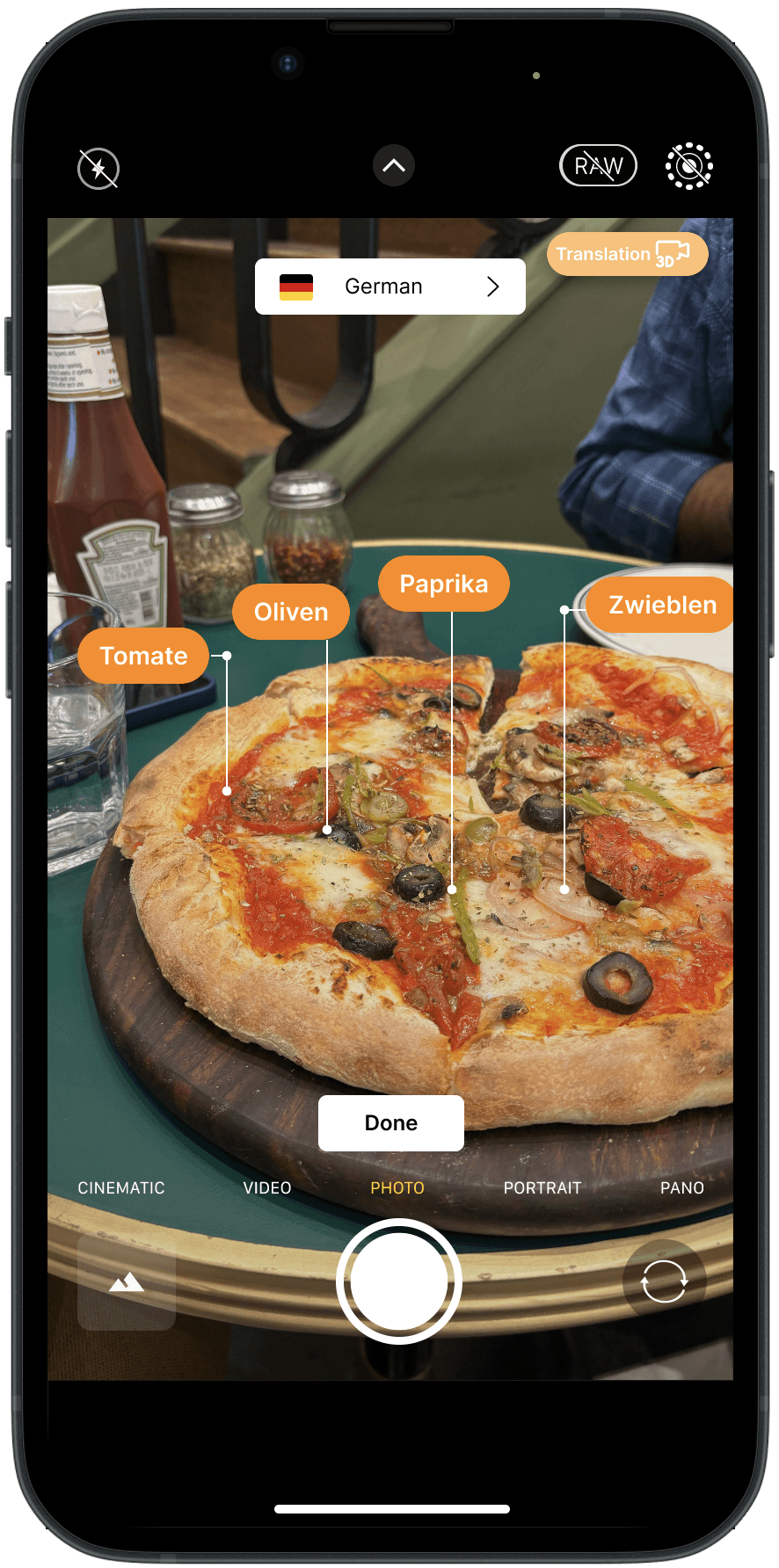
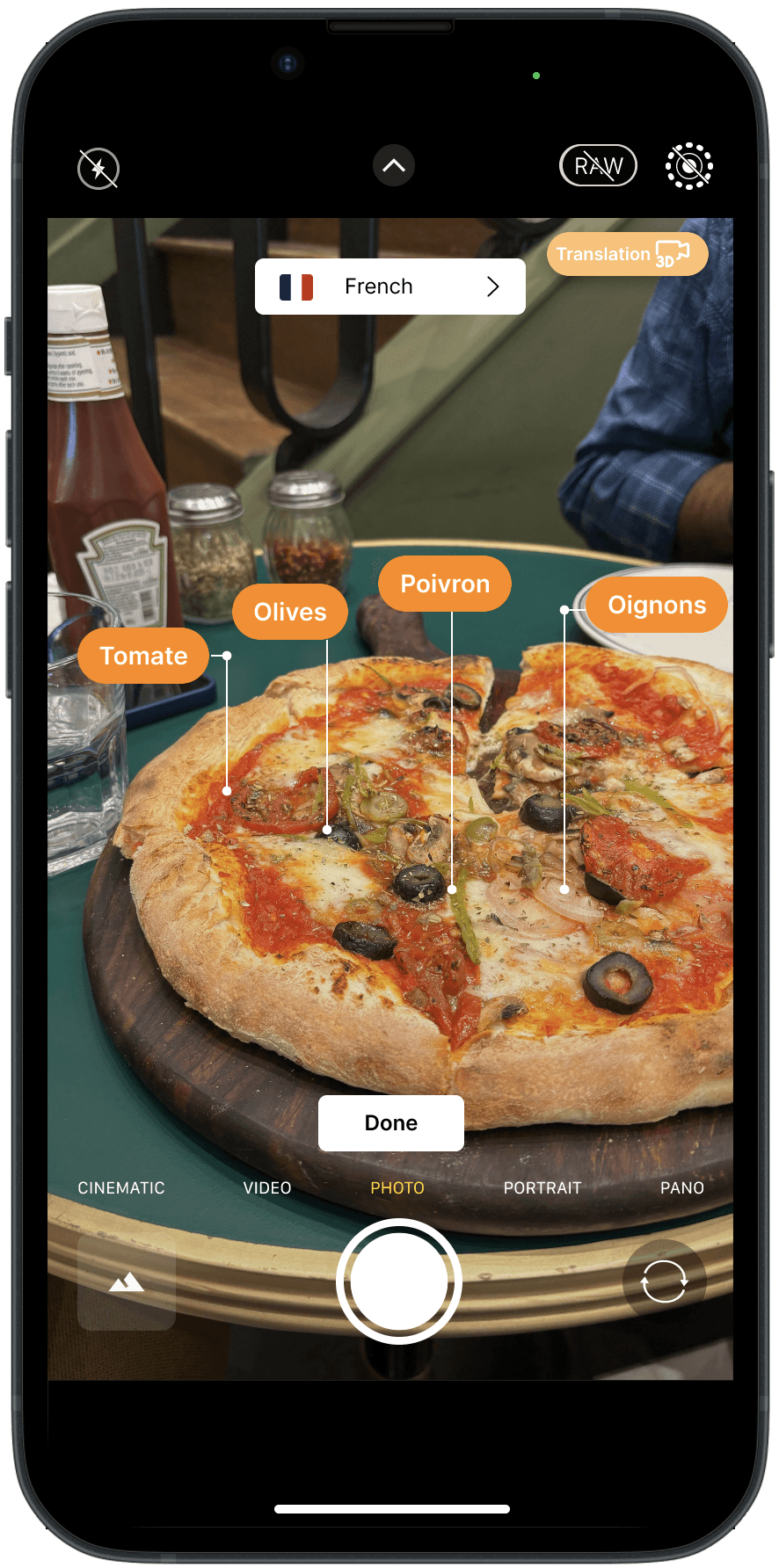
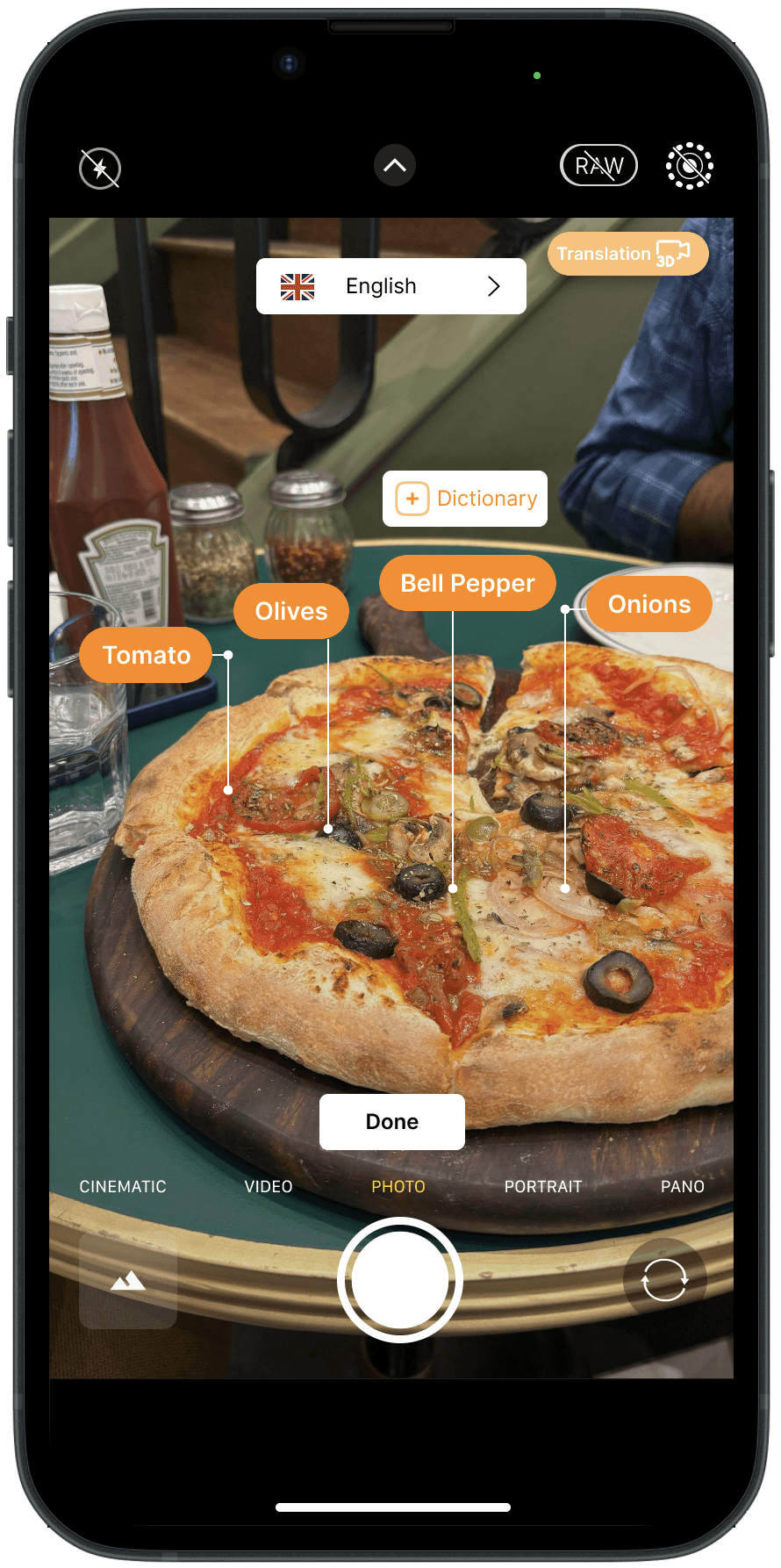
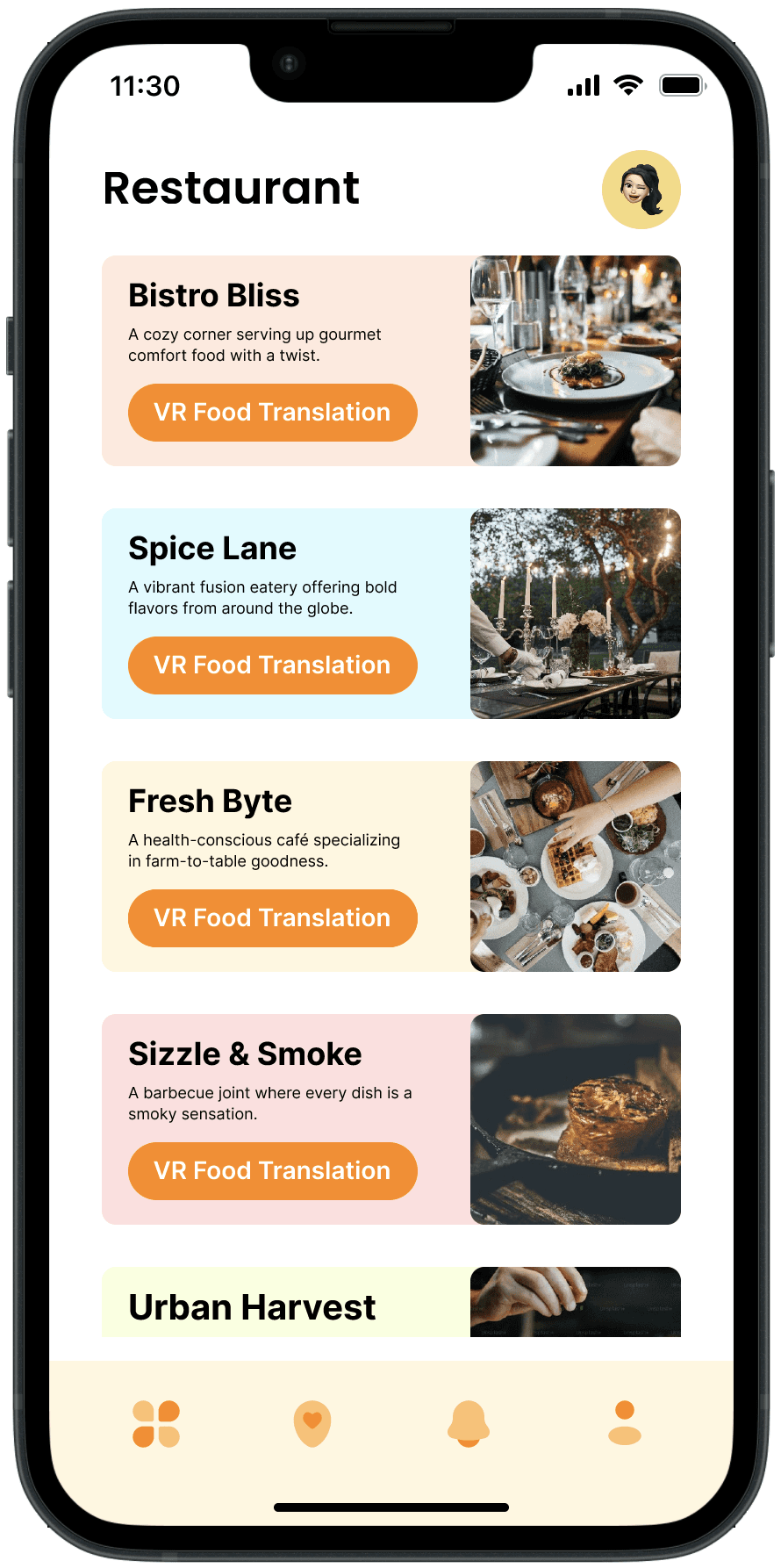
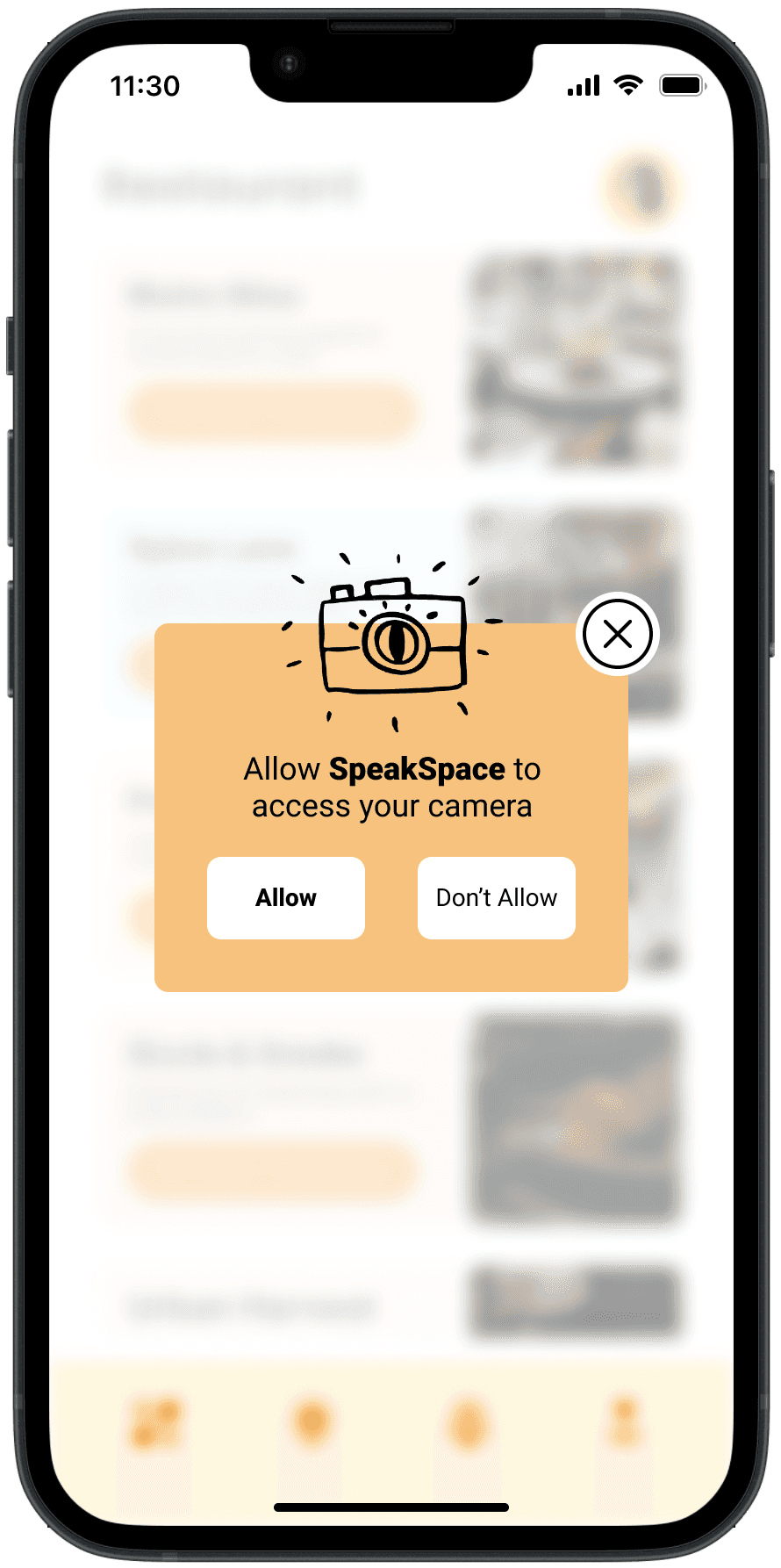
The high-fidelity screens of the VR Language Learning app offers a polished, interactive representation of the final user interface design.
The high-fidelity mockup prototype screens offer a comprehensive visualization of the final design and user interface. These screens are meticulously crafted on FIGMA tool to provide a realistic representation of the app’s look and feel, ensuring that every element aligns with the intended user experience and functionality.



Usability Test
Prototype
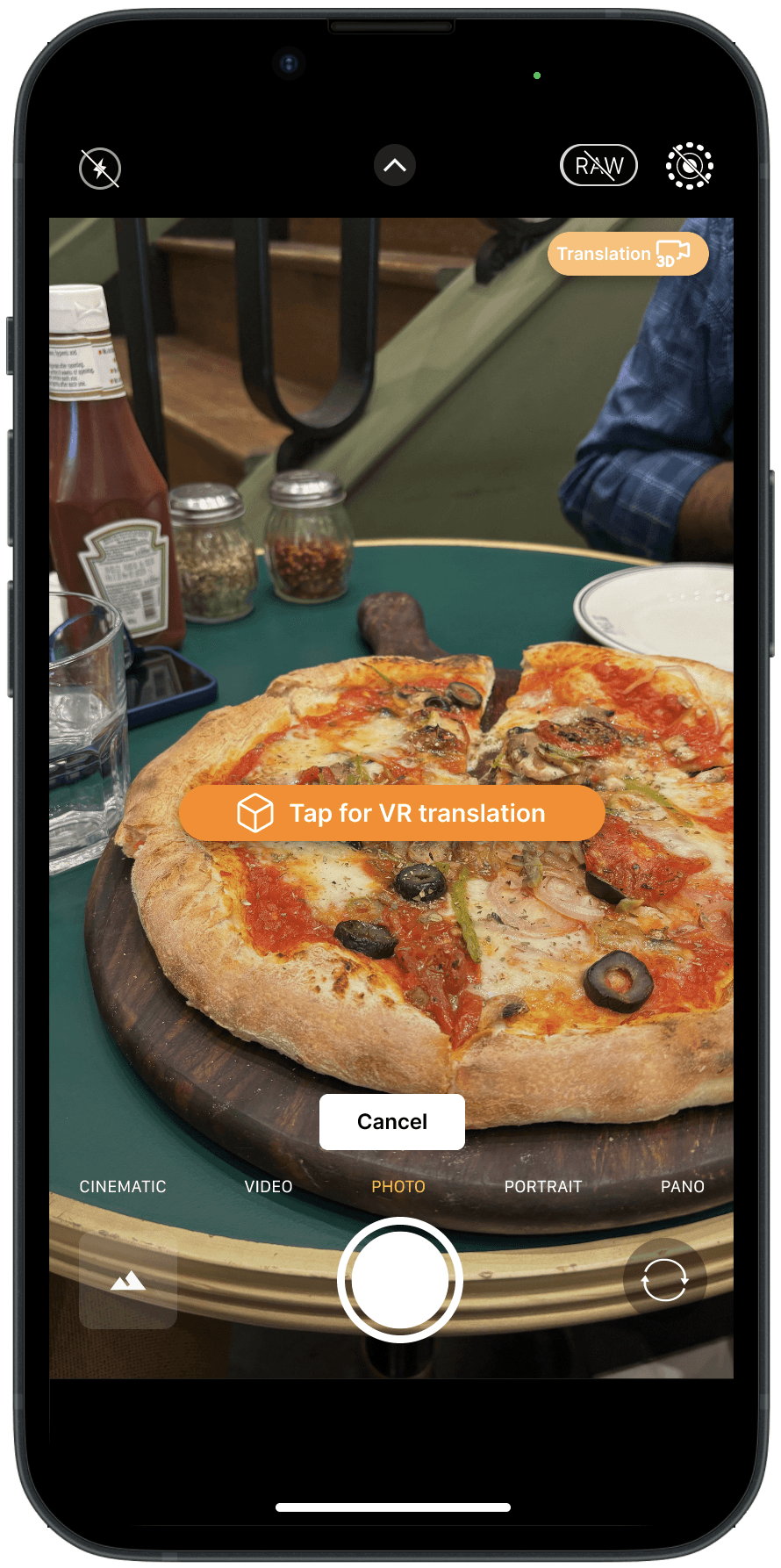
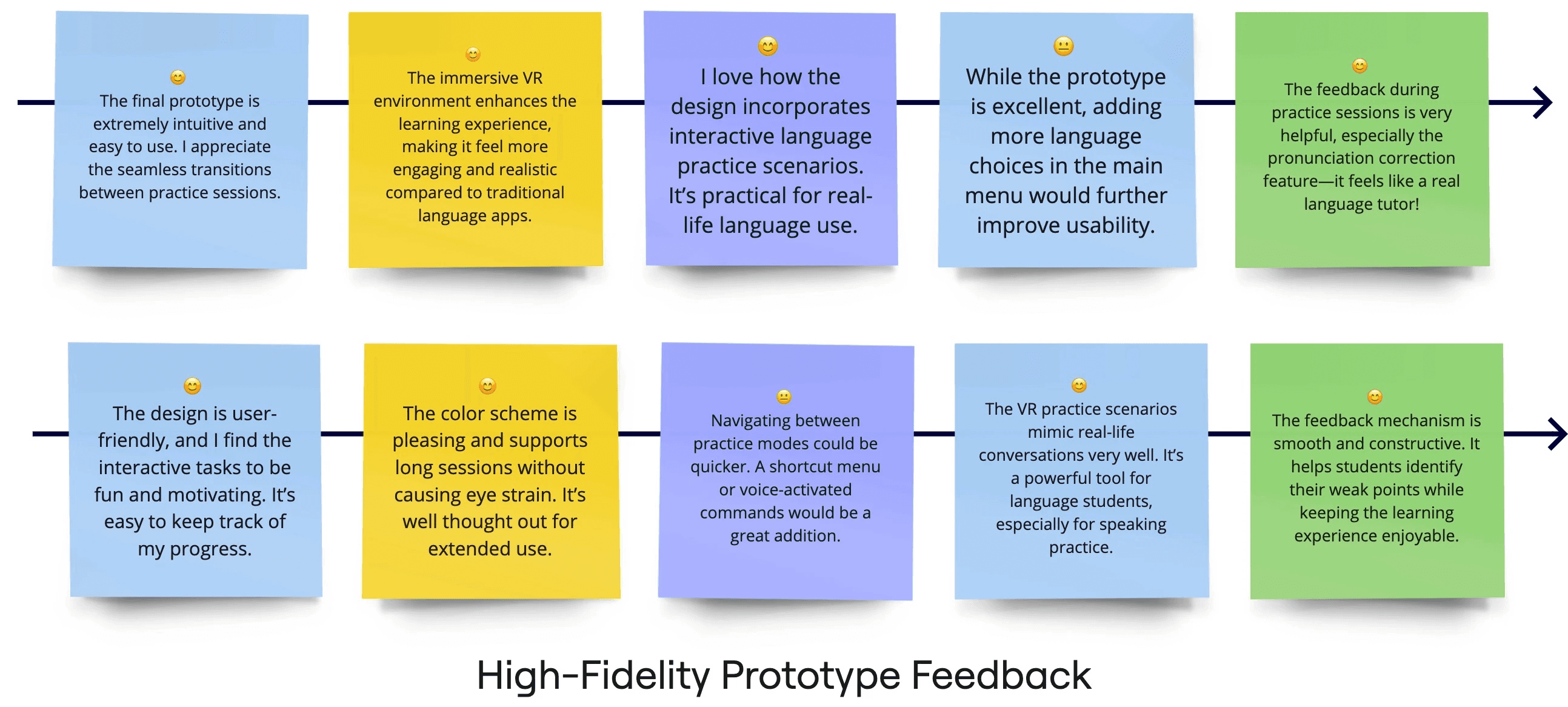
The Figma prototype for the VR Language Learning App showcases an immersive design and user experience tailored to enhance language acquisition through virtual environments. This prototype illustrates the app's intuitive interface, highlighting key features and interactions that provide engaging and practical learning experiences.
In the final Design, I’ve also included some key components:
Dynamic VR Interactions: Demonstrates how the app utilizes virtual reality to simulate real-world conversations and scenarios, enabling users to practice language skills in an interactive and realistic environment.
Prototyping Links: Interactive hotspots guide users through various features of the app, such as vocabulary practice, speech recognition feedback, and real-time conversational simulations, offering a comprehensive preview of the app's usability and functionality.
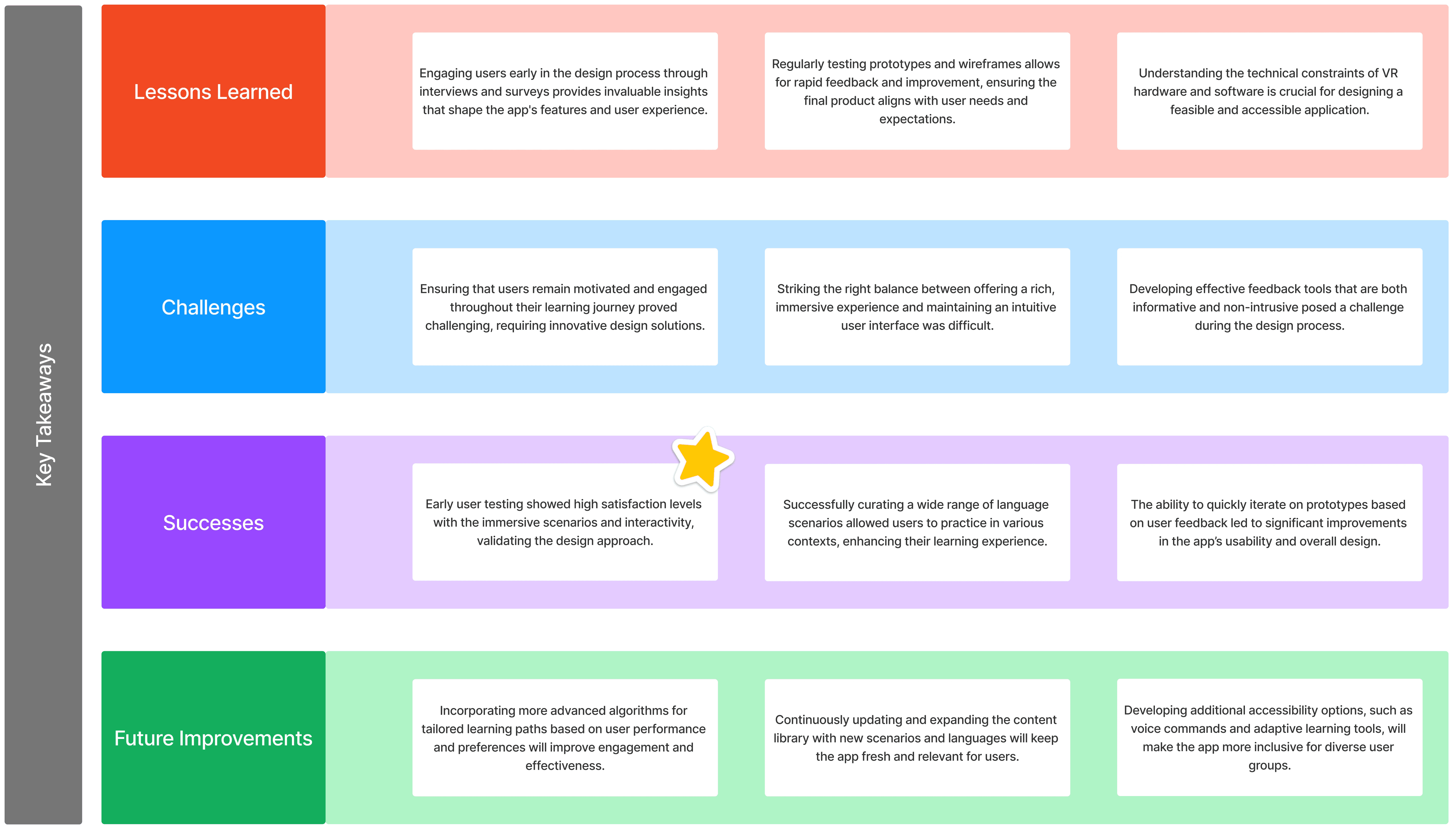
Key Takeaways